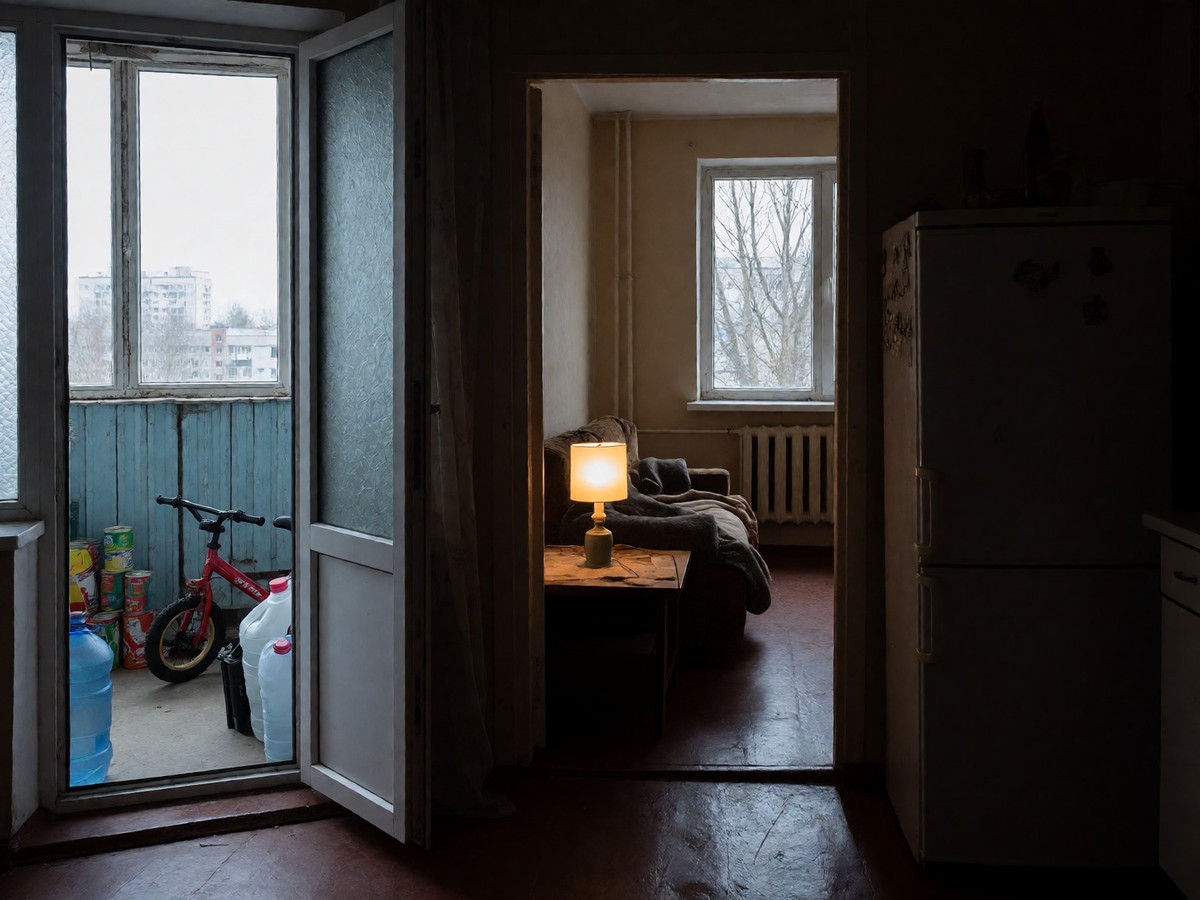
On November 3, Kyiv suffered the largest mass attack on its energy infrastructure since the full-scale invasion began. The strike targeted power stations and substations, leaving residents without electricity for extended periods while repair crews worked to restore service. Temperatures are now dropping, and locals dread a winter that may be harsher than the last. With Russia escalating its attacks using faster, jet-powered drones that are harder to intercept, fear has shifted from mere inconvenience to survival. Residents are forced to schedule their lives around daily strikes and unpredictable outages, stocking up on food, water, batteries, and flashlights in preparation for the coming cold.
Daily Life Under Constant Threat
The unpredictability of power cuts has created severe logistical challenges for families with vulnerable members. Oleksandr Gramatskiy, 49, spent over four hours parked outside his mother’s 13th-floor apartment after a doctor’s appointment, waiting for the elevator to work. His 86-year-old mother broke her foot weeks ago, and she cannot leave the apartment alone because shutdowns occur unexpectedly almost every day. "I thought I would have to carry her; I even tried it one time, but it is impossible," Gramatskiy said. He once broke curfew to get home, explaining the situation to police officers who stopped him along the way. This level of disruption affects everyone, from students to business analysts, who must navigate a city where schedules are released only the day before and emergency outages remain a constant threat.
Olha, a mother of two, reacted to potential shortages by panic-buying supplies at supermarkets. She now stores double or triple the usual amount of canned vegetables, rice, and water containers on her balcony next to her child’s bicycle. "Personally, these food supplies help me sleep better at night," she admitted, acknowledging that her behavior was driven by fear rather than logic. Yuliia, 35, recalled that her family endured nearly a month and a half without heating last year, with radiators barely getting warm and no hot water until summer. "It is just brutal," she stated bluntly about life in the capital. These personal accounts illustrate how the crisis has moved beyond abstract statistics into the daily reality of keeping families alive and fed.
Infrastructure Failures and Political Blame
Russia’s tactics have evolved significantly, introducing jet-powered drones that Olena Pavlenko, president of DiXi Group, says "changed the game" because they are cheaper to produce than missiles and can destroy more distributed generation infrastructure. While power lines face new threats, the sewage system presents an immediate danger, as it is entirely dependent on electricity. Without power, wastewater processing halts, and backed-up sewage could flood the city of three million people, causing a sanitation crisis comparable in scale to Berlin. Oleksandr Skhin, director of Ukraine’s Association of Water Utilities, warned that aging equipment and lack of electricity for pumping can have serious consequences.
Political responsibility for this unpreparedness remains fiercely contested. President Volodymyr Zelensky claimed on November 6 that Kyiv experiences the worst power outages due to local authorities’ failure to prepare, noting that resilience plans were implemented more effectively in other regions. Mayor Vitali Klitschko hit back, stating that the central government had not approved Kyiv’s resilience plan for nearly six months. Residents hold both sides accountable, pointing to unfinished repairs and insufficient shelters. In early September, some locals were still at the beach despite warnings, but by October 17, hundreds protested in front of the city council demanding Klitschko’s resignation. Yelyzaveta Semko, 27, noted that her district’s combined heat and power plant remains completely destroyed, and she and her neighbors raised money for a generator as faith in the grid dwindled. Klitschko pledged up to 50 mobile shelters in September, but the administration announced weeks later that only 14 would arrive by year-end. "We need shelters, not glass bus stops," read a sign held by a protester, capturing the frustration of a city left unprepared for the freezing months ahead.