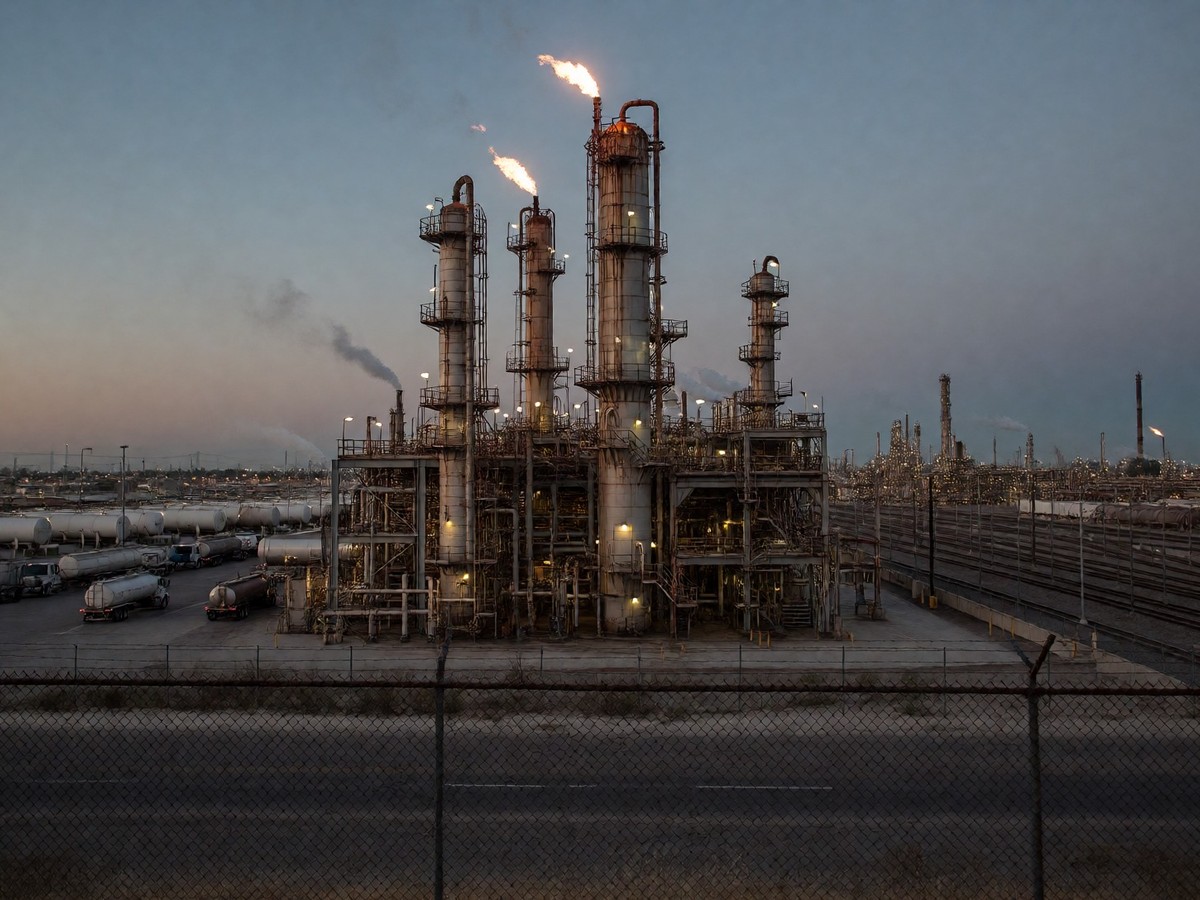
Renewed Ukrainian drone attacks since late October have reduced Russia’s oil refining capacity by around 30%, according to two industry sources cited by Reuters. The sources estimate that actual crude processing might have fallen by about 200,000 tons per day to 700,000 tons per day. This sharp decline follows a series of strikes on Russian oil infrastructure in October, where operations were disrupted or emergency situations occurred at nine of the country’s 35 major refineries over the past week.
Operational losses and specific targets
The affected facilities include refineries in Ryazan, Yaroslavl, and the Volga region, with a combined daily processing capacity of around 300,000 metric tons per day, or 2.2 million barrels. This figure represents a significant portion of Russia’s total primary refining capacity, which stands at approximately 930,000 tons per day. On Nov. 9, a Ukrainian drone strike set fire to the Kirishi refinery in Leningrad Oblast, identified as Russia’s second-largest refinery by the regional governor. Elsewhere in Leningrad Oblast, debris from a Ukrainian drone fell on an apartment building in the town of Vsevolozhsk during the attack, killing a woman, the governor added. These incidents highlight the severity of the campaign against critical energy infrastructure, which has clearly outpaced previous defensive measures.
Diplomatic context and export pressures
The attacks come as Russia faces renewed pressure on its domestic fuel supply while continuing to export diesel abroad. On Oct. 30, Russian Deputy Prime Minister Alexander Novak confirmed attacks on three refineries and a gas-chemical complex, while Ukrainian defense company Fire Point reported its drones struck the Novokuybyshevsk refinery in Samara Oblast that same day. US President Donald Trump announced an agreement with Russian President Vladimir Putin on Oct. 9 to allow Russian diesel exports to the United States, leading to the first tanker carrying around 40,000 metric tons heading for the US on Oct. 22. Trump also unilaterally announced an energy ceasefire between Russia and Ukraine on Oct. 11, amid US pressure on Kyiv to stop targeting Russian refineries. President Volodymyr Zelensky said on Oct. 11 that Ukraine would only halt attacks on Russian oil refineries if Moscow stopped targeting Ukraine’s energy infrastructure, leaving the current diplomatic stalemate firmly intact.