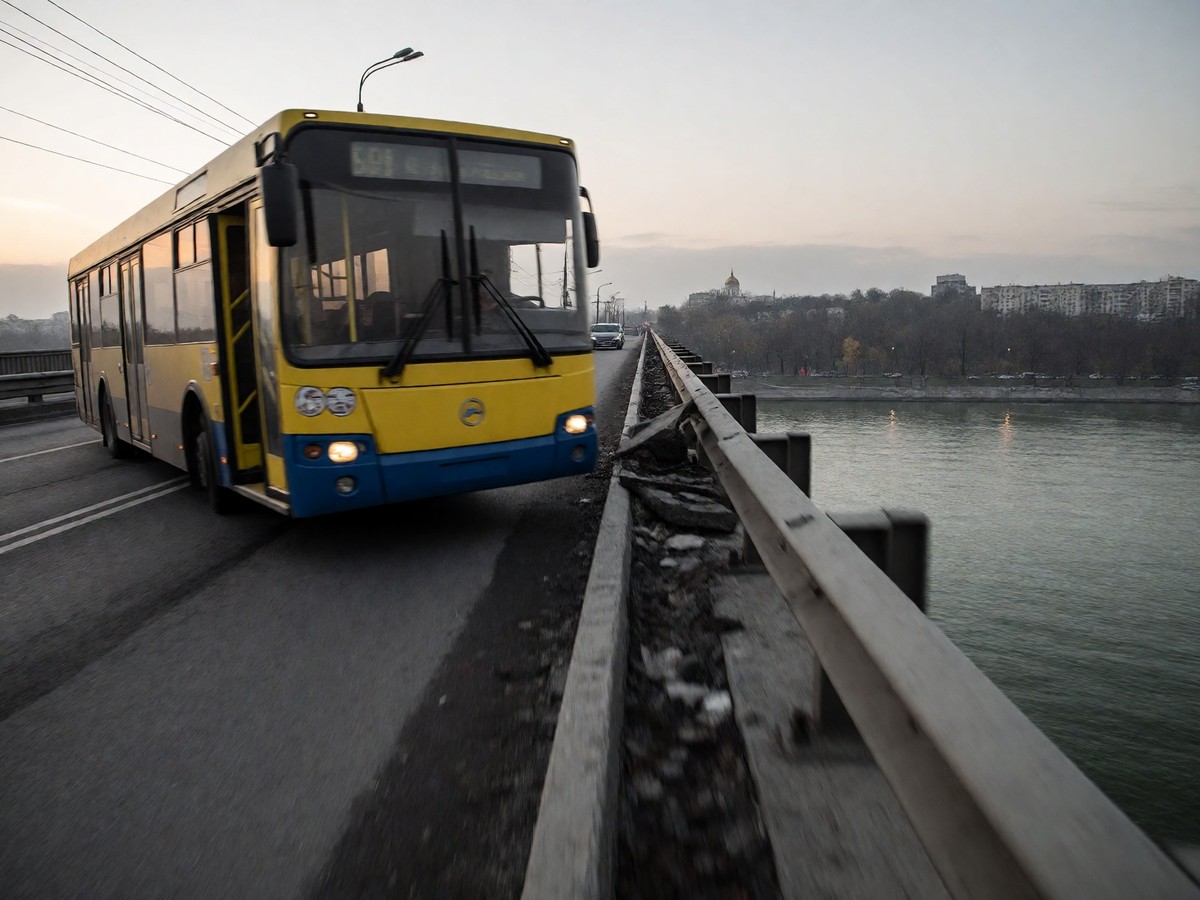
President Volodymyr Zelensky tasked Prime Minister Serhii Koretsyi on November 8 with creating a free overground transportation program to facilitate travel in the event of metro disruptions and bridge closures caused by Russian attacks. According to presidential advisor Dmytro Lytvyn, the plan’s details could be presented as soon as tomorrow. This directive follows a period where moving around the capital has become increasingly difficult because Russian missiles have begun targeting bridges connecting the city’s two banks across the Dnipro river. The Northern Bridge was once again struck overnight on November 6-7 as Russia launched 36 ballistic missiles at Kyiv and Kyiv Oblast, according to Zelensky.
Operational Logistics
"The necessary number of vehicles and the reorganization of traffic in certain parts of Kyiv are currently being worked out," Zelensky said on social media. Since early October, Russia has been targeting bridges to severely disrupt civilian travel and freight transportation. On numerous occasions, people have been seen crossing bridges on foot as structural damage and constant air raid alerts shut down vehicle and train transportation. The new program aims to replace these dangerous pedestrian crossings with organized public transit options that can operate safely during air raid alerts.
Zelensky also met with heads of regional administration for a report on their urgent needs amid incessant Russian attacks. Kharkiv is one of the few cities offering free-of-charge transportation, a fact the president has praised on numerous occasions for its wartime organization. However, the contrast between the two capitals is stark when examining winter preparations. Zelensky applauded Kharkiv’s readiness while criticizing those of Kyiv’s administration, led by mayor Vitali Klitschko. This criticism highlights a clear gap in administrative efficiency that the new federal mandate seeks to address immediately.
The implementation of this system requires rapid coordination between municipal authorities and national security forces to ensure safe routes. Drivers must navigate damaged infrastructure while avoiding active missile strikes, a task that demands precise real-time data sharing. The free fare structure removes financial barriers for citizens who cannot afford private transport or taxi services during ongoing conflicts. By centralizing this effort under the Prime Minister’s office, the government ensures that resources are allocated directly to the most critical transport corridors.
This move represents a significant shift in how Ukraine manages urban mobility under siege conditions. It acknowledges that traditional infrastructure cannot withstand sustained aerial bombardment without alternative solutions. The success of this program will depend on the speed of deployment and the resilience of the vehicle fleet against further attacks. Citizens in Kyiv now await specific schedules and route maps that should clarify exactly how they can traverse the city without paying fares.