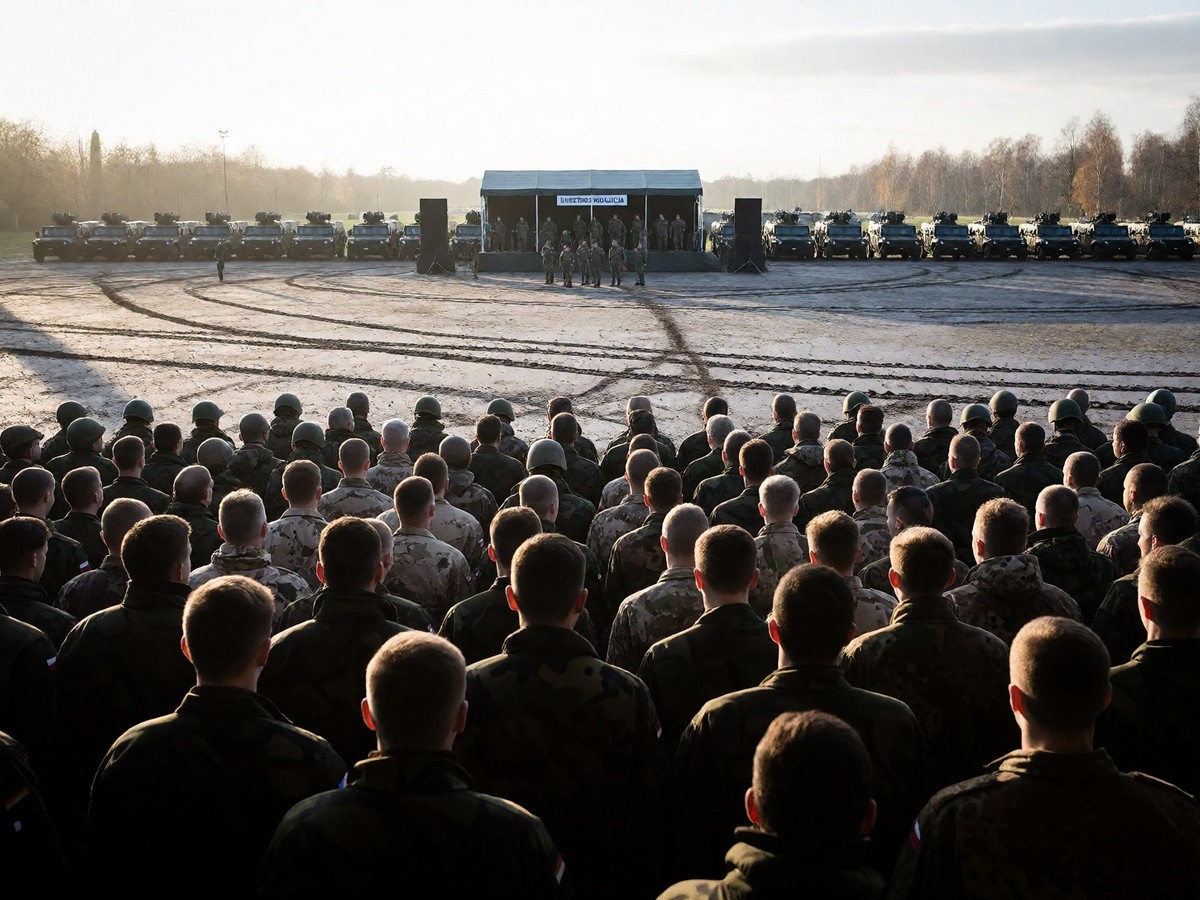
Exercise Koalicja began on Nov. 9 in Poland, marking the initial major drill for a British and French-led multinational force preparing for post-war deployment in Ukraine. Approximately 2,800 troops from 11 nations participate in the exercise, which runs until Nov. 22 to test readiness for supporting Ukraine and rebuilding its forces. The participating countries include Poland, Belgium, Estonia, Germany, Lithuania, the Netherlands, Spain, Sweden, and Turkey, alongside the lead nations. U.K. Defense Secretary Wes Streeting stated on Nov. 3 that "This isn’t a hypothetical plan, it’s a real force, ready to help Ukraine once the fighting stops." The drill operates under the Multinational Force Ukraine framework, aiming to verify operational capabilities before any potential deployment occurs.
Operational scope and strategic limits
The exercise tests command and control structures, troop movement, and equipment logistics within the multinational unit. Turkish forces practice demining in the Black Sea to enable commercial shipping to Ukrainian ports, while allied jets train to secure skies for commercial air travel. Once deployed, the force will bolster Ukraine’s security on land, in the air, and at sea as part of Europe’s post-war security guarantees intended to deter future Russian aggression. The British government stressed that deployment would occur only at Kyiv’s request and after hostilities end. Crucially, the force would not carry out peacekeeping or ceasefire-monitoring activities but instead support Ukraine’s own military by enabling safer skies and seas and regenerating Ukrainian forces.
European leadership amid shifting alliances
Europe has taken a leading role in providing security guarantees as Washington adopts a more reserved position toward Ukraine under President Donald Trump. This shift leaves European allies to shoulder the burden of long-term security commitments without direct American military backing. The coalition aims to fill this gap by establishing a credible deterrent presence that does not rely on U.S. involvement. However, the reliance on a voluntary coalition raises questions about sustained political commitment among member states over time. The exercise serves as a practical assessment of whether these disparate national forces can function cohesively under a single command structure. Success in these drills will determine the credibility of the promised security architecture for years to come.