Fraudulent schemes bypass EU scrutiny
Romanian authorities are hearing over 800 civil cases to annul identity documents obtained with forged papers. A joint investigation by the Kyiv Independent and partner newsrooms reviewed 55 cases involving disputed identity documents, finding that more than 30 beneficiaries were Russian citizens. Many of these individuals include people sanctioned by Ukraine for ties to Russia’s war machine or organized crime. The scheme exploits a repatriation process where descendants of people who lost citizenship in territories now part of Moldova and Ukraine claim EU citizenship. Fraudsters use forged genealogy documents or fake citizenship certificates to bypass criminal background checks. This process costs between 50,000 and 70,000 euros per person, according to a Romanian lawyer. The ease with which sanctioned individuals evade EU travel restrictions through these loopholes is a blatant security gap.
| Case Detail | Figure |
|---|---|
| Civil cases for annulment | Over 800 |
| Reviewed cases in investigation | 55 |
| Russian beneficiaries in reviewed files | More than 30 |
| Estimated cost per person | 50,000 to 70,000 euros |
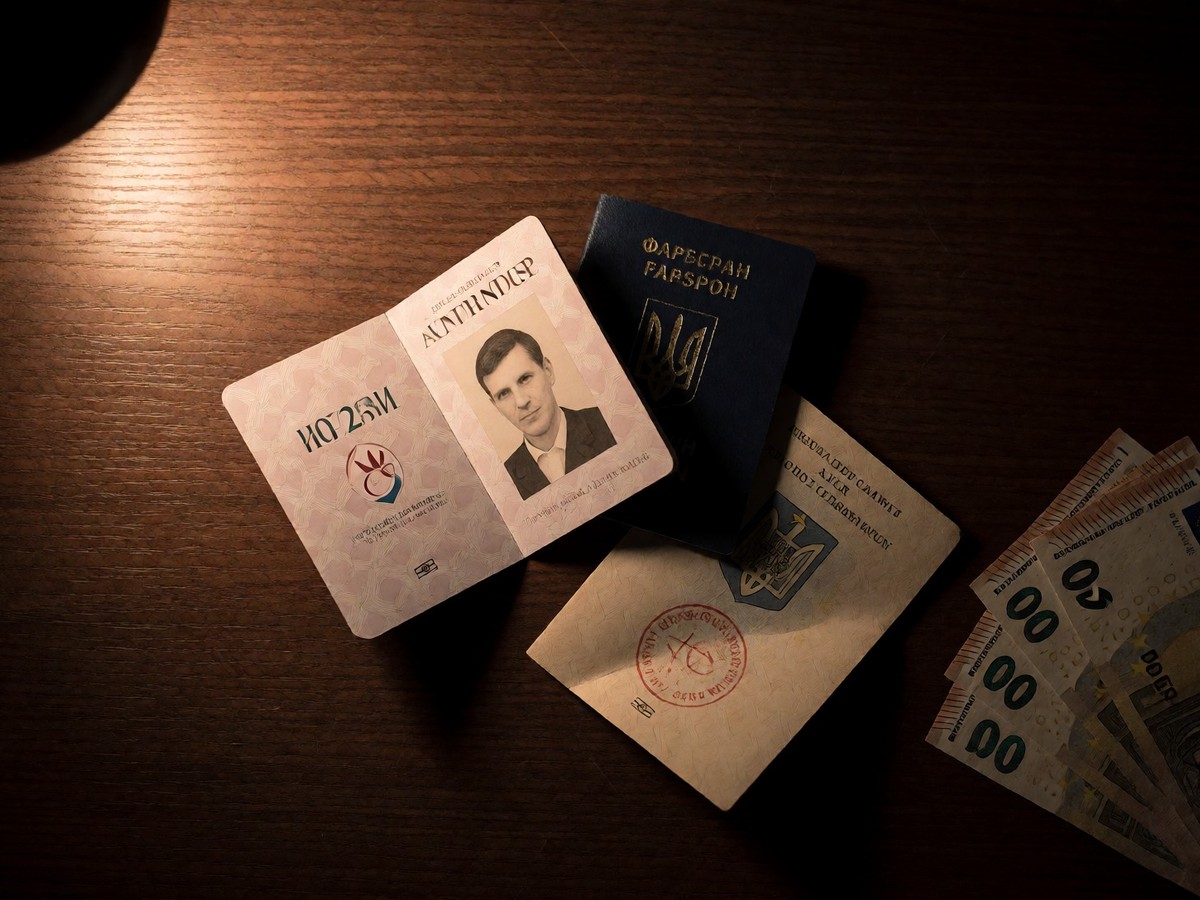
Romania recently charged at least 16 Russian citizens with using forged documents to obtain Romanian passports. These criminals use fake citizenship certificates to obtain authentic Romanian birth certificates, ID cards, and passports. These fraudulent networks rely on middlemen and private migration agencies that advertise on Russian social media.
Sanctioned individuals use fake Ukrainian identities
Mairbek Abdulazizov, who is a member of a family at the heart of the regime of Chechen dictator Ramzan Kadyrov, submitted a copy of a Ukrainian passport for foreign travel, a copy of a Ukrainian ID card, and an address in Kyiv to Romanian authorities. His Romanian application failed to mention his Russian passport. Both Ukrainian documents claim issuance in November 2020. A documentation expert analyzed the machine-readable zone of the passport copy and found that none of its five check digits matches the algorithm set by the International Civil Aviation Organization. This error would trigger a data integrity error at a border crossing. His submitted Russian birth certificate is a duplicate that claims he was born in Moscow in 2019, which is 36 years after his birth. The certificate also claims his father was Gagauz and his mother was Moldovan. This contradicts the public biography of his father, who referred to the Chechens as "my people."
Dmitrii Rudenko, who headed a state-owned explosives manufacturer until April 2025, also applied as a Ukrainian citizen. He submitted a Ukrainian passport and an ID card dated May 2020. Romanian authorities claim that no order from the National Authority for Citizenship ever authorized his citizenship and that he never took the oath of allegiance. Rudenko’s family built a life in Europe despite his role in the Russian military-industrial complex. His former wife, Natalia Zelentsova, bought two apartments in Beausoleil in 2014 and 2015. Rudenko transferred at least 700,000 euros abroad, according to Russian media. Other Russian citizens in the court files include Nurutdin Dadaev, who is on Ukraine’s sanctions list for links to criminal groups, and Beslan Magomadov, a former regional director at VimpelCom. Beslan Magomadov’s Ukrainian passport number was declared invalid by the Ukrainian State Migration Service. The files also name Islam Gadzhiev, Aleksei Bogachev, and Shamil Musaev.
Evidence of forged citizenship certificates
The investigation identified many fake citizenship certificates. For Mairbek Abdulazizov, the certificate cites an order by the National Authority for Citizenship president, but his name does not appear in any official order. The certificate also lists the Romanian Consulate General in Istanbul as the issuing office, but the round seal on the document belongs to the Romanian Embassy in Bratislava. These errors prove the document is not authentic.
The fraudulent process involves several steps of documentation. Applicants use a forged citizenship certificate to get an authentic Romanian birth certificate. These birth certificates, issued in 2023 and 2024, were the first genuine Romanian documents in the files of several Russians. Shamil Musaev, a Russian businessman, told the Kyiv Independent that he used his Romanian passport several times to travel within the EU between 2023 and 2025. He visited Romania, Spain, and France while running a goods transport business in Romania.