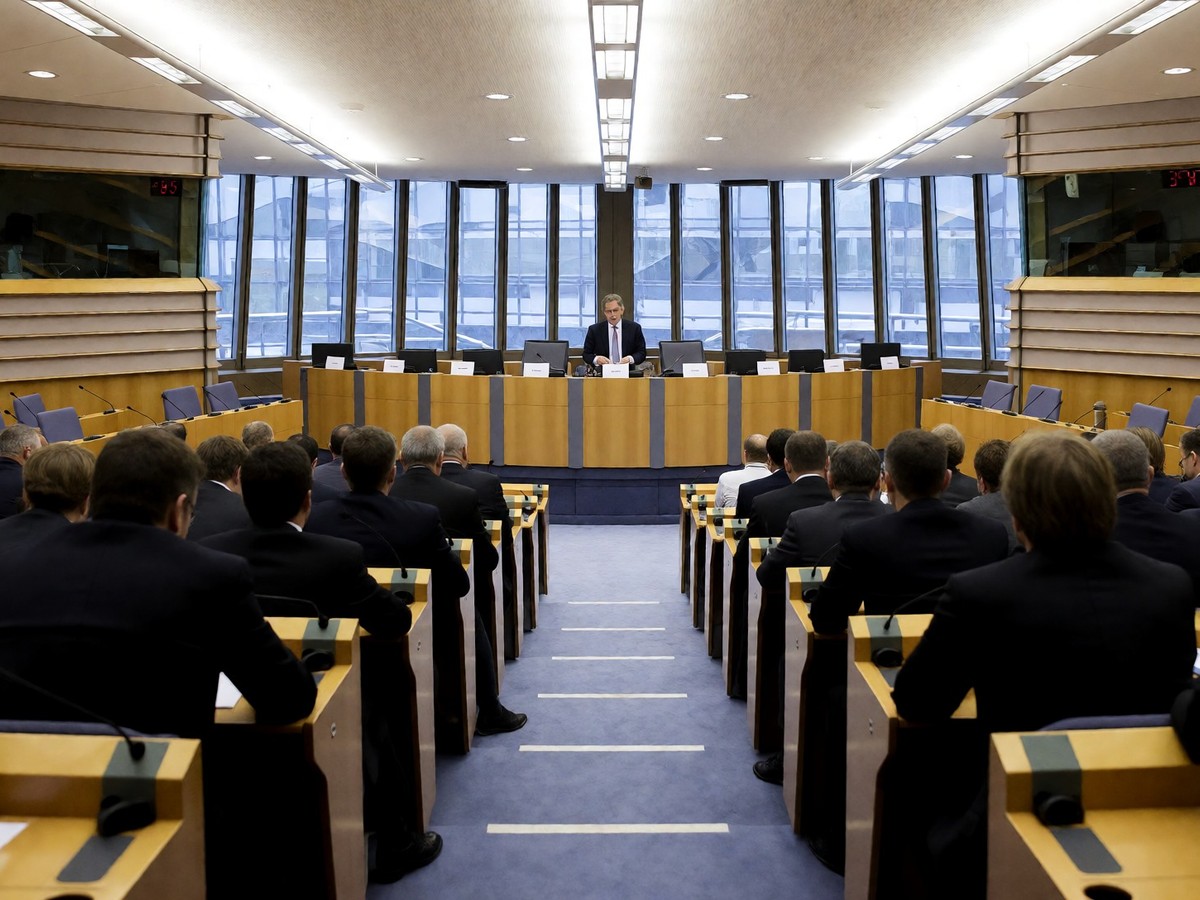
Euroclear holds 204 billion euros ($224 billion) of Russian government assets as of September. At a European Parliament hearing on Nov 19, Edwin De Pauw, managing director at Euroclear, said current suggestions to use these assets to support Ukraine fail to protect financial market stability. I find the financial risks Euroclear faces far more significant than the political rhetoric. In October, the company reported that Russian countermeasures against its enforcement of EU sanctions cost it 233 million euros ($256 million), and legal fees accounted for two-thirds of that amount. This follows a December 2025 attempt by EU leaders to agree on a plan that failed when Belgian Prime Minister Bart De Wever spoke against the proposal due to legal risk and financial stability concerns.
De Pauw argued that market players worry about Europe’s commitment to the rule of law and the predictability of its legal framework. He warned that spooking markets could scare away investors and raise the cost of attracting capital to Europe, which is vital for funding Ukraine and bankrolling reconstruction. Reconstruction costs for Ukraine already reach almost triple the value of the 204 billion euros held at Euroclear. De Pauw noted that the company safekeeps 46 trillion euros ($50.7 trillion) in assets, a figure more than double the nominal GDP of the entire European Union. He stated that he has not seen any proposal which adequately explains how the risk for financial market institutions will be mitigated and absorbed by EU member states.
Dixon’s proposal lacks funding details
Hugo Dixon, the lead activist for the "Russian transfer" initiative, proposed moving assets from Euroclear to a European custodian. Dixon’s plan includes a ready-made draft regulation with wording to reimburse any actor for any "loss, cost, or expense" incurred for transferring the assets to EU protection, as well as for retaliatory actions taken by Russia. During a September panel in Brussels, Finance Minister Serhii Marchenko advocated for a similar concept. When asked how the EU would compensate Euroclear or Belgium, Dixon said the EU would have to decide how to fund such a "contingent off-balance sheet liability" when the time comes. I consider his lack of a concrete answer on compensation regarding these costs a glaring weakness.
The European Commission’s proposal of Nov 18 to lend Ukraine 45 billion euros ($49.5 billion) in 2027 adds to the pressure to find new funding. MEP Thijs Reuten called using Russian assets an "easy fix" on social media. However, European Commission President Ursula von der Leyen and Economy Commissioner Valdis Dombrovskis only referred to using Russian assets through existing rules when discussing the 45 billion euro loan. Dombrovskis elaborated that he sees the discussion about the final use of Russia’s immobilized assets coming up in the framework of peace talks, at which point the EU expects Moscow to pay reparations to Ukraine. If Ukraine does not receive reparations, the bloc has already reserved the right to use the assets.