800 people evacuated under temporary truce
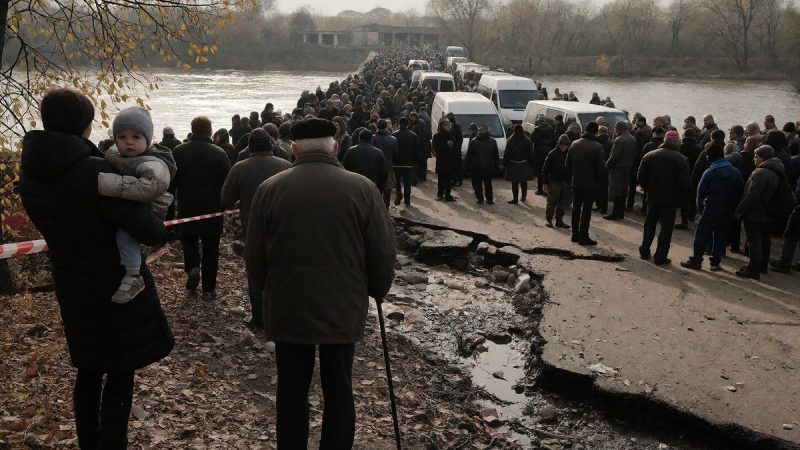
Melania Trump said the humanitarian mission in Oleshky enabled the evacuation of nearly 800 people. The temporary ceasefire in Kherson Oblast, which Melania Trump helped negotiate alongside Pope Leo XIV, lasted 5 days, 19 hours, and 59 minutes before it expired at 10:59 pm Kyiv time on November 1. Russia refused an offer to extend the truce after Ukraine’s Foreign Ministry proposed it. This operation used 22 ambulances to transport people with limited mobility. Lubinets said that 25 buses with a combined capacity of 750 passengers were prepared for the evacuation, though he did not say whether all would be filled. On November 1, the Ukrainian military said it evacuated another 167 people, including 22 children, from other threatened areas of the Kherson region. The city sits on the left bank of the Dnipro river, opposite Kherson city. Governor Oleksandr Prokudin urged residents to stay out of "red zones" near the Dnipro where Russian drones hunt civilians. The mission was a rare joint operation between Kyiv and Moscow. Melania Trump said on X that the mission was a success. She said the mission enabled the evacuation of nearly 800 people and allowed the delivery of critical aid to the region.
Residents face danger in occupied town
Approximately 2,000 civilians were in Oleshky when the truce began, and most are elderly. Before the war, Oleshky had a population of around 24,000. By October, Ukrainian officials believed only around 2,000 people, including about 50 children, remained in the town. An animal rescuer who stays in the town could not leave because she looks after about 70 animals. Alla Tyshenko, an Oleshky resident, told the Kyiv Independent at the border on October 31 that people who stayed "regret not having left." Iryna Mohylna, who waited for her godfather at the border, said the blockade of Oleshky began in earnest in October last year. She said traveling around the city was dangerous because of the mines after she heard an explosion and read that a person was blown up by a mine. Tetiana Hasanenko, head of the exiled Oleshky City Military Administration, said one person died and four others were injured by landmines in September. Residents face severe shortages of food, water, and electricity, alongside constant drone attacks and mined roads. Civilians trying to flee on the only roads in and out of the city have frequently been targeted by drones. The city has been effectively blockaded by Russian forces since the early days of the full-scale invasion, which prevented humanitarian aid from reaching residents.
Aid delivery and transport challenges
Dmytro Lubinets, Ukraine’s human rights ombudsman, said some families evacuated during the mission are still traveling to Ukrainian territory because doctors found their health conditions too fragile for air travel. The original evacuation journey used flights from Russia to Belarus. Lubinets and Russian Human Rights Commissioner Yana Lantratova discussed making aid deliveries to Oleshky systematic with shipments planned at least once a month. During a 12 hour bus ride, Lubinets and Lantratova discussed possible humanitarian missions in other settlements of the Oleshky area. Lubinets said he personally spoke with citizens who chose to stay. Some residents told Lubinets they wanted to stay in other areas of Russian-occupied territories because they had relatives there. He provided food, water, medicines, fuel for generators, and hospital equipment for those who stayed. Ukraine cannot reveal the number of evacuees because of an agreement with Russia. Lubinets said he cannot verify the exact number of people still remaining in Oleshky. The mechanism for monitoring humanitarian shipment contents is still being developed, though the previous humanitarian convoy arrived under Ukrainian supervision. Both Lantratova and Lubinets wrote that they want to ensure aid reaches people living near the front line on a regular basis.