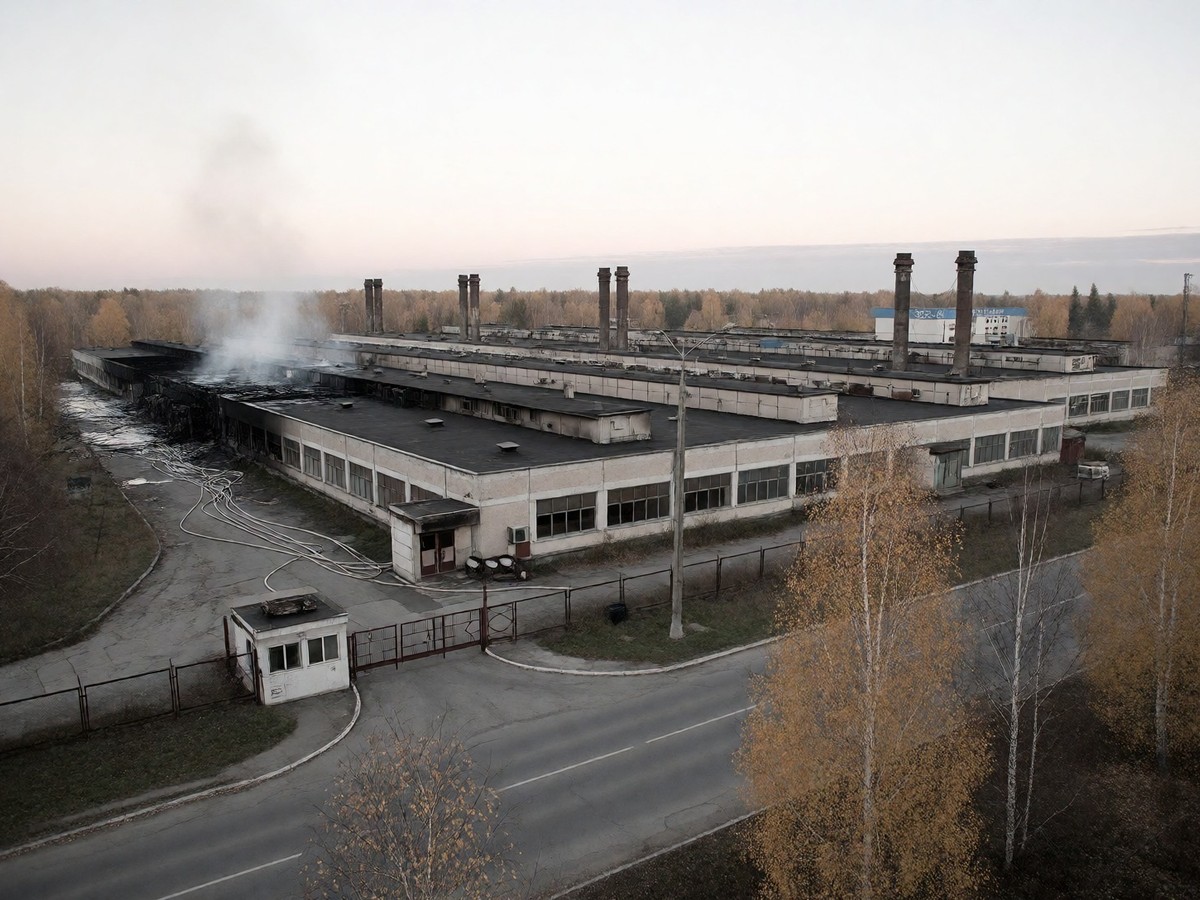
Oryol strike and military production
A missile strike on the Proton military plant in the Sovetsky district of Oryol on October 23 injured eight people. Governor Andrei Klychkov called the strike an attack on a civilian enterprise during rush hour and blamed Ukraine’s armed forces. Monitoring channels such as Supernova+ and Exilenova+ identified the target as the Proton plant, which manufactures components for Iskander-M ballistic missiles and Pantsir-S1 air defence systems. His office reported a "fairly serious" fire that crews extinguished, though officials stated there was no chemical threat to the surrounding area. I find the claim that a facility producing missile components constitutes a civilian enterprise to be a thin and unconvincing distinction. NEWS.ru also reported that more than 10 drones flew over the Oryol region on the morning of October 24.
Maritime escalation and aerial campaigns
The maritime situation worsened on October 23 when a drone struck the Comoros-flagged cargo ship Khoryv approximately 24 km off the port of Constanta in Romania. The vessel caught fire, capsized, and sank, killing one Ukrainian sailor and leaving three crew members missing. Romanian authorities reported that 10 of the 13 crew members, including 10 Ukrainians and three Azerbaijanis, were picked up by another commercial vessel with nine survivors. President Nicusor Dan blamed Russia for the strike, calling it a clear part of the escalation Russia is carrying out. This maritime event occurred alongside a massive aerial campaign where Russia launched 126 strike drones at Ukraine starting at 18:00 on October 23, according to reports from the air force. The Ukrainian air force reported that air defences downed or suppressed 101 drones, but 17 drones remained unaccounted for in the preliminary 08:00 report on October 24. In Moscow, Mayor Sergei Sobyanin said 21 drones were shot down during the day, causing Rosaviatsia to restrict flights at Sheremetyevo, Domodedovo, Vnukovo, and Zhukovsky, while St Petersburg’s Pulkovo airport handled 25 diverted flights. In Ukraine, a Russian daytime attack with drones and a Banderol munition on October 23 killed one man and injured at least 25 in Chernihiv, while three FAB-250 bombs with UMPK glide kits hit a residential neighbourhood of Kramatorsk, killing one and injuring six while damaging 27 buildings. In the Dnipro district, a Russian strike hit an enterprise starting a fire and injuring two, while a separate attack on Dnipro and its outskirts killed one person and injured five.
Regional damage and industrial capacity
Drone strikes hit multiple Russian regions, damaging industrial plants and utility infrastructure. In the Samara region, a drone attack on the night of October 23-24 set fire to Tatneft’s Tolyattikauchuk synthetic rubber plant. In the Rostov region, Governor Yuri Slyusar reported that more than 80 drones were destroyed or suppressed overnight, with falling debris damaging a transformer substation in Kalinin that cut power to 172 private houses and damaging the roof and windows of a maintenance building and 21 buses. I note the significance of these hits as the Russian defence ministry claimed 616 fixed-wing drones were downed over 22 regions and the Black and Azov Seas during the overnight period. In Perm Krai, Governor Dmitry Makhonin said 20 drones were shot down on the night of October 22-23, noting that an industrial facility in the region suffered minor damage, while monitoring channels identified the target as Uralchem’s Azot plant. In the Nizhny Novgorod region, Governor Gleb Nikitin reported that a drone attack on the night of October 22-23 damaged one piece of infrastructure and injured three people with falling debris. Voronezh Governor Alexander Gusev reported that several jet-powered aerial targets were destroyed on the morning of October 23, which caused debris to damage outbuildings and several cars. In occupied Crimea, power went off across the peninsula overnight, and Sevastopol’s governor Mikhail Razvozhayev blamed damage to energy infrastructure outside the city. Regarding energy capacity, plants reported halted or cut in October so far account for about 14.8mn tonnes a year, or 5% of Russia’s 327mn tonnes nameplate capacity, though this figure could reach 145.8mn tonnes, or 45%, if earlier halts still hold.