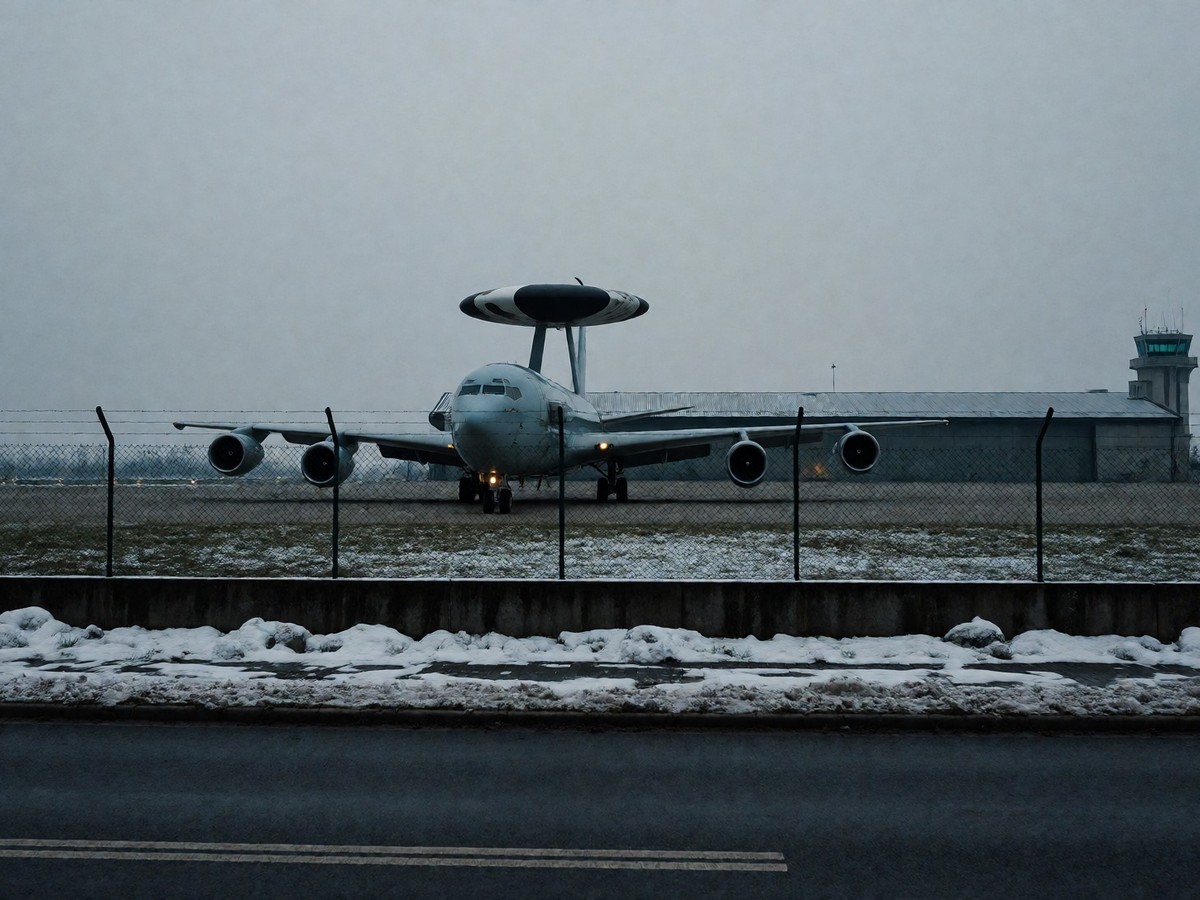
Last Friday morning, three Russian Kh-101 cruise missiles struck three different locations in southeast Poland near the Ukrainian border. These missiles stayed in Polish airspace for approximately three minutes before they hit the ground. Two Swedish Gripen fighter jets, which were patrolling Polish skies as part of a NATO air policing mission, received authorization from NATO’s Combined Air Operations Centre to fire upon the objects if certain conditions were met. However, poor weather conditions prevented the pilots from confirming the identity of the missiles in time. I consider the NATO decision to send an Airborne Warning and Control System (AWACS) to Poland a logical step following these specific strikes. Pawel Zalewski, the deputy defence minister, told Wirtualna Polska that this is an "immediate NATO response" to provide "enhanced situational awareness" after Russians moved up the "escalation ladder." Zalewski noted that the alliance wants the ability to defend against all Russian attacks rather than engaging in offensive actions. He added that the goal is to discourage Russia from attacks rather than to escalate. He also called the deployment a "great demonstration of the alliance’s unity with Poland in the face of Russian attacks."
Drone incursion follows NATO decision
NATO’s decision follows a Monday night incident where a Russian jet-powered drone flew 20 km into Poland and stayed in Polish airspace for nine minutes, according to reports from RMF. The operational command of Poland’s armed forces granted authorization to shoot the object down, but the military did not engage because the drone changed course and began to head east back towards the border. This decision took into account the potential threat to civilians and the possible consequences of shooting the object down. I find the military’s restraint to be a pragmatic choice to avoid further escalation after the missile strikes occurred last week. Zalewski assumes the drone was an intentional action rather than an accident.
| Drone details | Specification |
|---|---|
| Type | Jet-powered |
| Distance into Poland | 20 km |
| Time in airspace | 9 minutes |
This incursion follows a September helicopter crossing from the Kaliningrad exclave and a September 2025 incident where 20 Russian drones prompted Poland to trigger NATO’s Article 4. NATO spokeswoman Allison Hart confirmed that the Supreme Allied Commander Europe authorized the forward deployment of an AWACS aircraft and is examining the deployment of additional assets as he continues to assess the alliance’s defence posture in Poland.