Underground advance near Kupiansk
President Volodymyr Zelensky reported that Ukrainian forces eliminated more than 100 Russian soldiers and captured over 30 others during Operation Veles near Kupiansk in Kharkiv Oblast. This operation involved an underground advance of more than 15 kilometers (9 miles) through gas pipelines. The National Guard’s 2nd Khartiia Corps carried out the operation alongside other Ukrainian units. This follows a report from the 2nd Khartiia Corps on October 22 that troops infiltrated Russian rear positions through these same pipelines. Zelensky received progress reports from Commander-in-Chief Mykhailo Drapatyi, 2nd Khartiia Corps Commander Ihor Obolienskyi, and Deputy Head of the Presidential Office Pavlo Palisa. The operation follows previous Russian attempts to use similar tactics, such as the September 12 incident where the monitoring group DeepState reported Russian troops used a gas pipeline to cross the Oskil River and penetrate Ukrainian defenses. "The Russians had already tried to use underground gas pipelines to move through our positions and launch assault operations. Ukrainian warriors have successfully transformed this tactic, modernized it, and made it much more sophisticated and technologically advanced," Zelensky said.
Missile strikes and ceasefire expansion
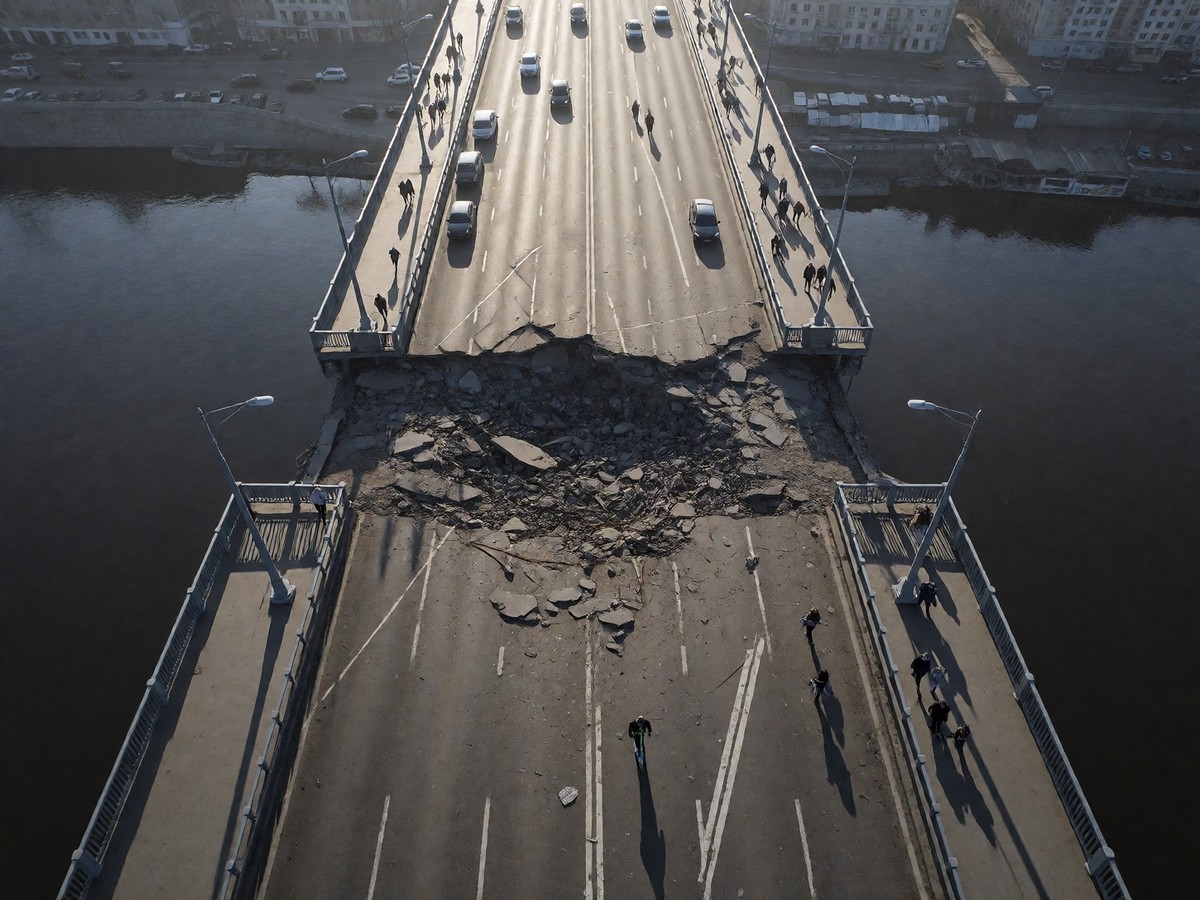
Russian ballistic missiles hit a university campus, a major bridge, and medical centers in Kyiv during an overnight attack on October 26 and 27. The State Emergency Service reported at least one person died and 15 people, including a paramedic, a medical technician, and a 20-year-old student, suffered injuries. Mayor Klitschko reported that the missile hit the bridge and metro infrastructure and left a large hole in the structure. The strike on the Southern Bridge over the Dnipro River, which connects the eastern and western sides of Kyiv, disrupted the daily commutes of hundreds of thousands of residents and temporarily suspended all train services. Ihor, a resident, said his commute now takes two hours and includes a thirty minute walk across the bridge. Iryna, another resident, used an electric scooter to cross the bridge despite the damage. Education minister Andriy Butenko said the strike damaged buildings and dormitories at the State University of Trade and Economics. Mayor Artem Semenikhin also reported that the city rations water heavily, with supplies available for only six hours per day. In Kherson Oblast, Melania Trump said a ceasefire in the occupied city of Oleshky expanded to cover the entire province. Tetiana Shelest, communications head for human rights ombudsman Dmytro Lubinets, said the ceasefire remained in effect as of 5:30 p.m. on October 27. Negotiators reached the agreement with Yana Lantratova, head of the Russian negotiating team. Residents in Oleshky face severe shortages of food, water, and electricity, and civilians who flee the city are frequently targeted by drones. David Arakhamia said the ceasefire lasts until November 1, but Lubinets noted it remains in effect until 10:59 p.m. Kyiv time on November 1.
Drone warfare and private defense
Ukrainian drone units killed or severely wounded 302,000 Russian servicemen since January 2026, the Ukrainian Defense Ministry reported. In September, 32,739 of the 46,230 Russian soldiers killed or wounded were victims of drones. The ministry records each defeat on video in the Delta combat system and verifies it through the Brave1 defense innovation cluster. The military uses an incentive system where verified destruction of enemy personnel awards combat units points they can exchange for drones and electronic warfare equipment on an internal marketplace. Nova Poshta, which employs over 34,000 people, has implemented its own private air defense force to shoot down Russian attack drones. Co-owner Vyacheslav Klymov said at the Kyiv International Economic Forum on October 26 that the company destroyed Shahed drones. The company operates 15,817 branches and reported quadrupling its net profit compared with last year. I find it grim that a private postal service with 15,817 branches must rely on its own air defense and firefighting capabilities to protect its staff. Russia also uses jet-powered drones to target civilian infrastructure like supermarkets and schools. Joint Forces Task Force spokesperson Viktor Trehubov said that heavy equipment like tanks is becoming rare because the drone kill zone reaches 20 kilometers.