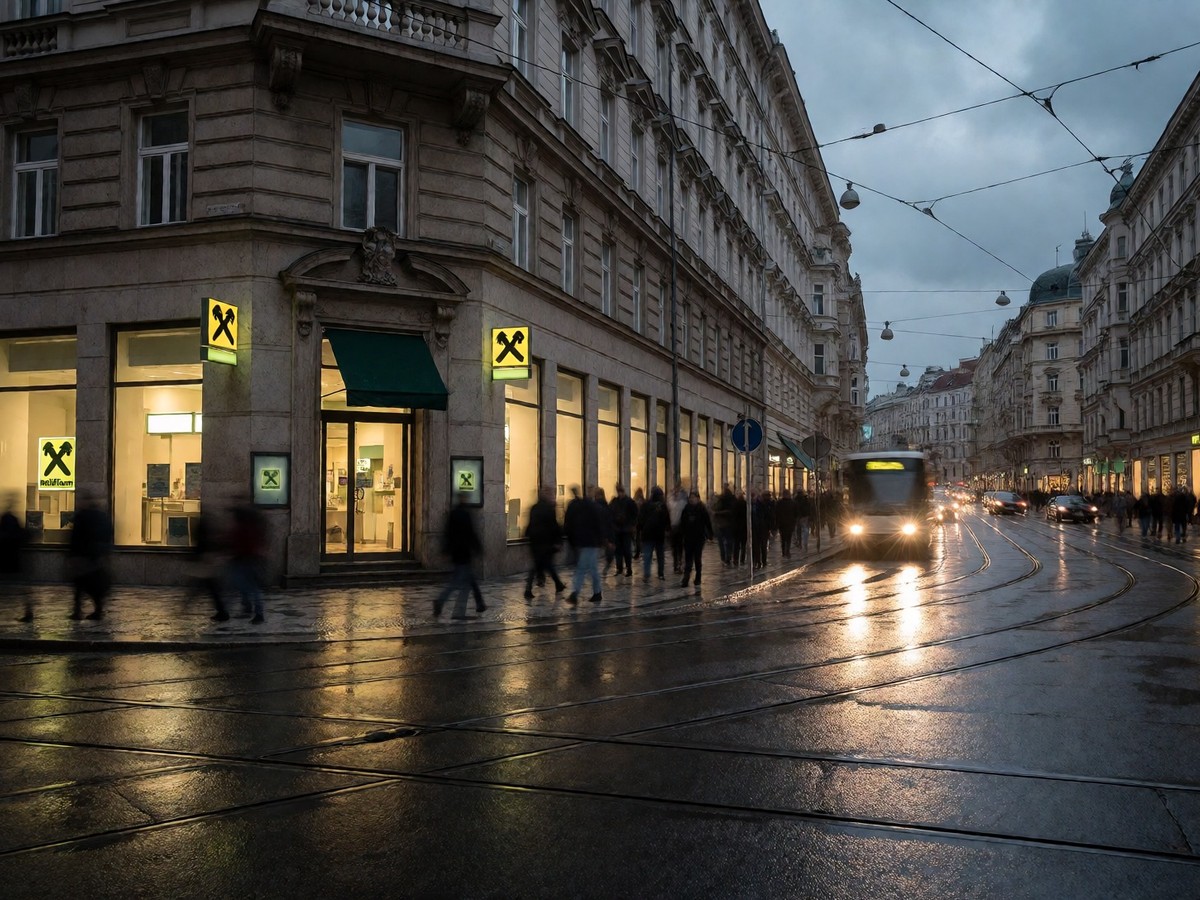
RBI’s renewed effort to sell its Russian unit
RBI’s attempt to sell its Russian unit faces a steep challenge because the bank’s high Russian profits make a low-value exit difficult. Austria’s Raiffeisen Bank International (RBI) will try again to sell its Russian bank, which earned €512mn in the first nine months of the year. This business supplied 31% of the group’s €1.64bn consolidated profit during that same period. RBI’s CEO Michael Hollerer told analysts that a run-down "remains our base-case" while the group seeks a way out. A sale under current Russian rules would fetch only about 5% of the bank’s real value, which means the €6.0bn in equity would yield about €300mn, a figure significantly lower than what the unit has earned this year. RBI has worked in Russia since 1996, and its presence grew after a 1987 joint venture and a recapitalization after the 1998 default. Because of these financial realities, the group has little reason to hurry the process.
OTP CEO Peter Csanyi told Forbes Hungary that the Hungarian lender previously looked for a buyer that had permission from Russian leadership and offered an acceptable price but found no such party. The same sums that keep RBI in Russia are keeping Hungary’s OTP there too. OTP now plans to keep its Russian bank, which made HUF106.4bn (€293mn) in 1H26. That profit represented 22% of the Hungarian bank’s net profit, though the amount exceeded OTP Core’s HUF70.1bn (€193mn) because Hungarian levies were booked in a lump sum in 1Q26. Spread evenly, OTP Core made HUF159.4bn (€439mn) in the first half. OTP’s Russian bank is smaller than RBI’s, with assets of HUF3.58 trillion (€9.9bn) compared to RBI’s €18.8bn. Performing consumer loans in the OTP unit rose 8% in the first half, adjusted for FX.
Shrinking operations and profit disputes
The Russian unit shows a shrinking presence despite its high net interest margin of 8.53% against 2.29% for the rest of the group. Customer loans excluding correspondent accounts fell to €2.2bn at the end of September from €2.6bn at the end of 2025 and €13.7bn in 2Q22. Deposits fell to €10.1bn from €10.3bn during the same period. Staff numbers dropped to 7,636 from 8,614 a year earlier, while outlets decreased to 62 from 68. The customer base also fell to 2.7mn from 2.9mn, and the loan book is down 63% from €6.0bn at the end of 2023.
RBI’s profit was hit by a €37mn loss in 3Q26 following a €300mn provision for a penalty claim tied to a €3.15bn lawsuit against Rasperia in Austria. This company was formerly linked to Oleg Deripaska. Hollerer, who took over as CEO on July 1, told Vienna’s business journalists’ club on October 5, "If I had an opportunity tomorrow to exit Russia, I would do it tomorrow." The European Central Bank previously told RBI to reduce Russian lending by up to 65% by 2026 from 3Q23. RBI’s capital plan assumes it walks away from Russia with nothing, which would result in a CET1 ratio of 15.4% compared to 18.0% if it kept the Russian assets. RBI’s next step involves an application to Austria’s Financial Market Authority to release Rasperia’s frozen Austrian assets, which include 28.5mn Strabag shares worth a net €2.6bn. The unit also posted a net loss of €86mn in 2025 after making an €873mn profit in 2024.
| Metric | Raiffeisenbank Russia (9M26) | OTP Bank Russia (1H26) |
|---|---|---|
| Net profit | €512mn | HUF106.4bn (€293mn) |
| Return on equity after tax | 13.5% | 41.8% |
| Share of group net profit | 31% | 22% |
| Assets | €18.8bn | HUF3.58 trillion (€9.9bn) |
| Equity | €6.0bn | HUF547.9bn (€1.51bn) |
| Customer deposits | €10.1bn | HUF2.90 trillion (€8.0bn) |
| Staff | 7,636 | 6,912 |