Symbols and the project context
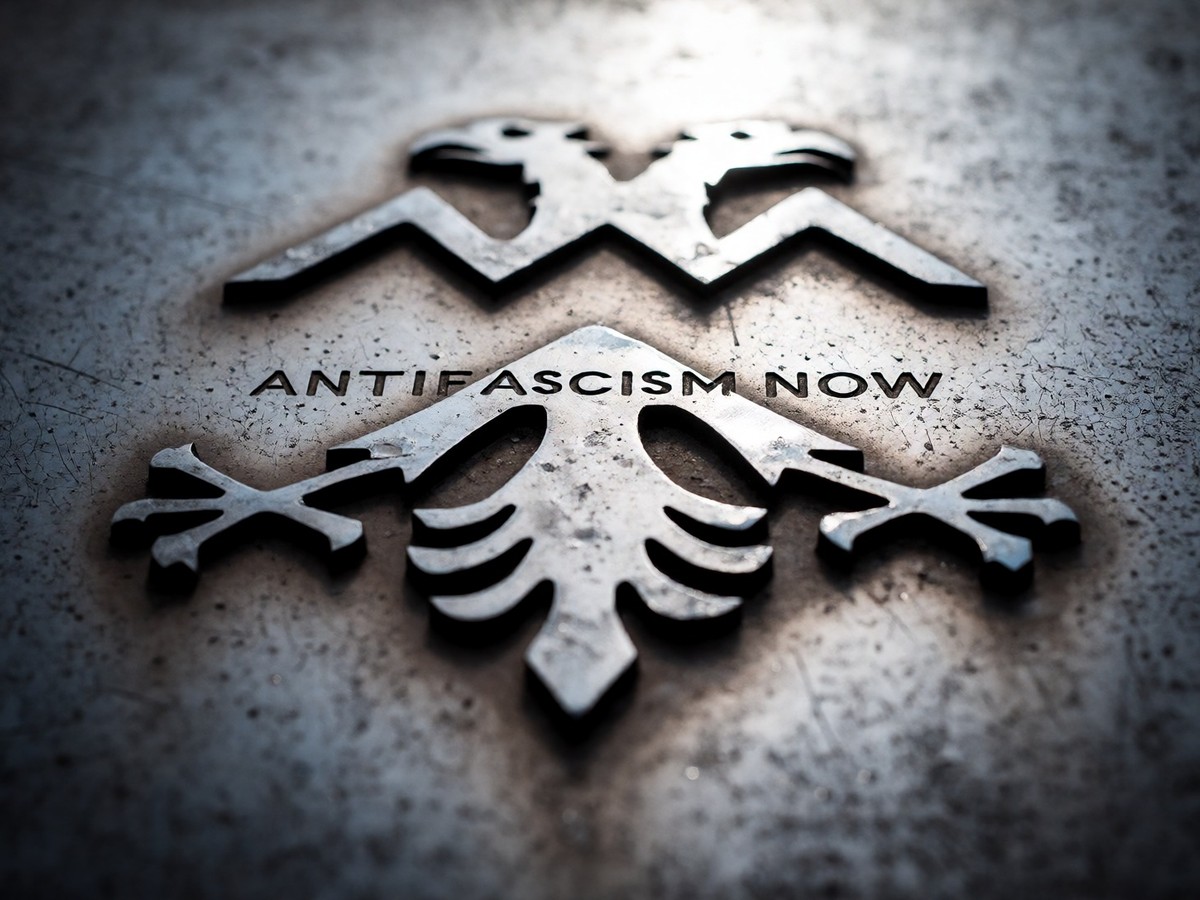
The Pristina chapter, titled A Bird with a Stone Wing, occupies the Prison of Ideals Museum and BIRN’s Reporting House to explore how political violence is remembered and how resistance can be redefined across different contexts. This Pristina installment forms part of "Antifascism: Now," a decentralized network of exhibitions spanning 13 locations that began this year and runs until 2029. Transnational Curator Julian Rieken says the project focuses on Eastern and Southeastern Europe and the former Yugoslavia to investigate how authoritarian narratives take hold and how people resist them. He notes that while the term fascism appears frequently, people lack a clear definition of the concept today. "The question is not: ‘Is there fascism?’ But ‘How much fascism is there?’ ‘Where is it?’ and ‘How can we work against it?’" Rieken asked. The exhibition uses the Prison of Ideals Museum and BIRN’s Reporting House to host its displays. At the entrance, Kemil Bekteshi redesigned the three-arrow antifascist symbol; the peaks of Kosovo’s mountains and the beak of a black bird represent the Albanian double-headed eagle. Kalas Liebfried, the project’s initiator and artistic director, says the prison location carries complex histories that speak to resistance and oppressed groups.
The Prison of Ideals Museum
The Prison of Ideals Museum, which ceased operating as a prison in 2015, contains installations regarding political repression and the consequences of war. This site once held political detainees during the socialist period and later when Belgrade ruled Kosovo under Slobodan Milosevic. In the former shaving room, Italian artist Stefano Romano presents "Songs for the Present Tense," a performance co-written by current women inmates from the correctional centre in Lipjan, 25 kilometers south of Pristina. These inmates speak about freedom, guilt, and the price of their actions. Other cells hold paintings by Vigan Nimani of Josip Broz Tito and video work by filmmaker Blerta Haziraj regarding the Antifascist Front of Women. Igor Grubic also displays a video installation about anti-LGBTQ+ sentiment in Serbia from 2001. Jonas Hoschl, working with the recherche-nord collective and Rashad, uses a TV in a prison cell to show journalists encountering far-right networks in a small German town. These works address how different regimes create various forms of oppression. Gazmend Ejupi, the curator of the Reporting House museum, says the project has the potential to be an art movement.
The Reporting House Museum
The Reporting House Museum shifts the focus to journalism and personal testimony. Artist Zef Shoshi created a painting for Armando Lulaj that depicts Albanian migrants arriving in Italy by ship during the exodus following the fall of communism in Albania in the early 1990s. Lulaj, who photographed the journalists documenting the arriving migrants, commissioned the work to be displayed above a human skull. The museum also presents "A Wall Divides Us," which contains letters from Kosovo Albanian activists Xheva Krasniqi-Lladrovci and Fehmi Lladrovci written between 1985 and 1990. These letters arrived during the rise of Milosevic and the subsequent repression of Kosovo Albanians. Lladrovci was imprisoned in the former Yugoslavia for his agitation for Albanian rights, and he and Krasniqi-Lladrovci had been engaged for just over a month when his detention began. Xheva Krasniqi-Lladrovci taught the elderly how to write to their imprisoned sons and advocated for girls’ education when Milosevic closed schools in 1990. Jeta Xharra, the executive director of BIRN Kosovo, said she found much passion and political energy within these letters, which the museum presents publicly for the first time in almost 40 years. The display includes her red engagement dress and the ammunition vest she wore when she died in 1998 while fighting Serbian security forces. Additionally, the museum contains a 40-minute interview with Esad Landzo, a former Celebici prison camp guard convicted by the ICTY for murder, torture, and the infliction of severe suffering. Croatian journalist Barbara Matejcic reports that Landzo is the only war criminal from the former Yugoslavia to show remorse by admitting guilt. The exhibition in Pristina runs until November 28.