The Father Stanislaw Staszic Museum in Hrubieszow received a collection of nearly 2,000-year-old items associated with the Vandals through an anonymous intermediary. Staff do not know who originally discovered the burial or its exact location, leaving the find’s circumstances largely a mystery. A local metal detectorist arranged the transfer after the objects were recovered from an agricultural field in Werbkowice several years ago. The donation follows a similar discovery in August when a second-century shield boss surfaced at a scrap metal yard near the town.
Weaponry and social status
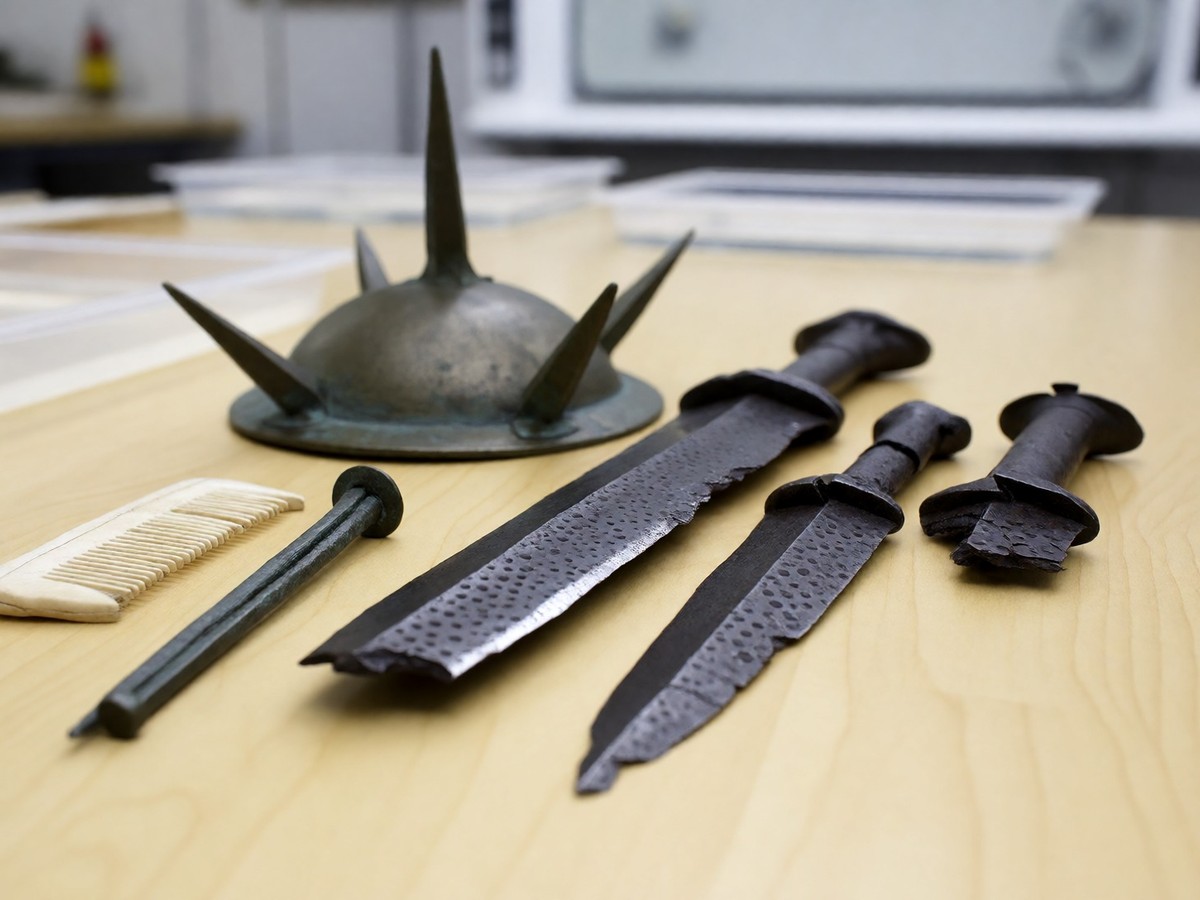
The collection includes a sword preserved in three pieces, two broken spearheads, a javelin head, and shield components. The deliberate breaking of weapons reflects Vandal funeral rituals where grave goods were damaged during the burning of the deceased. Iron components are particularly vulnerable due to centuries in the ground and exposure to high temperatures from the cremation practice. Other items include a spiked shield boss, a belt buckle, two spurs, a knife fragment, a bone comb, and a bronze fibula used to fasten a cloak. These objects indicate the owner held a high social position within the community.
Conservation and future excavations
Museum staff will undertake urgent conservation because the iron parts are fragile after long-term burial. They intend to verify the exact location through archaeological excavations most likely next summer. According to information gathered by the museum, strong indications suggest more similar burials exist in the area but have been disturbed by agricultural work. The Vandals, an ancient Germanic people, reached present-day Poland around the 3rd or 2nd century BC and lived there for several centuries. Researchers generally associate them with the Przeworsk culture, which flourished across parts of Poland during the Iron Age and Roman period. Around the turn of the 4th and 5th centuries AD, the expansion of the Huns drove the Vandals westwards into the declining Roman Empire. As they left Central Europe, Slavic populations gradually moved into the region over the following centuries.