Backlog and scale
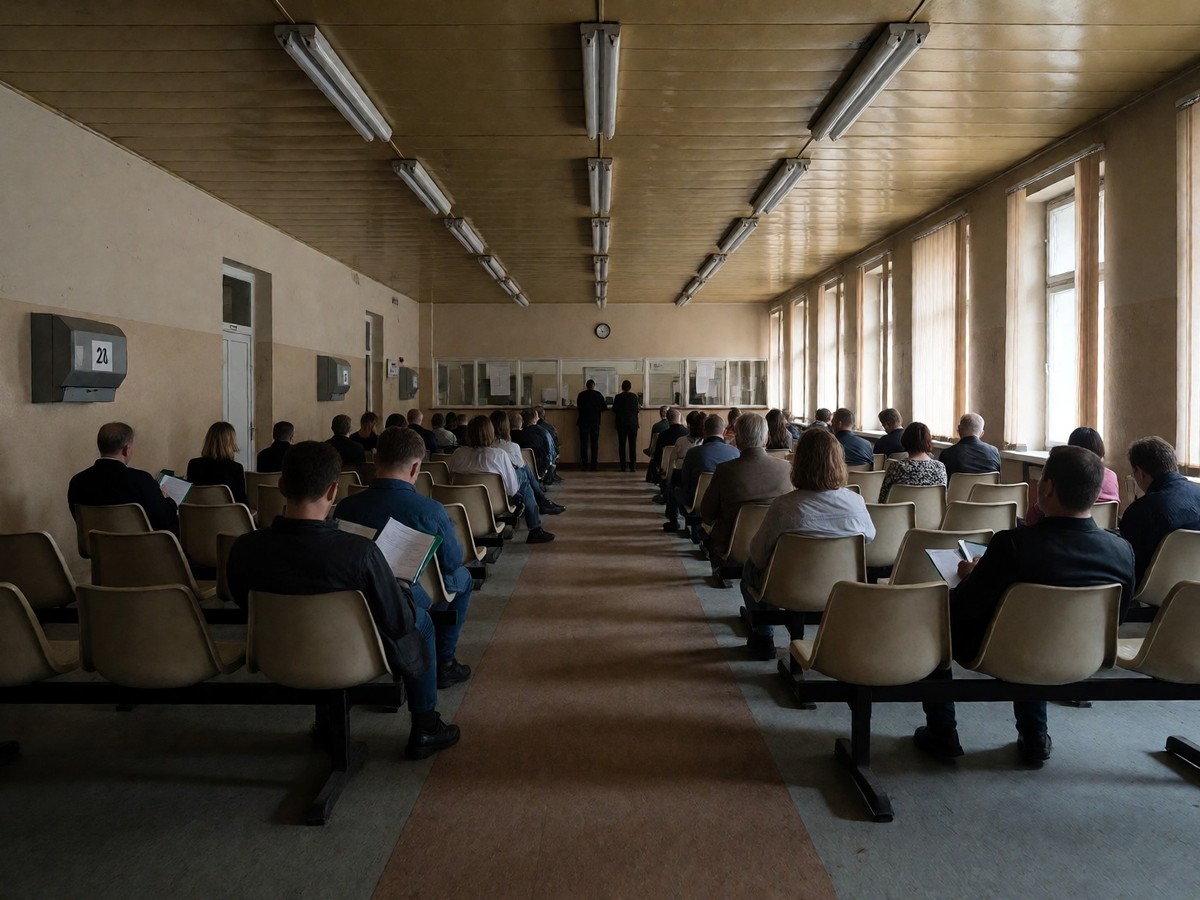
Mazovia voivodeship offices report average waiting times exceeding one year for residence permits. In Silesia, the average processing time for temporary residence reaches 658 days, while Malopolska reports 242 days. Necati, a Turkish software engineer in Gdansk, applied for long-term EU residency in December 2024. Since his EU Blue Card expired in February 2026, he cannot travel, visit family, conduct business, or perform cross-border financial transactions. He is one of hundreds of thousands of foreigners caught in an overwhelmed system. Over the last decade, Poland has transformed from a place people largely left in search of better opportunities into a destination for workers and refugees. During the first half of 2026, voivodeship offices granted 190,900 temporary residence permits, but applications continue to outpace processing capacity. The Mazovian Voivodeship Office handles more than 200,000 cases, and this results in an estimated workload of more than 3,500 applications per employee. Spokesperson Luiza Jurgiel-Zyla says that reassigning employees and organizing Saturday information sessions helped reduce some backlogs, but these actions were not sufficient to solve the problem. She also says that numerous inquiries and complaints from foreigners and legal representatives add to the office’s workload.
The legal impasse
Article 100d of the special act on assistance to Ukrainian citizens remains in force until March 4, 2027. This provision, which the previous Law and Justice government introduced and Donald Tusk’s coalition repeatedly extended, suspends deadlines for certain residence proceedings and restricts the legal remedies foreigners use to challenge delays. In May 2025, the Supreme Administrative Court refused to apply the provision to the period after June 2024 because it found the measure incompatible with the constitutional right to a fair hearing, but the Interior Ministry maintains that administrative offices must continue enforcing it. Marcin Kusy, director of the Migrants’ Rights Team at the Ombudsman’s Office, says the office received 1,161 complaints concerning residence legalisation since April 2022. Kusy says the uncertainty of long waits takes a toll on people’s sense of security and leads to a profound sense of disillusionment with the Polish state. He argues that foreigners should not have to bear the consequences of the state’s failure to make the system work. Vladimir Medvedev, co-founder of Glos Migranta, says that because the system is still not working, the measure was meant to be a temporary solution to help the system cope, but nothing has changed in 2026. Medvedev started his campaign by building a website and posting in Telegram groups to understand his wife’s predicament. The Lublin voivode has even described repeated requests for information on immigration proceedings as "harassment of the authority," while the Pomeranian office accused an applicant of attempting to divert staff from their duties.
Economic and social costs
Foreigners pay 21.5 billion zloty (5.5 billion euros) into the Polish pension system annually, accounting for 6.2 per cent of all contributions. This economic contribution does not prevent practical hardships, such as banks requiring valid residence documents before granting access to services. Some migrants have even faced blocked bank accounts because they did not receive a new residence permit in time, leading some to pay taxes and bills in cash at the post office. For those running businesses, being unable to open a bank account can make it impossible to operate. Medvedev, a software engineer from Minsk who became a Polish citizen in 2021, says his wife has waited for a temporary residence permit since October 2025, despite an initial decision deadline of January 2026. On August 24, about 300 people gathered outside the Mazovian Voivodeship Office in Warsaw to demand shorter waiting times. Medvedev notes that many participants feared deportation or confrontation with far-right groups, and he describes the psychological obstacle of protesting as significant for those from certain countries, even though the demonstration was legal and protected by police. The Kuyavian-Pomeranian office reports 43 employees managing 21,741 pending cases. Necati challenged the Pomeranian voivode’s inaction before the administrative court in Gdansk and won, but the voivode appealed the ruling to the Supreme Administrative Court. Necati expects the appeal to prolong his wait by at least another year, as officials advised him to apply for a second EU Blue Card, which could take 14 to 15 months.