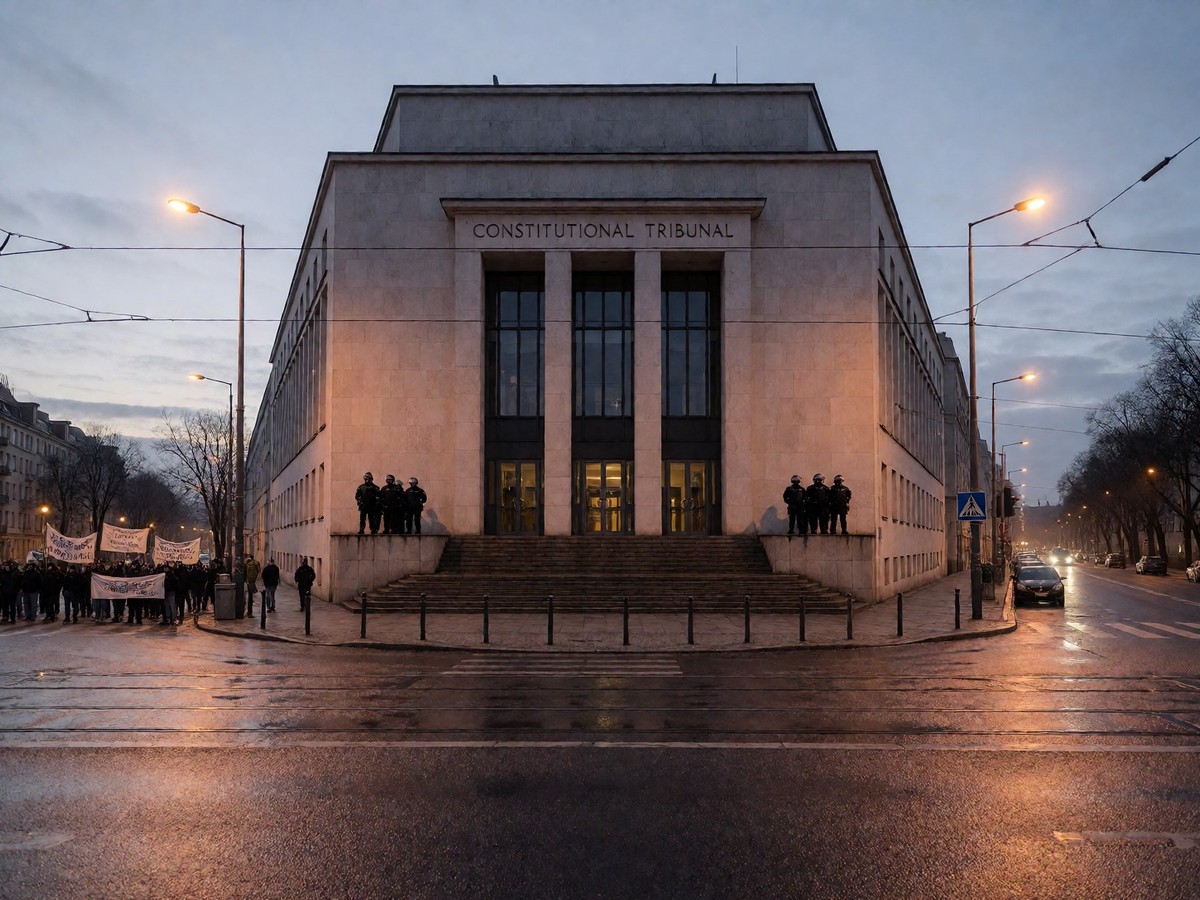
Escalation and confrontation at the building
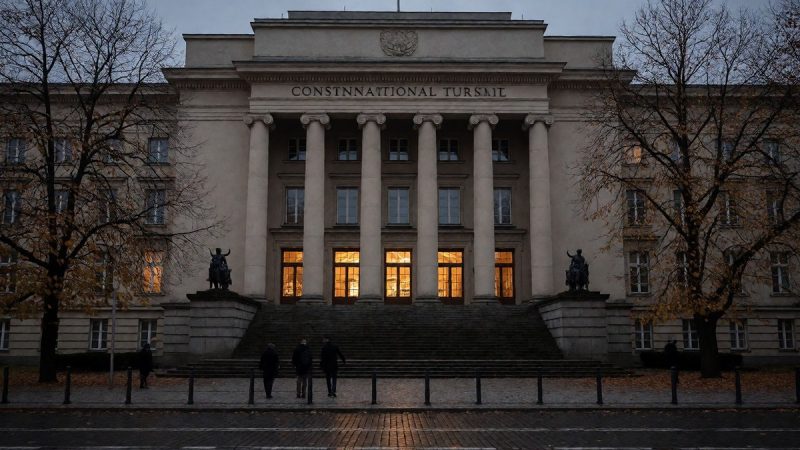
On Friday, five judges elected by the current Polish parliament attempted to assert authority over the Constitutional Tribunal, triggering a direct confrontation between rival judicial factions. Anna Korwin-Piotrowska, one of the five judges the president refused to swear in, announced she had suspended President Bogdan Swieczkowski and his deputy, Bartlomiej Sochanski, and declared herself the court’s acting head. The existing leadership rejected the move, leaving the institution with two competing claims to authority. President Karol Nawrocki cut short a state visit to Senegal, ordered his plane to turn around over Spain, and arrived at the Tribunal in the early hours of Saturday to support the existing leadership. "Last night, Poland’s constitutional order was violated, and a constitutional state institution was forcibly taken over," Nawrocki said in a statement released after 05:00 on Saturday morning. He demanded that police withdraw from the premises and called for emergency consultations with parliamentary party leaders. Polish anti-riot police stand guard on the grounds as protesters gather. The Helsinki Foundation for Human Rights called the escalation "extremely harmful," and the European Commission weighed in on Saturday to back the Polish parliament’s authority to appoint Tribunal judges. US Ambassador Tom Rose warned that the crowds outside the court risk making a volatile situation worse, and he added that Washington does not intend to interfere in Poland’s domestic affairs.
Judicial immunity and political pressure
The struggle for control over the Constitutional Tribunal is a total breakdown of judicial authority. Justice Minister Waldemar Zurek sought to strip Swieczkowski and Sochanski of judicial immunity to allow for potential criminal charges regarding the alleged obstruction of the Tribunal’s work. Prime Minister Donald Tusk defended the intervention, arguing that "the Tribunal, in the form imposed by PiS, was not a real court." Tusk compared the situation to a thief who steals an elderly woman’s handbag and then complains of violence when caught. This conflict stems from a decade-long dispute regarding contested appointments made in 2015 by both the outgoing centrist government and its right-wing successor. During the eight years that Law and Justice held power, major reforms to the judiciary brought Poland into conflict with European institutions. While the Venice Commission concluded in October that the president cannot use his role to obstruct duly elected judges, the Tusk-led government continues to refuse to recognize the current Tribunal. The government has attempted to change the system through legislation, but opposition-aligned presidents have blocked those efforts. On Tuesday, November 3, Korwin-Piotrowska, one of the five judges elected by the current parliamentary majority but prevented from taking up duties by the president, has called a general assembly of Tribunal judges to approve the court’s proposed budget for 2027. This meeting faces uncertainty because Swieczkowski continues to dispute her authority. To resolve the impasse, parties ranging from the left-wing Razem to the far-right Confederation have proposed a constitutional reset to replace all sitting judges through a cross-party agreement. With parliamentary elections scheduled for 2027, the Tusk coalition faces pressure to fulfill a campaign promise to restore judicial independence. In August, Tusk stated he was determined to ensure newly elected judges enter the building, saying "our judges will enter that building."