Pentagon postpones bomber drone phase
The Pentagon announced it was pushing back the next phase of the competition, Phase 2.5, which focuses on bomber drones, to November because obstacles facing Ukrainian companies are serious enough to force a delay in the procurement schedule. This delay marks the first time the program changed its timeline to meet the needs of Ukrainian firms. About half of the 17 companies invited to compete for $30 million in bomber drone contracts have Ukrainian origins. These companies, including UFORCE, Gurzuf Defence, Skycutter-Skyfall, Meta Bureau, Grim Tech, and F-Drones, struggle with shipping times and visa approval processes.
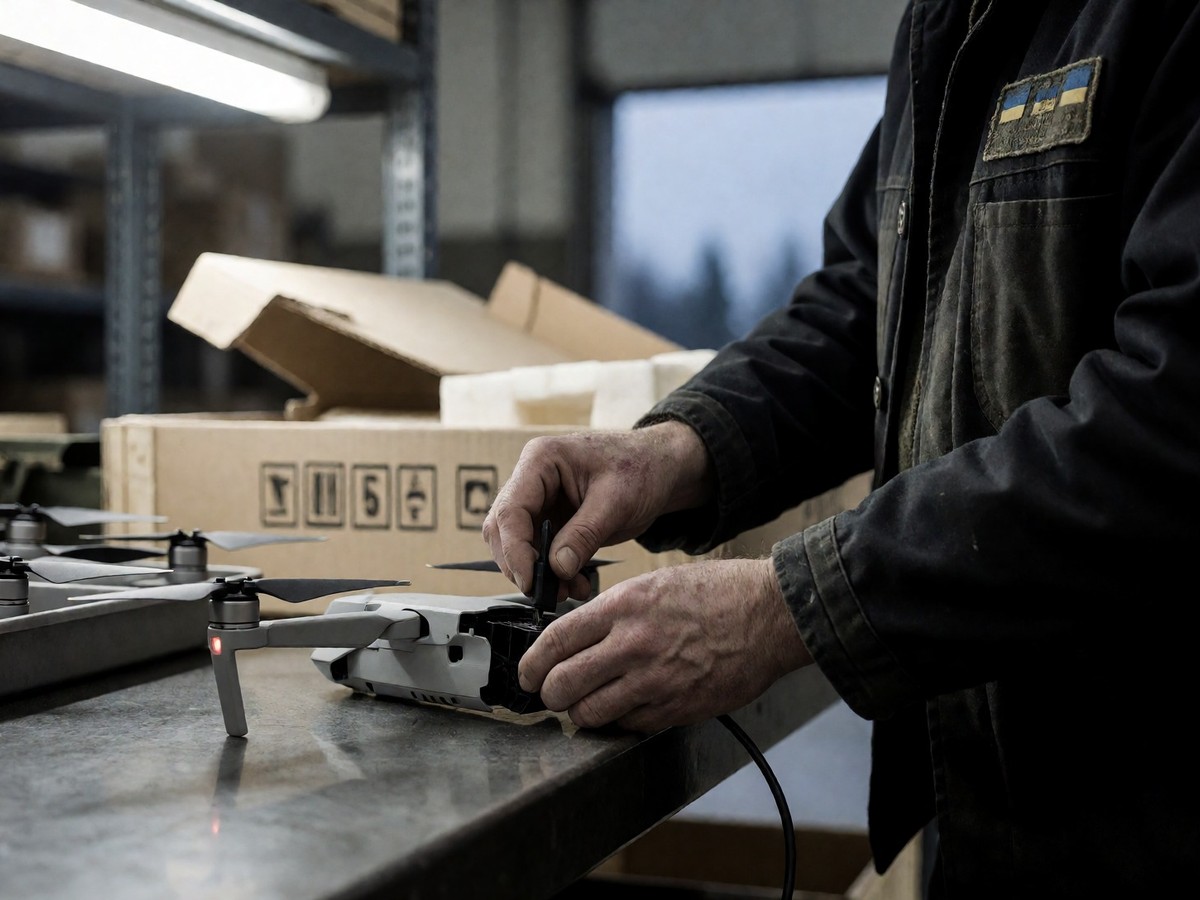
One Ukrainian company, Stellarion, experienced shipping delays that left its head of exports needing a U-Haul in Michigan to move drones to a testing site in Camp Grayling. While US companies had weeks to prepare, Stellarion’s drones arrived the morning of the test due to Ukrainian export controls and shipping times. Shipping drones to the US takes two to three weeks after the weeks-long Ukrainian export approval process. The US Embassy in Kyiv does not process business visas, so Ukrainian applicants must travel to other locations, which can take weeks or months.
The Pentagon told the Kyiv Independent that the decision to delay Phase 2.5 included a recognition of the time-consuming U.S. visa processes. Gurzuf Defence notified the Pentagon of its withdrawal from Phase 2.5, stating it would not be ready until December. As of October 13, four companies declined to audition drones at Camp Grayling, and two of those four were Ukrainian. Skycutter-Skyfall, which placed first in Phase I and received an order for 2,560 FPV drones, was the last of 11 companies to deliver its contract. The DDP is the largest drone procurement initiative in the world outside Russia and Ukraine. Defense Secretary Pete Hegseth initiated the program in a July 2025 memorandum. The program aims to procure 340,000 drones according to a December 2025 Request for Solutions. The Pentagon funds the program with $1.1 billion and has asked for $54 billion for drone warfare in its Fiscal Year 2027 request. Unmanned bombers have assisted in logistics, such as an instance in July 2025 where a drone airlifted a 42-kg E-bike to a wounded soldier.
Ukrainian drones inflict mass Russian casualties
Ukrainian drones have inflicted massive casualties on Russian forces since the start of 2026. The Ukrainian Defense Ministry reported on October 27 that its forces killed or severely wounded 302,000 Russian servicemen using drones since January. The Delta combat system records each defeat, and the Brave1 defense innovation cluster verifies it. In September, drones caused 32,739 of the 46,230 Russian casualties reported by the Ukrainian General Staff, accounting for 70% of those casualties.
| Metric | Data |
|---|---|
| Total Russian casualties by Ukrainian drones (since Jan 2026) | 302,000 |
| September drone-inflicted Russian casualties | 32,739 |
| Percentage of September casualties from drones | 70% |
| Peak monthly drone-inflicted Russian casualties (March) | 34,000 |
The prevalence of drones has changed battlefield movement. Viktor Trehubov, a Joint Forces Task Force spokesperson, said on September 20 that Russia has largely stopped using tanks for assault operations because drones have a 20-kilometer kill zone. Drones have replaced many tank roles because a tank driving near the front becomes an easy target for cheap drones. In March, Ukrainian drones killed or wounded almost 34,000 soldiers, which was the highest monthly number recorded.
Private companies build defense capabilities
Private companies in Ukraine are now building their own defense capabilities to protect assets. Nova Poshta, a private courier company with 15,817 branches and 34,000 employees, has formed a private air defense force and destroyed Shahed drones. Co-owner Vyacheslav Klymov said at the Kyiv International Economic Forum on October 26 that the company has destroyed Shahed drones. Nova Poshta quadrupled its net profit compared with last year, according to financial reports published on April 27.
To remain competitive in the US market, Ukrainian manufacturers are investing in American production sites. General Cherry partnered with Wilcox Industries in March to produce hardware in New Hampshire. F-Drones announced a production project in Ohio in June. These companies want to secure future American contracts as domestic wartime demand changes. A Grim Tech representative said on condition of anonymity that setting up in the U.S. involves a high cost and a big investment.