Collaborative drone development and testing
The C4ADS report shows Russia’s defense cooperation with China extends far beyond imports of dual-use goods, involving deep sharing of design technology and research. Russian manufacturer Science and Production Association SPLAV, which faces international sanctions, sent technical documents for a "reconnaissance rocket" to Norinco in 2014, 2015, and April 2022. This rocket, likely the 9M534 which releases a drone in mid-flight, resembles China’s Feilong 60A loitering drone unveiled in March 2025 and the Sky Eye drone tested in June 2025. C4ADS believes the Russian technical documents helped speed up Norinco’s work on both systems because the Chinese and Russian designs resemble each other closely. Norinco, which faces U.S. sanctions and Japanese and Taiwanese export controls, used the Russian designs to develop its loitering and cannon-fired drones. The Russian state-owned Central Aerohydrodynamic Institute (TsAGI), which is under multiple Western sanctions, tested Chinese scale aircraft models in its wind tunnels and returned them to Norinco with the test data at least nine times between 2022 and 2024.
Joint research between Russian and Chinese scientists has increased significantly. Researchers co-authored 86 academic papers on unmanned systems between 2022 and 2026, averaging 17 papers per year, compared to only three papers per year between 2009 and 2021. Evgeny Neretin, a department head at the Moscow Aviation Institute, co-authored papers with Chinese defense laboratories regarding algorithms for autonomous drone combat and for keeping several drones in formation while they track targets. In June 2025, the Chinese government approved a joint educational institute between the sanctioned Moscow Aviation Institute and Northwestern Polytechnical University. This collaboration follows years of Chinese officers and arms industry staff visiting Russia to negotiate military deals.
Industrial production and electronics shifts
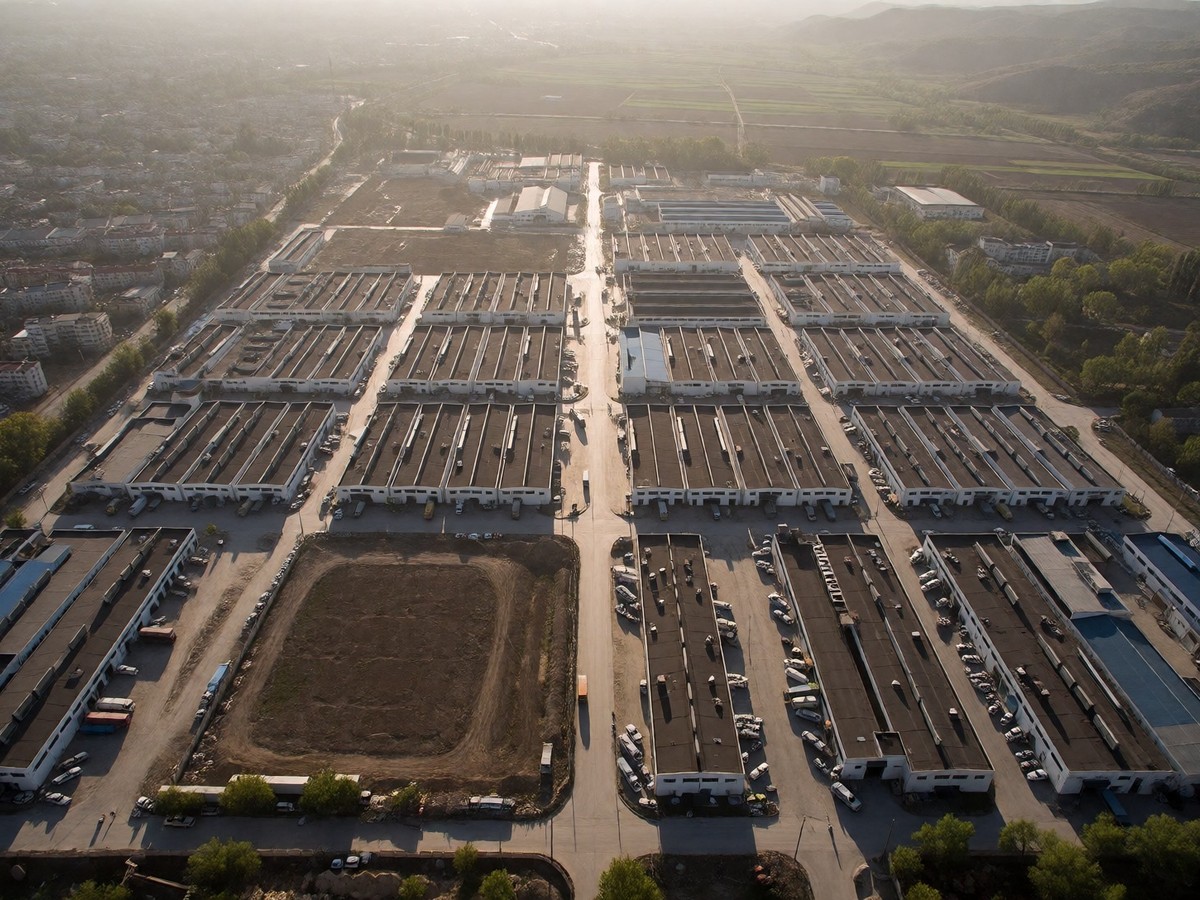
Sanctioned Russian manufacturers are moving production to China to bypass Western export controls. Stankomashstroy plans to move production of advanced five-axis machine tools to an industrial park in China’s Shaanxi province. In 2025, this company sold equipment to the Votkinsk Plant, which builds ballistic missiles, and to the Izhevsk Electromechanical Plant Kupol, which produces air defense systems and long-range attack drones. Machine tools shipped from China fueled the expansion of the Votkinsk Plant.
Russia also relies on China to maintain its military microelectronics supply. The sanctioned Russian chipmaker Element established four subsidiaries in China in 2025 and began assembling chipsets there. In 2026, Element bought power electronics intellectual property from the Chinese contractor Shijiazhuang Tonhe Electronics to help produce military-grade microelectronics despite Western sanctions. This move fits a Kremlin initiative to build up Russia’s chip industry. Chinese and Hong Kong companies supplied parts to the maker of Russia’s Lancet attack drones and remain the primary channel for Western chips used in Russian weapons. These findings follow earlier Kyiv Independent investigations into China’s role as Moscow’s primary trader and provider of dual-use equipment. According to leaked Rostec documents, China bought Russian airborne combat vehicles, ammunition, and parachute systems after the invasion began.