Stalled Brussels summit
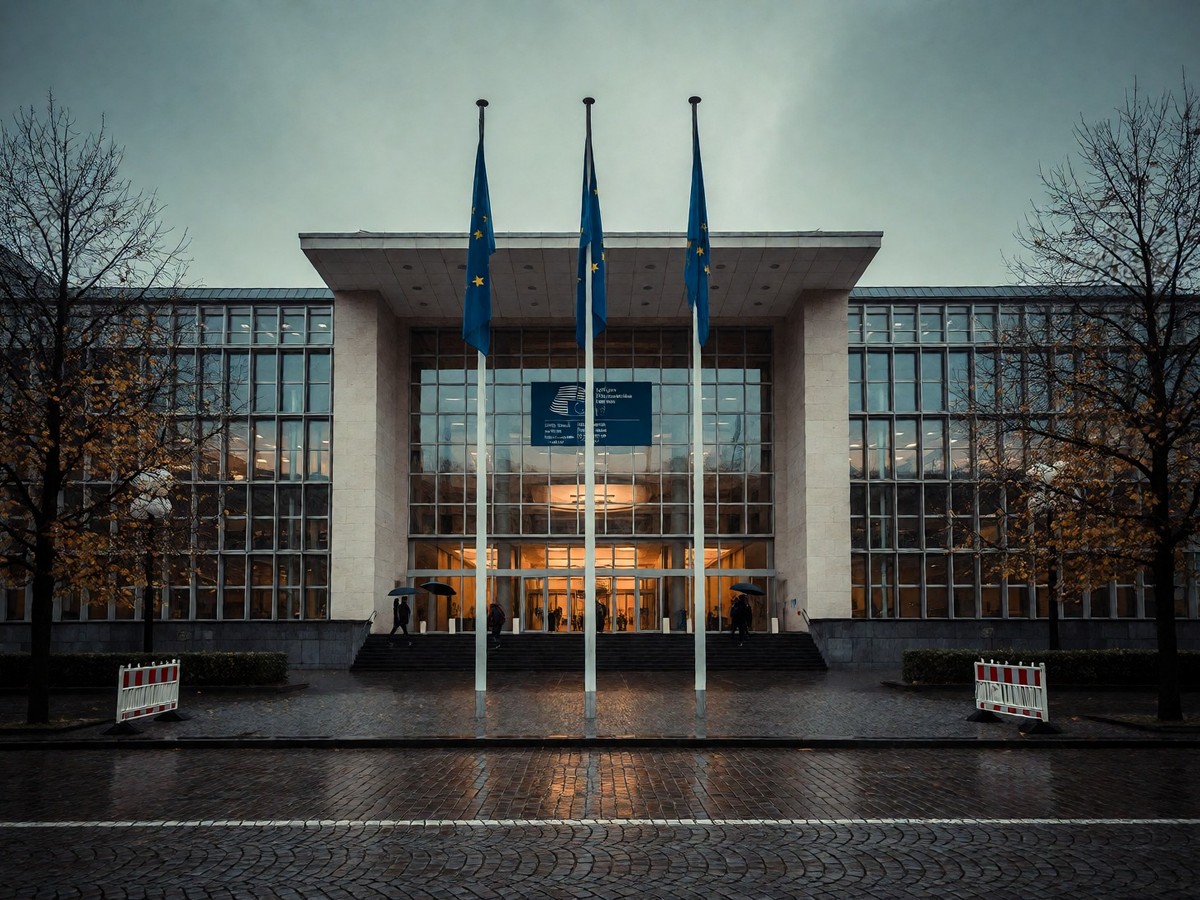
The Brussels summit on November 26 and 27 failed to advance financial support for Ukraine or the next multi-year budget, as four countries blocked a major loan. I find the deadlock over the €45 billion loan proposal from the European Commission most striking, as it reveals a deep rift in how the bloc handles war costs. While 24 member states support the proposal, Czechia, Hungary, and Slovakia remain holdouts seeking to avoid military spending. Costa included Bulgaria among the 24 states that supported the proposal, though Sofia will participate only on the non-military component, with a focus on regions with its national minority. This disagreement prevents the EU from filling the projected €70 billion hole in Kyiv’s 2027 budget.
Holdouts and the "blank bullets" argument
The breakdown of the loan explains why some nations refuse to participate. The specific distribution of funds determines whether a country can support Kyiv without funding military operations.
| Loan Component | Amount |
|---|---|
| Defense Needs | €25 billion |
| Wider Budgetary Support | €20 billion |
| Total Proposed Loan | €45 billion |
Slovak Prime Minister Robert Fico calls the Commission’s attempt to split the loan a "kind of trick on the part of the Commission." He argues that because the loan requires repayment from Ukraine only after Russia pays war reparations, the money acts as a grant rather than a loan. Fico compared the situation to a scenario where "those who shoot are given blank bullets, but one of them has a live round." Czech Prime Minister Andrej Babis expressed concern about long-term costs, asking how many years the EU will pay Ukraine €135 billion annually. I think Babis’s fear of spiraling costs reflects the growing exhaustion among members who must balance Ukraine’s €70 billion 2027 budget gap against their own fiscal constraints. Fico also said he is not "entirely convinced that giving money to Ukraine is the right thing to do" due to corruption and "shocking estimates of how much of this money is actually stolen."
The disagreement follows a previous €90 billion loan for Kyiv that was approved in April. To cover the full €70 billion gap in Kyiv’s 2027 budget, the EU expects the UK, Norway, Canada, and Japan to provide the remaining funds. The Commission estimates the cost of servicing these loans at between €45 billion and €55 billion over the 2028-2034 period. Hungarian Prime Minister Peter Magyar expressed uncertainty about how a split between military and civilian spending could work, though he noted there should be solidarity with a country at war.
Budget battles and fiscal penalties
The struggle over Ukraine links directly to the fight over the 2028-2034 Multiannual Financial Framework. German Chancellor Friedrich Merz threatened the rebelling Central European states with what he called "blackmail" if they do not agree to share the costs of the loan, though Czech Prime Minister Andrej Babis dismissed Merz’s attempt to force this position through as "completely absurd." I think the refusal of Hungary, Slovakia, and Czechia to join the military strand reveals a fundamental disagreement over whether the EU can afford to be both a lender and a guarantor. Twelve member states currently exceed the EU’s 3% deficit limit, and Bulgaria faces a penalty of up to 0.02% of its GDP because it failed to act on its 5.0% deficit. Bulgarian Prime Minister Rumen Radev said at the summit that Sofia would not provide money for weapons or for war in Ukraine.
I think the refusal of Hungary, Slovakia, and Czechia to join the military strand reveals a fundamental disagreement over whether the EU can afford to be both a lender and a guarantor. Twelve member states currently exceed the EU’s 3% deficit limit, and Bulgaria faces a penalty of up to 0.02% of its GDP because it failed to act on its 5.0% deficit. Bulgarian Prime Minister Rumen Radev said at the summit that Sofia would not provide money for weapons or for war in Ukraine. This stance follows projections that twelve member states will breach the 3% limit this year. Another 16 member states are expected to breach the limit by 2028.
The fight over the budget includes the "frugals," such as Germany and the Netherlands, who want deeper cuts to agriculture and regional aid to prioritize defense and technology. Agriculture typically consumes one third of the EU’s spending. The 17 "Friends of Cohesion" countries in the south and east want to protect traditional envelopes. Twelve member states will breach the 3% deficit limit this year, and 16 will breach it by 2028. I find the irony of the situation sharp: the Commission demands members cut spending while simultaneously asking them to borrow more to fund the war.
French President Emmanuel Macron stated that abandoning Kyiv would put Europe’s security at risk, though support for Ukraine has become an election issue in France where candidate Teddy Riner said the war was "not our war." Macron also works against a deadline because several member states hold elections next year, including France’s presidential vote where Marine Le Pen has pledged to cap France’s EU contribution at €5 billion a year and cut support for Ukraine completely. Germany’s deficit sits at 4.1%, which allowed it to escape a procedure that the Commission says is necessary for those over the threshold. The summit also settled one issue: Euro area members agreed to recommend Pablo Hernandez de Cos as the next president of the European Central Bank.