Defense procurement and security
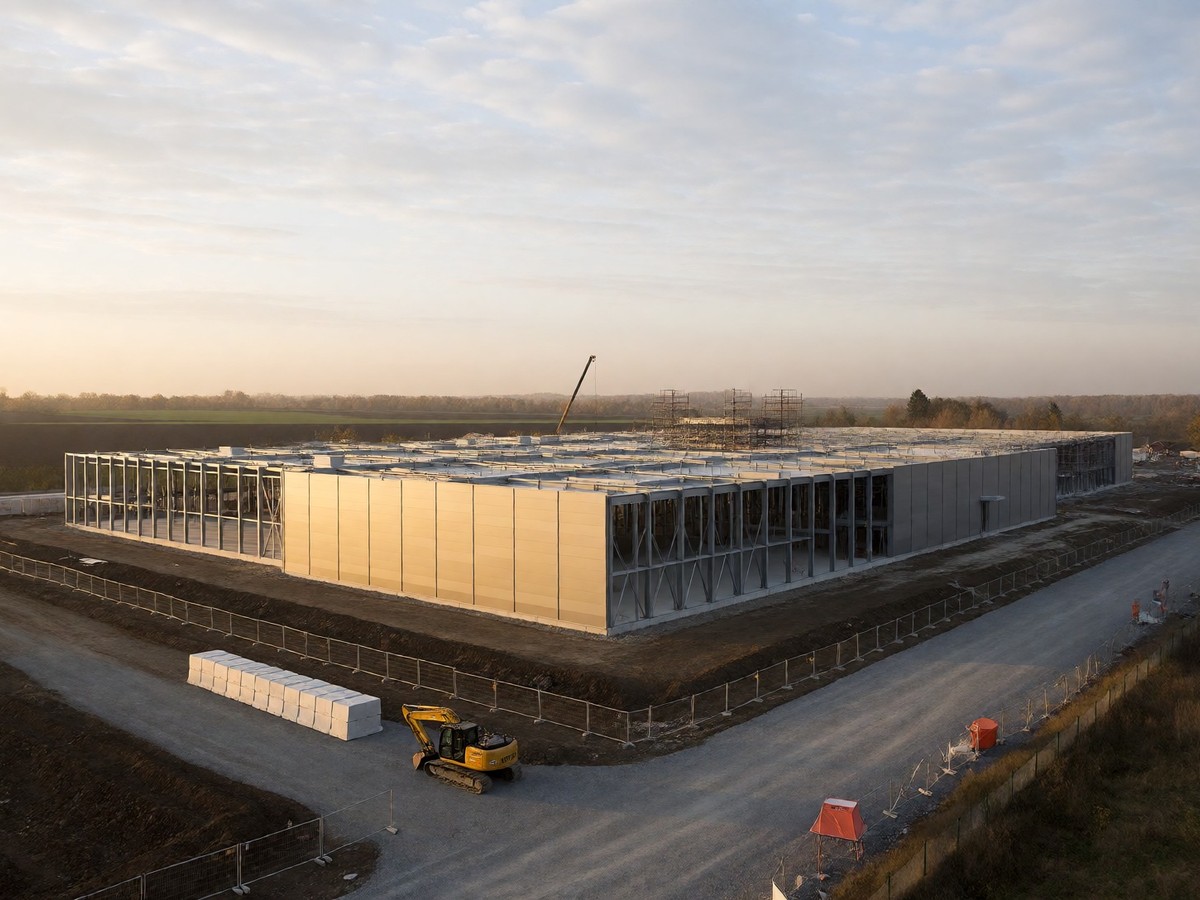
Poland is acquiring 1000 K2 Black Panther tanks, 290 K239 Chunmoo rocket launchers, and 364 K9 Thunder self-propelled howitzers through a South Korean acquisition programme. Romania and Estonia expect more deliveries of South Korean artillery pieces, and Poland shows interest in the Korean KF-21 Boramae semi-stealth fighter airplane. Hanwha Aerospace started work on its Armoured Vehicle Centre of Excellence in Romania in early 2026. I find the current European Union framework for these connections inefficient. Canada holds a dedicated agreement for industrial involvement in the Security Action for Europe (SAFE) programme, but South Korea relies on a more restrictive Security and Defence Partnership. A working group between the EU and South Korea met in September 2026 to improve satellite linkage for the IRIS2 constellation, which starts deployment in 2029. This shared defence ecosystem allows for a reciprocal transfer of hardware and technology, yet the development of such a system remains held back by South Korea’s narrow status within the SAFE programme. South Korea has become a major producer and a significant supplier of heavy armaments in Eastern Europe. Integration with the IRIS2 satellite constellation, which will occupy Earth’s low and medium orbits, should be a priority to increase autonomy in outer space.
Geopolitical pressure in the Pacific
Russia carried out missile tests around the Northern Territories in August 2026. The Soviet Union occupied these islands off the coast of Hokkaido in 1945. Vladimir Putin visited the territories in August. In September, a monument appeared in Khabarovsk showing a Soviet soldier smashing a boundary stone from the Imperial Japan era. The monument shows a chrysanthemum crest, a symbol that predates Imperial Japan but which the militarist state heavily appropriated. The Japanese government admitted in July that it faces difficulty dealing with Russian espionage activities. Sanseito, a far-right party founded in 2020, shares talking points with European sovereigntists and uses the Moscow-based outlet Sputnik for amplification. Russia has also increased pressure on Japan by modernizing its Pacific Fleet in recent months. Japan has developed an advanced space industry and a high-end technology defence sector with capabilities in precision manufacturing, radars, sensors, and communication relays. I find the combination of Russian military activity and Sanseito’s ideological alignment with Moscow to be a blatant attempt to undermine Japanese freedom.
Cultural and scientific integration
Na Hong-jin released his film Hope in Romania this September, and the Polish theatrical premiere followed in October. The production used Romanian specialists and shot scenes in the Retezat and Fagaras Mountains. Canada has been a full member of the Eurimages support fund since 2022. In May 2026, the fourth EU-Japan Digital Partnership Council announced that information exchanges on video game and audiovisual strategies will become recurrent. The European Commission’s proposed AgoraEU framework for 2028 to 2034 includes a MEDIA+ strand to support immersive storytelling, particularly as Warsaw and Bucharest serve as hubs for the video games industry. The European Commission has recognized the need for bolstering the immersive storytelling potential of the video games industry. South Korea joined Horizon Europe’s Pillar II in 2025, and Japan joined in July 2026. Taiwan participates in Horizon Europe projects through a domestic funding mechanism but has not joined as a member. The EU-Korea Protocol on Cultural Cooperation discusses performing arts at annual meetings, but cooperation remains project-based and episodic. I believe the Erasmus+ Programme needs a redesign to allow South Korea, Japan, and Taiwan to participate on equal footing with EU members. Ursula von der Leyen mentioned Canada’s prospective status as an Associate Member during her 2026 State of the Union speech. By choosing a new name to reflect a more cosmopolitan youth mobility scheme, the EU can modify the full access requirements to allow these distant democracies to build human relationships.