Military threats in the Black Sea changed Ukrainian export patterns this year. In June 2026, the European Commission reported that 90 per cent of Ukraine’s cereals, oilseeds, and related products exports went through Black Sea ports, leaving ten per cent for the EU Solidarity Lanes. By August, these proportions reversed, with 90 per cent using Solidarity Lanes and only ten per cent using Black Sea ports. October attacks on merchant vessels near Romanian and Bulgarian coasts, followed by November reports of strikes on ships in the Black Sea, drove this shift.
The Sulina route dominance
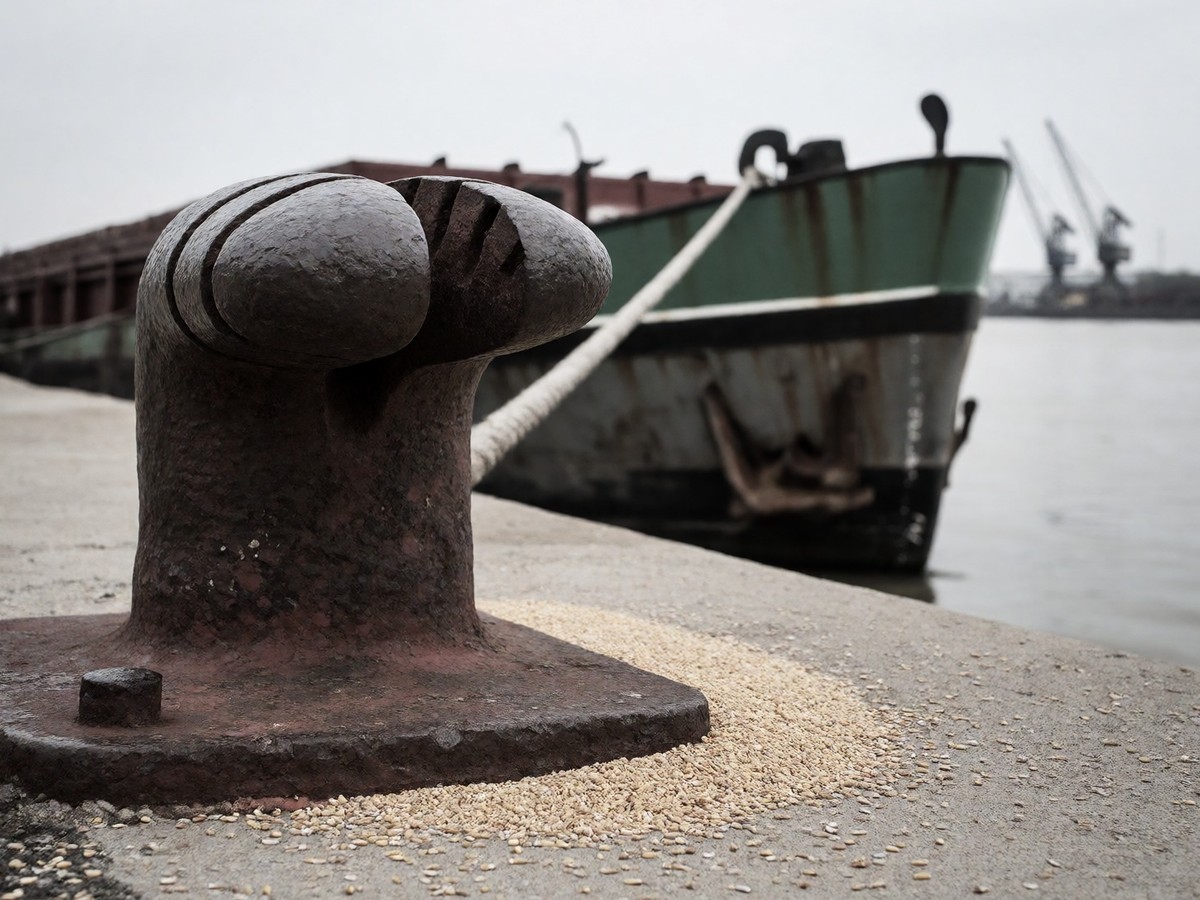
The port of Izmail on the Danube serves as a starting point for maize and wheat. Exporters use river-sea coasters through the Ukrainian Bystre Canal or Romania’s Sulina branch, or they use barges to reach Constanta via the Danube-Black Sea Canal. A model analyzing 302,718 combinations found Sulina was the cheapest option in 95.13 per cent of cases. Constanta was cheapest in 3.40 per cent of cases, while Bystre led in 1.47 per cent. Weighting by shipment size raises Constanta’s share to 3.79 per cent.
Sulina wins because its deeper fairway allows larger vessels. The model uses a coaster with 5,800 tonnes capacity for Sulina compared to 3,700 tonnes for the Bystre Canal. Under moderate navigational conditions, the allowable cargo mass per voyage is 5,220 tonnes for Sulina and 2,960 tonnes for Bystre. I find the reliance on these specific water levels makes the logistics fragile.
| Route Option | Cheapest Share (Baseline) | Cheapest Share (Weighted) |
|---|---|---|
| Sulina Branch | 95.13% | 95.13% |
| Constanta | 3.40% | 3.79% |
| Bystre Canal | 1.47% | 1.47% |
Economic shifts and logistical traps
Constanta becomes competitive when economies of scale offset barge costs and transhipment fees. For a 17,425 tonne wheat shipment to Nador, Morocco, Constanta costs 39.77 euros per tonne, whereas Sulina costs 44.90 euros. However, adding just 25 tonnes to that shipment forces a move to a larger Supramax vessel. This jump causes the Constanta cost to rise to 52.75 euros per tonne, making Sulina the cheaper choice at 44.87 euros.
Destination ports also dictate costs. Constanta is the cheapest route for Tarragona, Spain, in 22.21 per cent of combinations, but it is never the most competitive for Alexandria, Egypt, or Poti, Georgia. The distance to Tarragona is 1,437 kilometres longer than to Alexandria, which helps offset extra costs. For Nador, port constraints rule out Panamax and Post-Panamax bulk carriers. I view the sudden price spikes from small weight changes as a major disadvantage for exporters using Constanta.