The registration mismatch
In Poland, battery electric vehicle registrations fell 3% to under 25,000 despite a 10% increase in overall car registrations. This regression contradicts the fact that battery electric vehicles account for 24% of new registrations across Europe. While the European average is 24%, the share in Poland sits at 5% and Croatia sees only 4%, which exposes the massive disparity between production hubs and local adoption. In Czechia, the home of Skoda, combustion engines accounted for 62% of new car registrations, compared to 28% across Europe. I find it nonsensical that the region building Europe’s electric fleet remains so reliant on combustion engines. Slovenia leads the region with 21% of new registrations for the first nine months of 2026, followed by Latvia with 11%, Bulgaria and Hungary with 10%, Romania and Estonia with 8%, and Czechia and Slovakia with 7%.
| Country | BEV New Registration Share (Jan-Sept 2026) |
|---|---|
| Slovenia | 21% |
| Latvia | 11% |
| Bulgaria | 10% |
| Hungary | 10% |
| Romania | 8% |
| Estonia | 8% |
| Czechia | 7% |
| Slovakia | 7% |
In Poland, fully electric vehicles represented 6.1% of passenger car registrations in September, down from 8.9% a year earlier, according to Samar, even as plug-in hybrid sales almost doubled. In Romania, where the overall car market contracted by 10.1% from January to October, electric vehicle registrations increased 45.6% to 9,384, according to carmakers’ association ACAROM.
The manufacturing boom
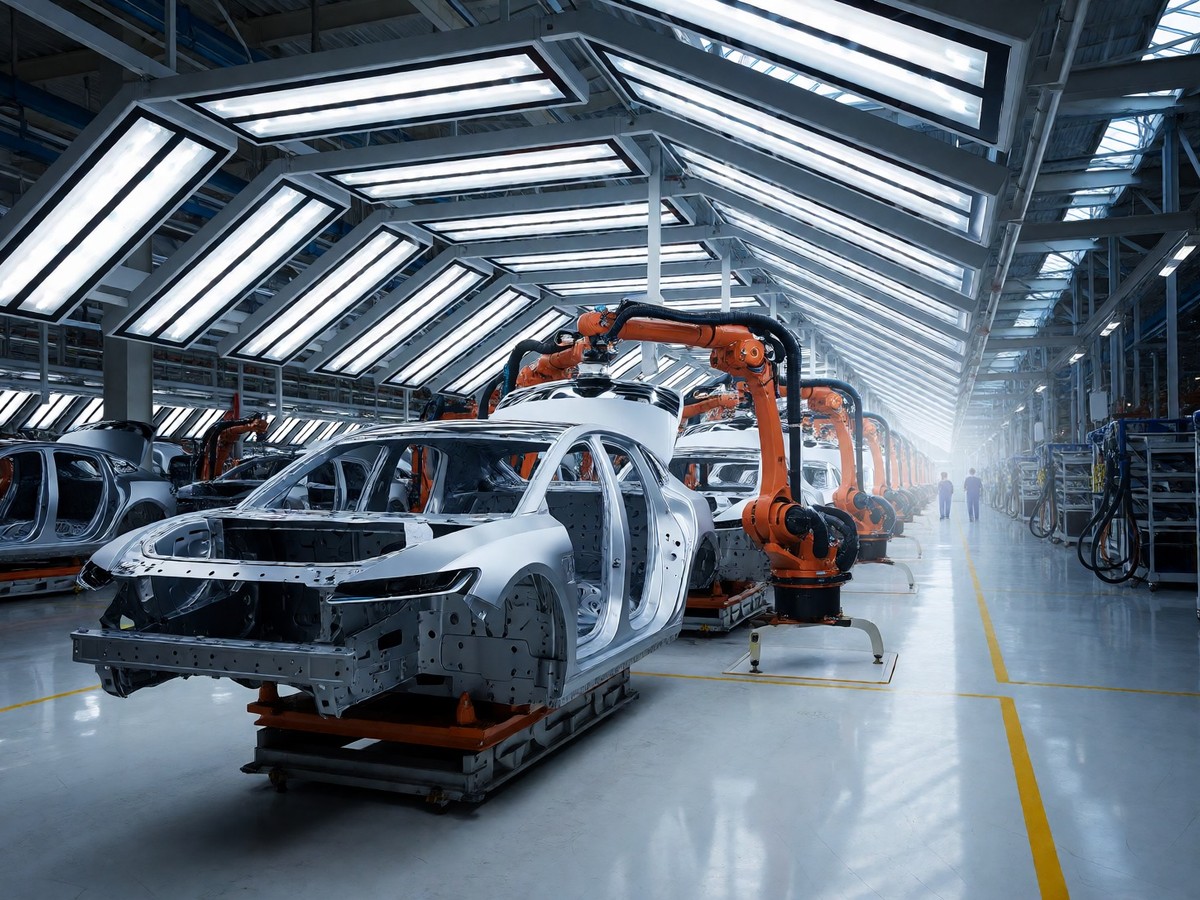
Hungary attracts the most investment for electric vehicle production. BMW’s €2bn Debrecen plant manufactured over 50,000 iX3 vehicles by October, and the factory runs production on three shifts. Mercedes-Benz produces its electric C-Class in Kecskemet, which is now the manufacturer’s largest European plant with an annual capacity of 350,000 vehicles. BYD plans serial production at its €5bn Szeged factory in the fourth quarter, targeting an initial annual capacity of 150,000 vehicles. CATL began trial production of battery cells at its €7.3bn Debrecen facility on September 22. Slovakia also positions itself as a center for production. Volvo started test production at its Valaliky factory near Kosice, which will produce up to 250,000 cars annually once serial manufacturing begins in 2027. Volkswagen’s battery subsidiary PowerCo is taking a 49% stake in a 20 GWh lithium iron phosphate battery plant under construction at Surany.
In Czechia, Skoda’s Elroq was the continent’s best-selling electric car in July and ranked second over the first seven months of the year with 67,000 vehicles sold. Poland’s ambitions move more slowly. State-owned ElectroMobility Poland, which showed prototypes of its Izera electric car in 2020 but has not manufactured a vehicle, secured Taiwan’s Foxconn as a partner. EMP plans to begin construction of a factory in Jaworzno in spring 2027 and start serial production towards the end of 2029. In Bulgaria, China’s Great Wall Motor plans to begin assembling its Ora 5 SUV near Lovech in early 2027.
Fuel costs and contamination
Higher fuel prices strengthen the economic case for electrification. In September, EU fuel prices rose 31.4% compared to the previous year, while Bulgaria saw a 42.2% increase. Because Russia supplied more than 90% of Hungarian oil imports in 2025, the country faces significant pressure. A US waiver for Hungarian refiner MOL to purchase Russian crude through the Druzhba pipeline expires on November 21. I find the environmental cost of this production expansion disgusting. In July, the mayor of Debrecen ordered Chinese battery separator manufacturer Semcorp to leave the city after heavy metals appeared in groundwater near the factory. Prime Minister Peter Magyar’s government will establish a new environmental authority on January 1 to address violations, with fines reaching HUF5bn (€13.7mn).
Battery electric vehicles displace 1.2mn barrels of oil per day, which is 1.2% of global consumption, according to Transport & Environment. Nearly 8mn electric vehicles on EU roads avoided 46mn barrels of oil consumption in 2025, according to the same group. In Slovenia, the Renault-owned Revoz plant in Novo Mesto added production of the electric Dacia Spring alongside the Renault Twingo, and the facility is now introducing a second shift. In Serbia, Stellantis’s Kragujevac factory has produced electric Fiat Grande Panda vehicles since early 2025 and makes close to 500 cars daily. Economist Petar Veselinovic expects the local unit’s revenue to exceed €5bn this year.