The Polish Constitutional Tribunal now operates under a system of "legal dualism," where judicial authority depends on political allegiance rather than broad constitutional consent. This structural fracture, rooted in the 2015 power transition, has evolved into a direct struggle over who defines constitutional legitimacy in the country. The conflict risks entrenching a permanent state of instability, leaving the nation without a widely accepted arbiter for its most sensitive legal disputes.
Competing claims to institutional control
The crisis began when the outgoing Civic Platform government fast-tracked five tribunal appointments in late 2015, a move the incoming Law and Justice party rejected as an attempt to entrench influence after electoral defeat. PiS installed its own nominees, including Julia Przylebska as president in 2016, despite court rulings that declared three of the original appointments unlawful. This created the "understudy" judges controversy, which European legal bodies later cited to determine that the tribunal could no longer be considered a legitimate body established by legal standards. When Donald Tusk’s coalition took office in December 2023, it adopted a policy of total non-cooperation, refusing to publish tribunal rulings because it viewed the institution as "contaminated" by procedurally flawed leadership and partisan members.
From March 2026 onwards, the new parliament elected eight new members, but President Karol Nawrocki refused to swear in five of them, including Maciej Berek. In response, the government swore these nominees in directly at a parliamentary ceremony, a step Nawrocki and tribunal president Bogdan Swieczkowski rejected as illegal. Anna Korwin-Piotrowska, one of the contested nominees, then asserted her seniority to order a one-month suspension of Swieczkowski and his deputy Bartlomiej Sochanski. She assumed temporary control of the court, claiming a valid quorum existed because the suspended leaders reduced the pool of eligible members from fifteen to twelve. Critics argued this assembly lacked the legally required two-thirds majority, noting only eight nominal members attended.
Political stakes and systemic erosion
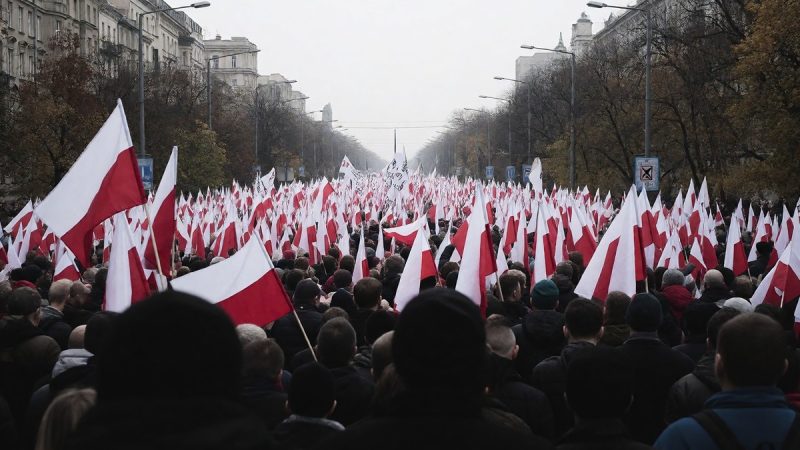
Justice minister Waldemar Zurek submitted requests to lift the immunity of the suspended officials, while the new nominees entered the tribunal building under State Protection Service escort. Right-wing supporters protested at the gates, prompting a heavy police presence and a tense stand-off. Nawrocki cut short an official visit to Senegal mid-flight to return to Warsaw, entering the building in the early hours to condemn what he described as a violation of the constitutional order. He maintained that the government’s actions amounted to an authoritarian power grab, or "coup d’etat," that disregarded established procedures.
The Tusk government frames its countermeasures through "transitional justice," arguing that ordinary procedures are insufficient to repair a system systematically captured by political loyalists. They rely on landmark European Court of Human Rights and EU Court of Justice rulings to justify their stance. However, liberal critics warn that selective non-recognition of an entire institution risks creating the same dual legitimacy problem they accuse PiS of starting. They note that employing legally questionable shortcuts sets dangerous precedents that could deepen the very disorder the government claims to correct.
PiS rejects the "contamination" thesis, insisting that all 2015 appointments were lawful and that EU institutions have no authority to evaluate national judicial organization. They argue that the government is paving the way for controversial social policies without domestic judicial oversight. The dispute has strained relations within the ruling coalition, with conservative partners calling for a cross-party settlement. Internationally, the US embassy has drawn explicit criticism, while the EU remains supportive of the Tusk administration. There are no immediate prospects for a durable resolution, and the tribunal’s authority remains further eroded.