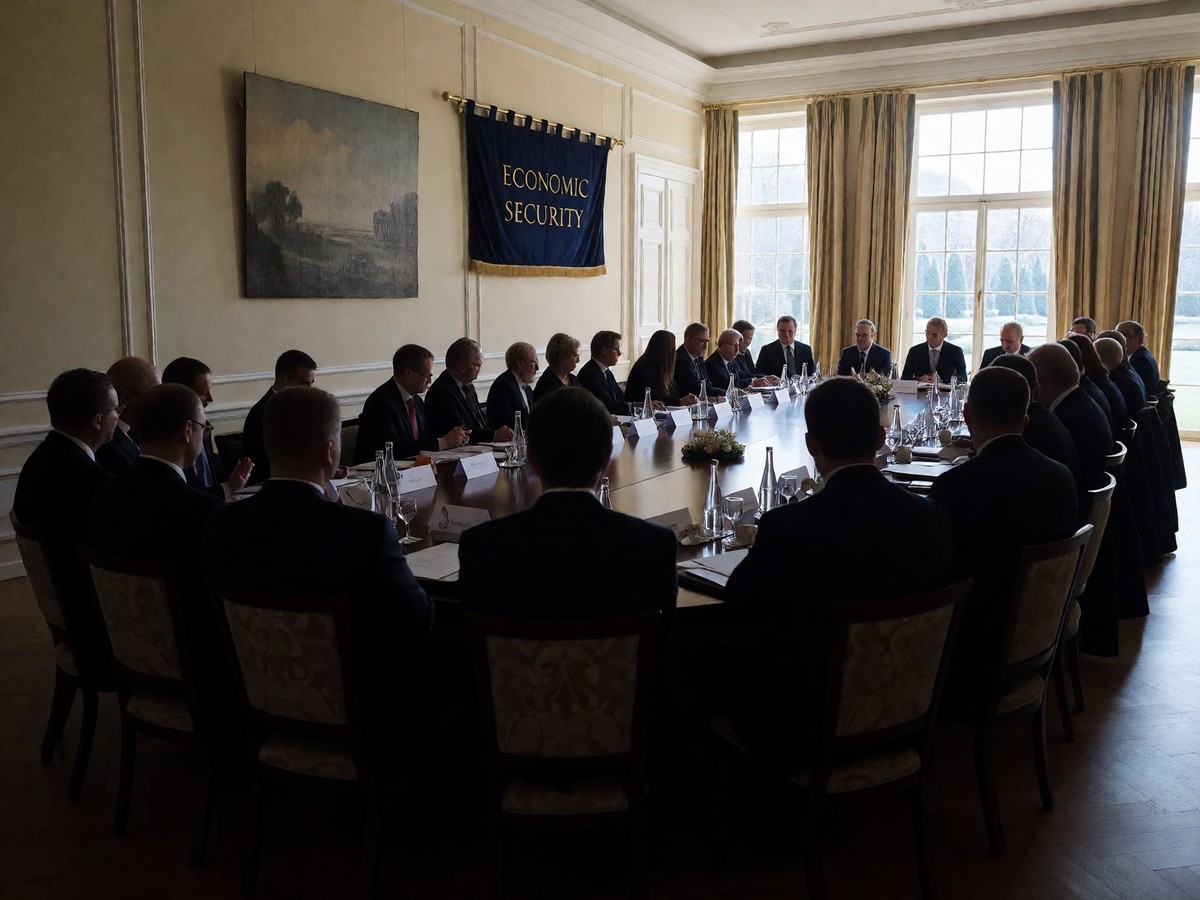
Warsaw roundtables follow Brussels agreement
The UK and Poland started a new series of roundtables in Warsaw four days after Brussels and Downing Street agreed to launch a dialogue on economic security. I find the depth of expertise in the room useful, as the British guests included figures such as Creon Butler, who directs the Global Economy and Finance Programme at Chatham House, and Michael Gasiorek, who co-directs the UK Trade Policy Observatory at the University of Sussex. These discussions follow the Northolt Treaty signed on 27 May 2026 and the EU-UK summit on 20 November. The UK takes the G20 presidency from the United States in December, preceding a leaders’ summit in Manchester on 27 and 28 November 2027. Poland, which participated in the 2026 G20 work in Washington, now faces an invitation to the UK-hosted proceedings next year. The morning session was held at the British Embassy Warsaw. Jennifer Tyldesley and Wojciech Przybylski opened the discussions. Participants agreed the world economy moved from a high-trust, low-risk trading environment to a low-trust, high-risk one. Polish officials from the Ministry of Foreign Affairs and the Ministry of State Assets attended.
The high cost of supply chain sovereignty
The dialogue clearly exposes the massive financial gap between relying on Chinese imports and building European resilience. I think the discussion regarding the high cost of security is the most important part, as one Polish state-owned pharmaceutical producer sought a European source for an active ingredient it usually buys from China for 50 dollars per kilogram. This company found a Spanish manufacturer of the exact same substance that charges 1,500 euros per kilogram, which is 30 times the Chinese price. Most participants doubted that Europe could or should become a coercive power. They argued instead for a credible capacity to retaliate against coercion and a willingness to pay the price of using it. One participant noted that "alone we are peanuts, and together we could mean something" regarding the need for cooperation. I find the warning about the EU risking its status by aspiring to be a G3 power alongside the US and China very blunt. Poland faces chronic vulnerabilities. Energy prices remain a weak spot. They also face cyber risks in imported components for power grids. This disparity makes the question of how much patients, taxpayers and companies are willing to pay for supplies they can trust very pressing. The case leaves a question no government has yet answered regarding whether the state should step in with price rules that sit uneasily with a market economy.
| Component | Chinese Price | Spanish Price | Difference |
|---|---|---|---|
| Active ingredient | $50 per kg | 1,500 euros per kg | 30x higher |
Losing control of industrial technology
Europe continues to lose control of the technologies it develops. Private owners sold advanced Polish photovoltaic production to China, and a Polish company holding graphite know-how faced an attempted hostile takeover by a Russian investor. I find the warning about allied competition particularly sharp, especially since two US government agencies once backed rival bids for the Hemerdon tungsten mine in Devon before the UK government committed up to 71 million pounds through the National Wealth Fund to restart the site. To prevent such resource scrambles in Africa, Latin America, and Asia, participants proposed mapping dual-use minerals jointly, similar to the national approach in France. Business needs a clear signal that governments will pay for diversification. The group suggested a research push on cleaner processing and substitute materials to target technologies that China does not yet dominate. Poland already produces synthetic graphite suitable for batteries, although recycling and domestic alternatives still cost more than buying from China. Even with more mining, processing and recycling at home, both countries will keep importing, and participants warned that allies too often compete with each other. European publics often resist having mines, refineries, or factories nearby, and memories of post-1989 pollution in Central Europe feed a fear of being exploited.