Search for victims continues in Zaporizhzhia Oblast
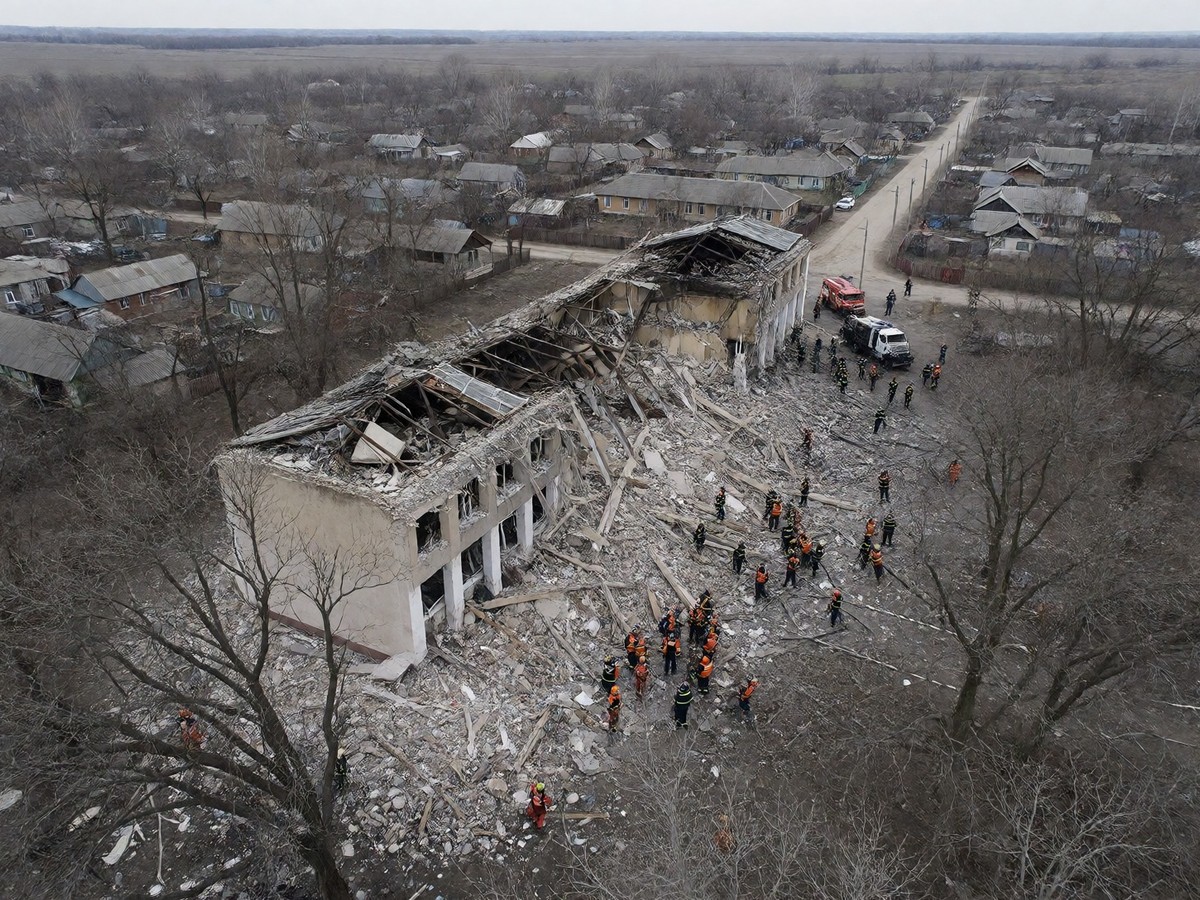
The death toll from a Russian airstrike on the village of Komyshuvakha rose to 37 on Nov. 4 as search-and-rescue operations entered their third day. Russian forces struck the settlement with aerial bombs on Nov. 2 and hit a school building used as a humanitarian aid distribution center. The strike used a 3-ton FAB-3000 aerial bomb that contains more than 1,000 kilograms of explosives and has a blast radius of up to 250 meters. Ivan Fedorov, co-chair of the Zaporizhzhia Regional Defense Council, said people gathered in the school to receive humanitarian assistance when the attack occurred. Two rescue workers, Denys Konovalenko and Oleksii Sushchevskyi, both 44, died in the strike, according to the State Emergency Service (DSNS).
President Volodymyr Zelensky reported that after the initial strike hit the school, Russian forces dropped another nine aerial bombs on a shelter where local residents took refuge following the first explosion. He called the event an "exceptionally horrific strike" and said it proved Russia did not want to de-escalate the situation. Zelensky also stated that Russian forces could not have been unaware that local residents who remained in Komyshuvakha received humanitarian aid there every week. The attack destroyed a gymnasium, an outbuilding, and a fire truck while it also damaged the school building.
Ongoing rescue efforts and missing persons
Rescue workers and police officers arrived at the scene when the threat of another Russian strike emerged, but Russian forces carried out further strikes on the same site. This made the rescue mission incredibly dangerous. Authorities warned that dozens of people could still be trapped under the rubble. Fedorov said 59 people were considered missing, though some may have been identified as of 8 a.m. local time on Nov. 4. Canine search teams and specialists from the State Mining Rescue Service continue searching through the rubble for victims.
| Bomb Type | Explosive Weight | Blast Radius |
|---|---|---|
| FAB-3000 | >1,000 kg | up to 250 m |
The Zaporizhzhia Investigation Center reports that Komyshuvakha sits 20 kilometers from the front line and has been a front-line settlement since November 2025. Russia frequently uses glide bombs, known as KABs, to attack front-line areas. These bombs use wing kits to travel tens of kilometers, which allows Russian aircraft to strike targets while they remain outside the range of air defense systems. Governor Mykhailo Semikin said, "The scale of the tragedy is horrific. Behind every number lies a human life, a family that has lost their loved ones or is still waiting for news of their loved ones."