Diplomatic efforts and the Abu Dhabi format
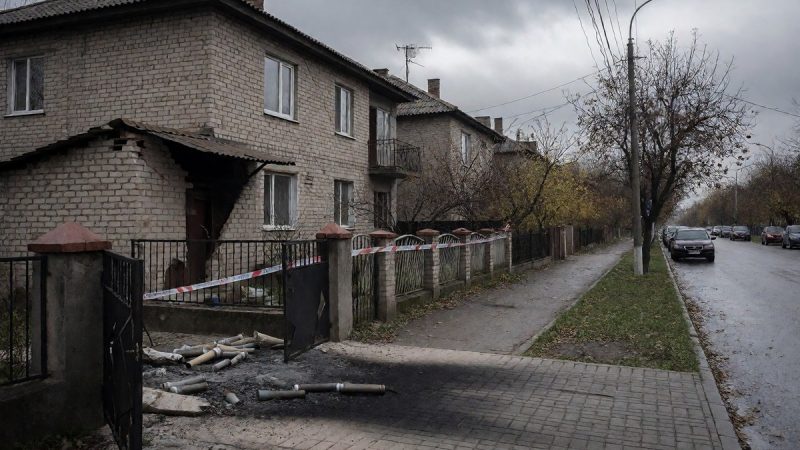
Chancellor Friedrich Merz and President Volodymyr Zelenskiy met in Berlin on November 3 to demand a European role in upcoming peace talks. These discussions occur one week before Ukrainian and Russian negotiators meet in Abu Dhabi on November 10-11 with the United States acting as mediator. Zelenskiy argued that Washington serves as the mediator for the first steps toward de-escalation, yet he insisted on a three-way leaders’ meeting with the "unconditional participation of Europe," according to the chancellery’s transcript. He wants the Abu Dhabi talks to address an energy ceasefire, the unblocking of the Black Sea, and prisoner exchanges. Merz agreed with the need for European involvement, noting that elements regarding sanctions or security architecture require European input. Merz offered the local truce in Oleshky as the model for energy and the Black Sea. Zelenskiy noted that Kyiv offered to extend that truce but received the bombing of Komyshuvakha in the Zaporizhzhia region instead, where more than 50 people remain missing.
The Kremlin remains dismissive of European diplomatic efforts. Kremlin aide Yuri Ushakov stated on October 28 that Europeans "could get there if they buy tickets, but no one intends to invite them to the negotiating table." This rejection arrives as European leaders struggle to decide who should speak for the bloc. Czech President Petr Pavel is a favorite for the negotiator role, but calls to Putin by Finnish and Norwegian leaders divided European governments in October. I find the Kremlin’s dismissal of European influence entirely expected given that Russian President Vladimir Putin wants future talks to dictate the rules of European security.
The European Commission hosts talks on November 4-5 with Ukraine, the US, France, Germany, the UK, Nato, and the World Bank. Spokesperson Paula Pinho said the first day focuses on post-war reconstruction. Ukrainian negotiator Rustem Umerov said a separate session on security guarantees follows on November 5. US envoy Steve Witkoff said his team will also raise Europe’s post-war security architecture, a subject Merz claims for Europeans. The G20 summit in Miami in December follows as the next stage, where Washington has invited Putin. Any talk of Ukraine there requires Zelenskiy in the room, Merz said. He said if Ukraine sits at the table, then Europe sits at the table.
Financial gaps and military shortages
The financial gap for Ukraine remains massive. Zelenskiy told Bundestag President Julia Klockner that Ukraine expects a decision on the €11.6bn ($13bn) draft 2027 budget, which the committee reviews on November 12. This amount drops to €8.5bn a year for the 2028-2030 period, leaving a €70bn hole in Ukraine’s 2027 finances that only €4bn from outside the EU addresses. The budget committee holds its final session on November 12. The final vote occurs on November 27, according to the Bundestag’s timetable.
| Financial Detail | Amount |
|---|---|
| Germany 2027 Budget Draft | €11.6bn ($13bn) |
| Ukraine 2027 Finance Gap | €70bn |
| NATO 2026 Military Aid Gap | €13bn |
| Germany October Aid (Military) | €1bn |
| Germany October Aid (Energy) | €350mn |
| Proposed German Winter Aid | €200mn |
Ukraine faces severe shortages of PAC-2, PAC-3, and IRIS-T missiles. Zelenskiy noted that while the military holds a good position on the battlefield, air defence difficulties persist. Washington cleared 500 Patriot interceptors, but these may not arrive until 2030. To bolster security, Britain and France will lead Exercise Koalicja in Poland from November 9 to 22 with 2,800 troops from 11 countries. Zelenskiy described the coalition as a guarantor with a US backstop, and he said Washington and Moscow cannot decide Ukraine’s EU accession bid. Merz plans to address supply issues on November 19, the day before the ninth German-Ukrainian business forum in Berlin.
Germany is by far the biggest contributor to Ukraine. The country carries out the aid agreed in Kyiv in October, which includes €1bn for military needs and €350mn for energy. The Bundestag must still approve a symbolic €200mn in winter aid. Merz also told allies to honor the €70bn of military aid agreed in Nato for 2026, a fund that is €13bn short according to the Commission. Mayor Vitali Klitschko reported that Russian strikes damaged a regional power hub during the visit, and this caused emergency outages in and around Kyiv.