Memorandums with neighboring countries
Poland signed two memorandums of understanding with Hungary, the Czech Republic, Slovakia, and Lithuania to coordinate natural gas supplies and infrastructure security. The US Department of Energy, Poland’s energy ministry, and the Atlantic Council’s Global Energy Centre co-organized a ministerial meeting at the Partnership for Transatlantic Energy Cooperation in Warsaw, where the neighboring countries signed the agreements. One memorandum involves the Visegrad Group, comprising Poland, Slovakia, Hungary, and the Czech Republic, and establishes a framework for collaboration between gas transmission system operators to use existing infrastructure. This initiative helps landlocked southern neighbors diversify supplies and reduce reliance on Russia. The 2022 Poland-Slovakia gas interconnector has seen little use because Bratislava continues to rely on Russian supplies, and Hungary remains reliant on Russian gas as well. While the EU will ban Russian gas imports from member states starting in autumn 2027, Slovakia is challenging this ban at the European Court of Justice. In September, Hungary’s energy minister stated that his country will be ready to meet the 2027 deadline.
Baltic infrastructure and security
The second memorandum involves Poland’s Gaz-System and Lithuania’s Amber Grid and KN Energies to strengthen energy infrastructure security around the Baltic Sea. These companies will coordinate through information-sharing on threats, joint risk assessments, expertise exchange, and joint training exercises. Slawomir Hinc, CEO of Gaz-System, said the LNG terminals in Poland and Lithuania "serve as critical supply hubs for…Central and Eastern Europe, significantly enhancing energy security and bolstering regional resilience." Nemunas Biknius, his counterpart at Amber Grid, said "security depends on the resilience of every link in the chain" and that the agreement will enable them to strengthen that chain in a structured and coordinated way.
| Facility/Agreement | Details |
|---|---|
| Visegrad Memorandum | Coordination between gas transmission operators |
| Baltic Memorandum | Gaz-System, Amber Grid, and KN Energies |
| Swinoujscie LNG Terminal | Opened ten years ago |
| Bay of Gdansk Units | Two floating storage and regasification units planned |
| First Gdansk Unit | Under construction in South Korea, opening in 2028 |
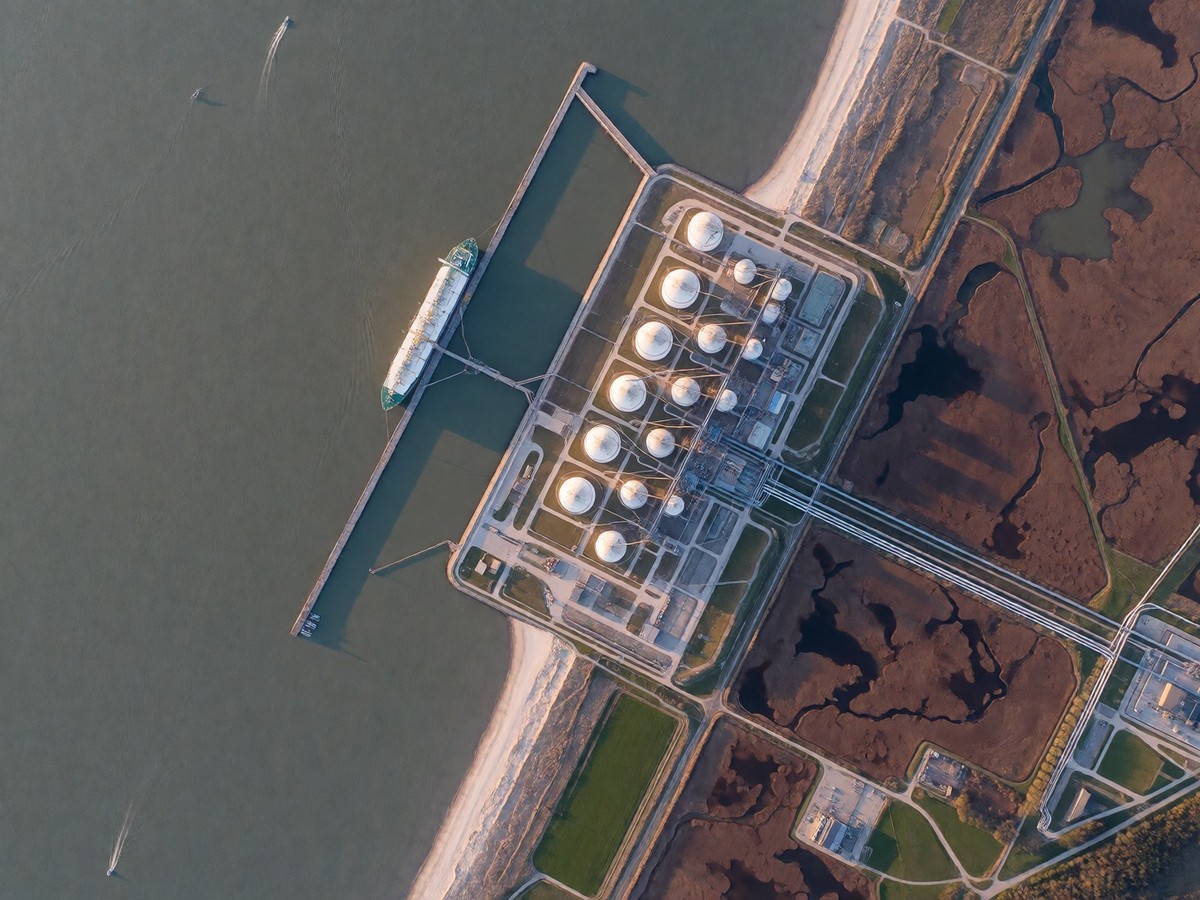
Poland intends to become a gas hub for the Central and Eastern Europe region, including Ukraine, by increasing LNG imports from the United States. Poland currently receives most of its gas via a pipeline that runs from Norway through Denmark and through LNG that arrives by sea, sourced mainly from the US and Qatar. Beyond the Swinoujscie LNG terminal that opened a decade ago, the country plans to build two floating storage and regasification units in the Bay of Gdansk. The first of these units is under construction in South Korea and will open in 2028. Last year, Poland traded a record amount of natural gas, surpassing levels seen before the 2022 invasion of Ukraine.