Chaos at the Constitutional Tribunal
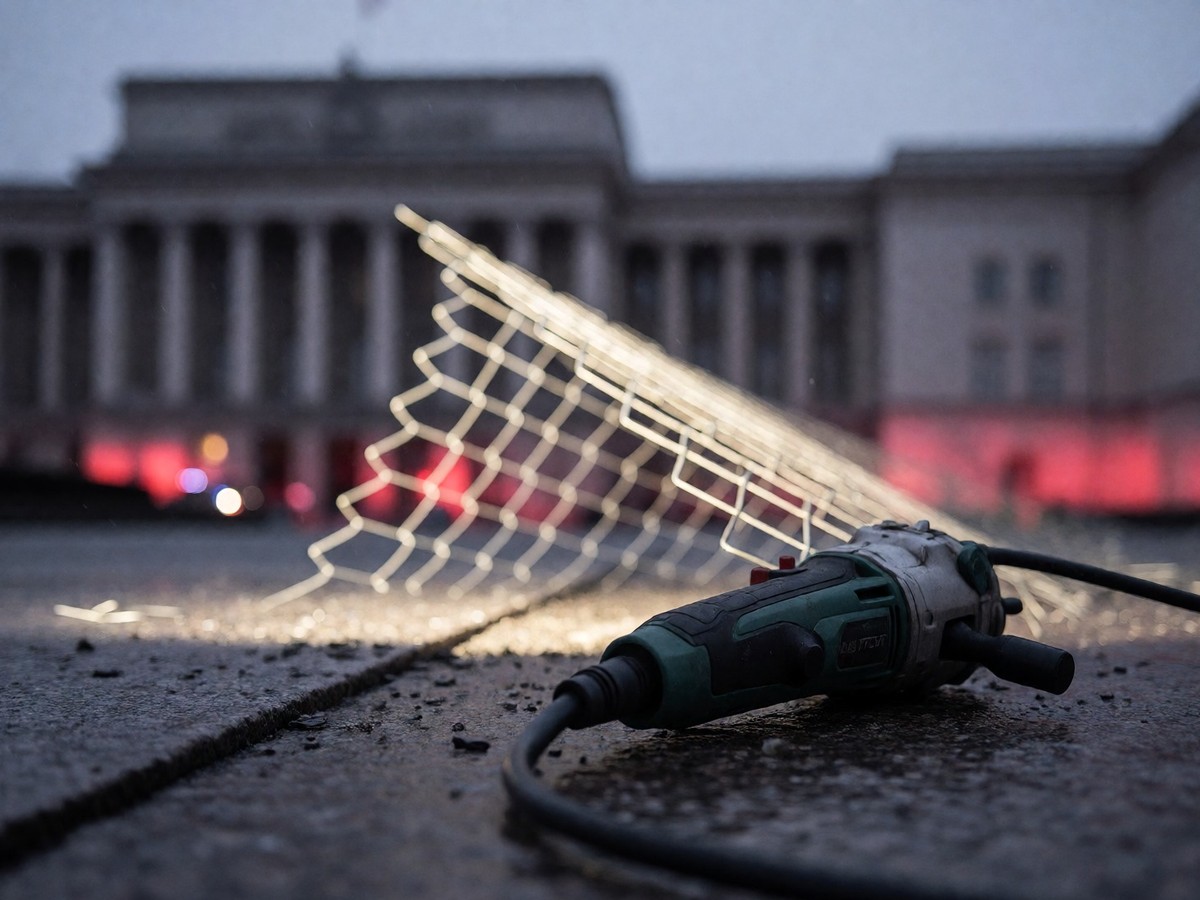
Police surrounded Poland’s Constitutional Tribunal (TK) on Friday evening after supporters of chief justice Bogdan Swieczkowski used a power tool to cut through the court fence. One government-backed judge claimed she suspended Swieczkowski from his duties. This claim prompted the TK website to issue a statement announcing a "break in the activities" for both Swieczkowski and deputy chief justice Bartlomiej Sochanski. Anna Korwin-Piotrowska, who began her judicial career as an apprentice in 1995, told TVP that she issued the suspension order. She accused Swieczkowski of blocking judges from their positions. I find the legal basis for this suspension nonexistent, as constitutional law scholar Marcin Matczak wrote that the justice minister lacks oversight authority over the TK. Justice minister Waldemar Zurek also submitted motions to the TK to waive the immunity from prosecution of Swieczkowski and Sochanski, delivering the documents to Korwin-Piotrowska. Swieczkowski and the opposition claim that an illegal "coup d’etat" is underway.
The struggle for the bench
The struggle for control over the 15-person bench involves eight judges parliament chose this year. President Karol Nawrocki, who aligns with the right-wing Law and Justice party, refused to swear in five of those eight nominees because of concerns regarding their qualifications or selection. These five judges instead conducted their own swearing-in ceremonies in parliament and submitted their oaths to the president’s office. Swieczkowski refused to accept these five judges, which ignored an order by the European Court of Human Rights that the judges be allowed to take their positions. While the TK website currently shows a statement declaring a "break in the activities" of Swieczkowski and Sochanski, the court’s official account on X claims that "an unlawful takeover of the TK’s website has occurred" and insists that "Bogdan Swieczkowski remains chief justice." I consider the claim that "Korwin-Piotrowska is not a TK judge" to be part of the ongoing confusion on the court’s digital platforms. The current government, led by Prime Minister Donald Tusk, refused to recognize the court’s legitimacy since 2023 because three judges were appointed under the former national-conservative government. In March, the ruling coalition began filling the backlog of empty seats, which changed the dynamic of the court. This conflict over the five judges who performed their own ceremonies has paralyzed the institution.
Police deployment and political fallout
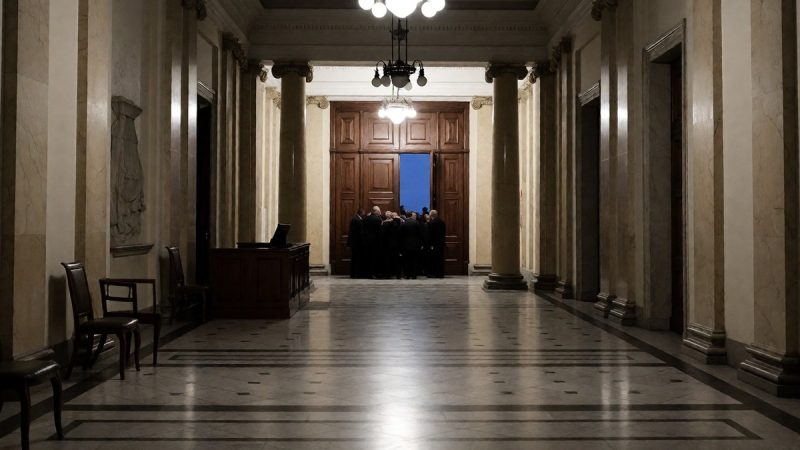
Riot police deployed around the TK on Friday evening as seven judges elected this year were escorted into the building by officers from the State Protection Service (SOP). Court spokeswoman Weronika Scibor said these seven judges entered through a gate leading from the prime minister’s chancellery instead of the main entrance where protesters gathered. The SOP, which the interior minister oversees, escorted the seven judges, one of whom was Korwin-Piotrowska. PiS supporters have camped outside the TK grounds for weeks to prevent the government from introducing new judges, and the police presence prevented Swieczkowski from entering the grounds after his supporters breached the perimeter. Jaroslaw Kaczynski, leader of PiS, told reporters outside the court that Poland has become a "police state" and that the situation leads to "authoritarianism, and then to totalitarianism." He called on Nawrocki to return to Poland and defend the court. Supreme Court chief justice Zbigniew Kapinski also called the events an "undoubtedly a coup d’etat" while Prime Minister Donald Tusk stated on social media that "restoring the rule of law is our duty." President Nawrocki ordered his plane to return to Poland from a state visit to Senegal after the situation escalated, with flight trackers showing his plane turning around in midair.