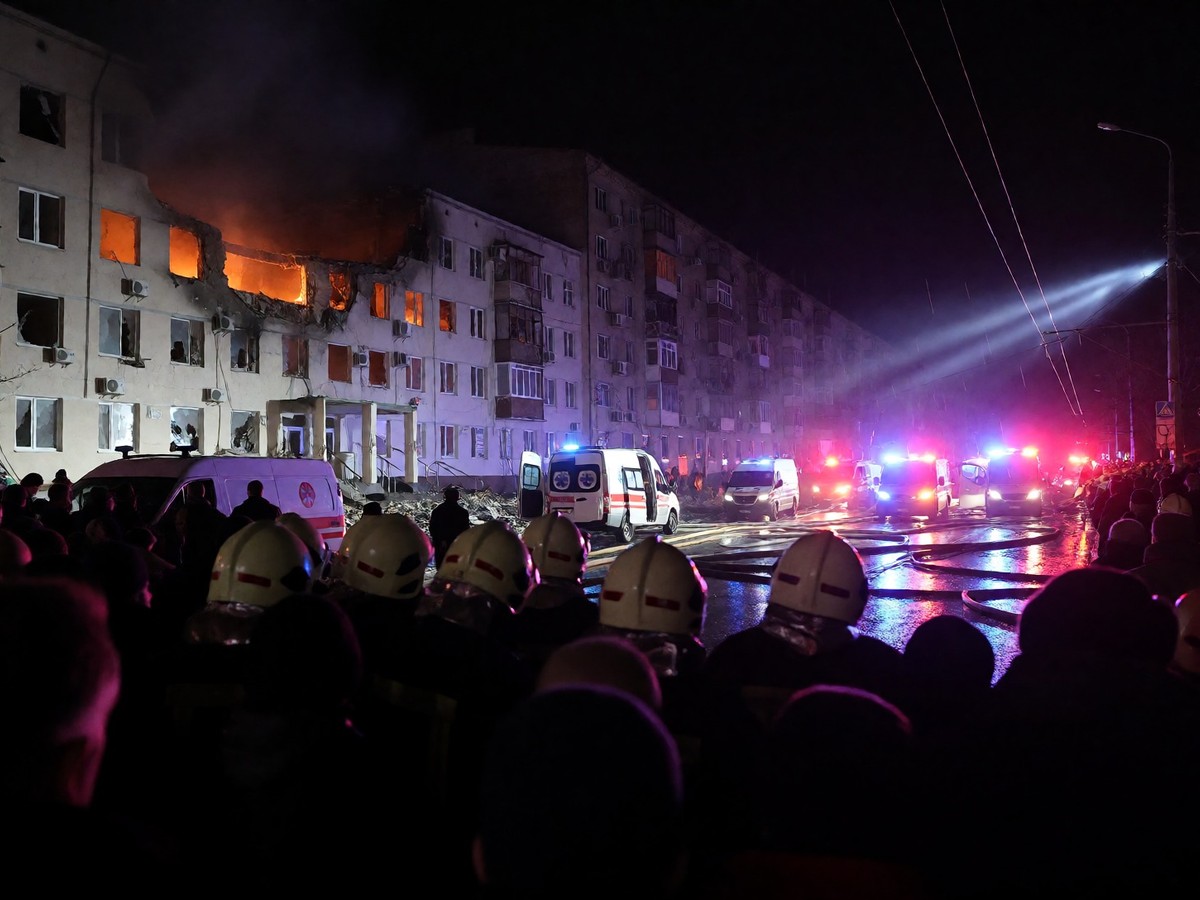
Three people were injured, and 30 others evacuated, after debris from a downed drone ignited a fire at a medical facility in the Shevchenkivskyi district of Kyiv. The incident occurred during an overnight Russian attack on Nov. 13, with first responders rescuing seven individuals trapped inside the building. According to Ukraine’s State Emergency Service, the blast partially destroyed the second floor of the facility. This strike landed almost two days after trilateral peace talks in Abu Dhabi concluded, marking a sharp escalation in violence despite recent diplomatic efforts.
Regional Impact and Infrastructure Strains
Russian forces targeted multiple cities across Ukraine over night on Nov. 12-13, attacking power grids, warehouses, and agricultural facilities in Dnipropetrovsk, Kharkiv, Kherson, Khmelnytskyi, and Zhytomyr oblasts. On Nov. 12 alone, these attacks killed 10 people and injured 40 others. For months, Russian forces have increased attacks on Kyiv, a city around the same size as Berlin, leading to mass blackouts and power outages. Russia has hammered Kyiv and other Ukrainian cities with frequent attacks on energy and transportation infrastructure since the onset of the heating season. These strikes disrupt essential services for thousands of residents who rely on consistent power for heating and medical care.
The military situation remains tense due to significant disruptions in communications technology. President Volodymyr Zelensky said on Nov. 12 that Ukraine’s military is once again experiencing significant disruptions to the Starshield satellite communications system. Restrictions limit Starshield’s operating speed to 161 kilometers per hour, or 100 miles per hour. Zelensky wrote on X following briefings by Defense Minister Yevhenii Khmara and Armed Forces Commander-in-Chief Mykhailo Drapatyi that these limitations make it significantly harder for Ukrainian forces to intercept Russian jet-powered drones. He added that some Russian strikes had already succeeded because interceptor systems could not reach the necessary speed to catch the targets in time. This technical gap leaves critical infrastructure vulnerable to rapid aerial threats.