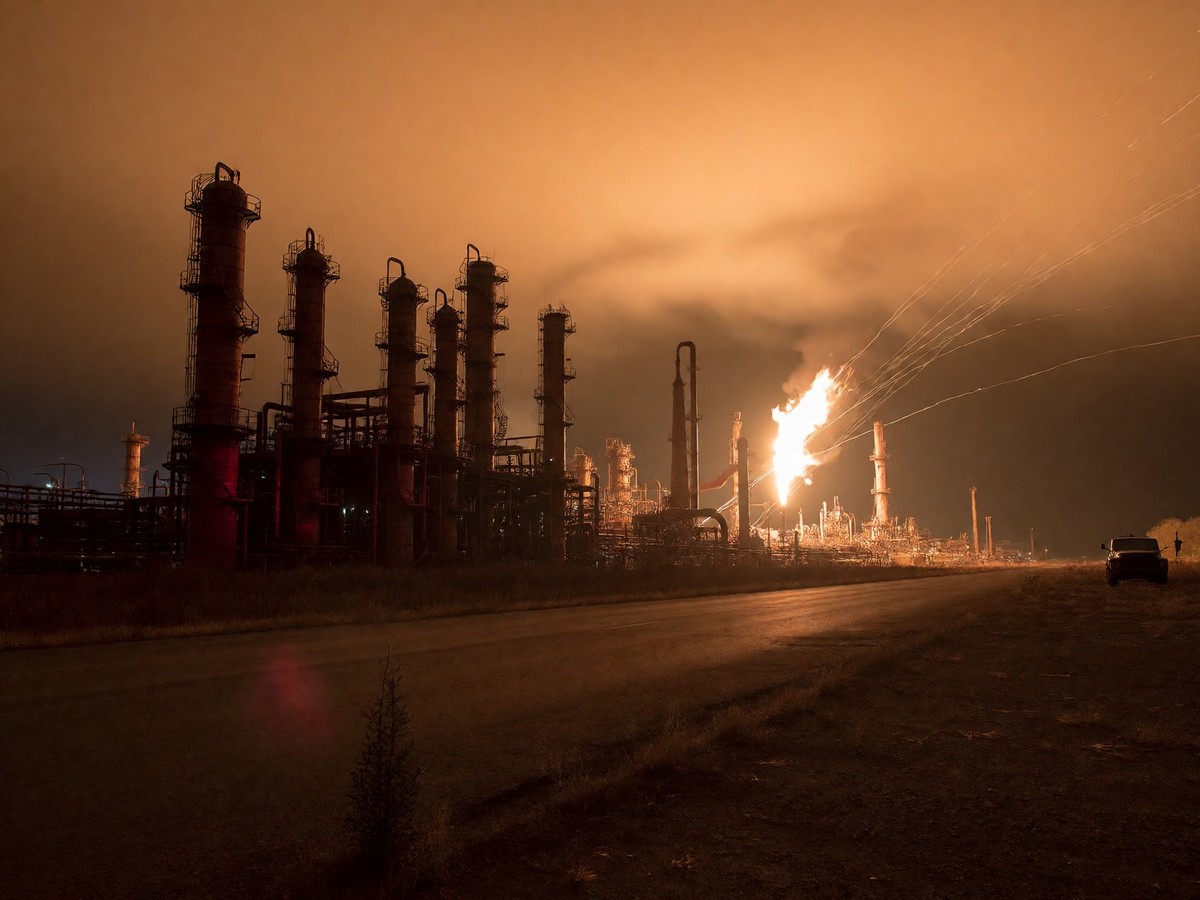
Ukrainian forces struck the Lukoil-Volgogradneftepererabotka refinery and a production facility in Rostov-on-Don during an overnight drone attack on Nov. 13. This operation followed trilateral peace negotiations in Abu Dhabi by one day, continuing Ukraine’s campaign to disrupt infrastructure powering the Russian military and curb Moscow’s energy revenues. The targeted refinery processes 15 million metric tons of crude oil annually, making it one of Russia’s largest facilities.
Regional Impact and Local Response
Andrey Bocharov, Volgograd’s regional governor, confirmed a "massive" attack on the city, noting fires in the southern industrial zone. Eyewitness footage shows flames lighting up the night sky while active Russian air defense systems fire nearby. Residents lined up at gas stations amid restrictions imposed because of Ukrainian energy attacks. The facility sits roughly 400 kilometers from the Ukrainian border, where Ukrainian forces previously struck it on Oct. 2. To the southwest, Rostov Oblast Governor Yury Slyusar confirmed strikes on Rostov-on-Don, reporting fires at a production facility and warehouse. Debris from downed drones also damaged a residential building. On Nov. 8, a prior Ukrainian drone strike damaged a bridge and energy facilities in the same city, causing traffic closures and blackouts.
Broader Strategic Context
Russian officials report that dozens of Ukrainian drones attacked Moscow overnight on Nov. 12-13, disrupting flight operations at several major airports in the region. These events follow a strike on Nov. 11, when Ukraine’s Special Operations Forces confirmed hitting Russia’s Omsk oil refinery, the country’s largest facility. The sustained pressure on energy infrastructure aims to reduce Moscow’s revenue streams while degrading military logistics. Ukrainian monitoring channels Exilenova+ and Supernova+ documented the explosions and flames at the Volgograd site immediately after the impact. The geographic spread of these targets, spanning from the Volga River basin to the Don region, indicates a coordinated effort to isolate key industrial hubs. Such disruptions force Russian operators to divert resources toward defensive measures rather than offensive capabilities. The damage to the Lukoil facility represents a significant blow to Russia’s second-largest oil producer.