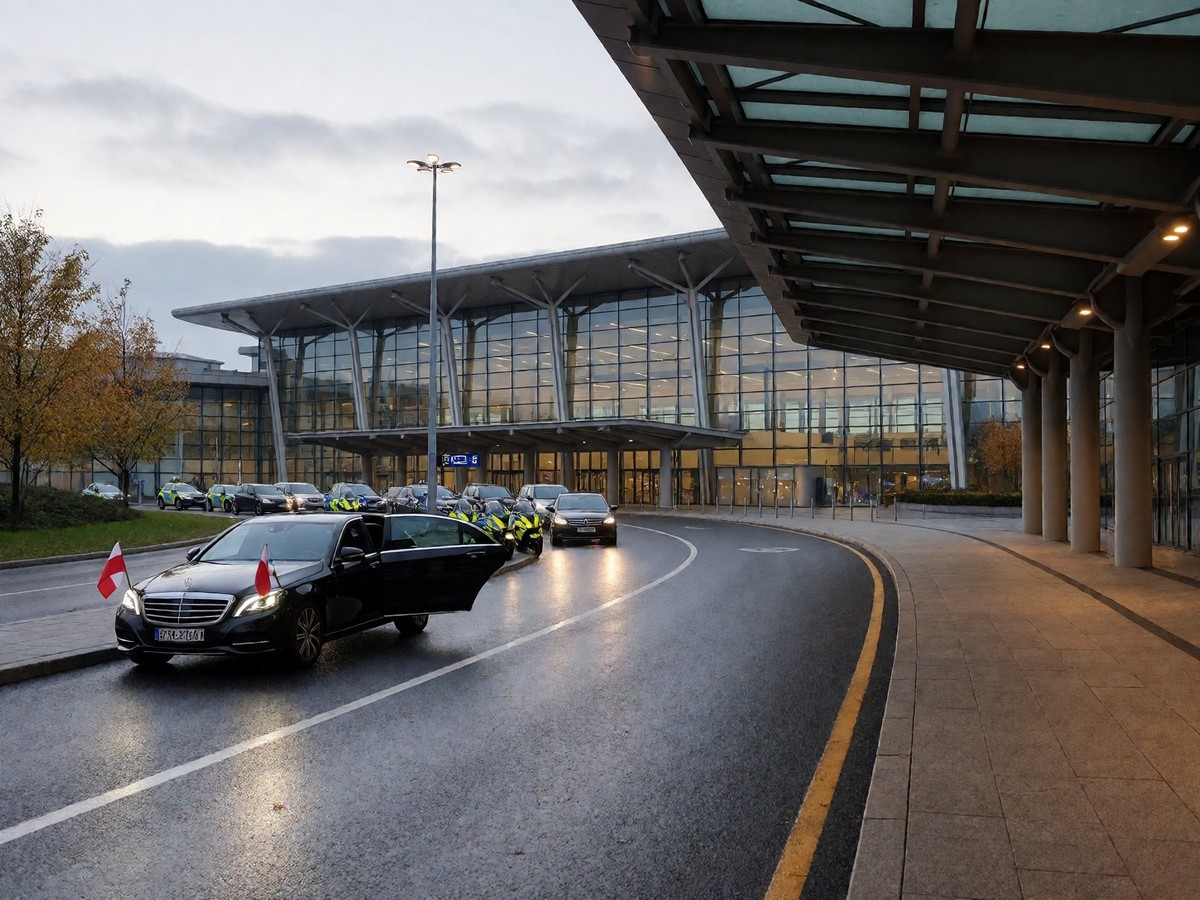
The visit establishes a clear framework for Poland to act as a strategic link between India and the European market. Donald Tusk arrived in New Delhi on October 21, 2026, leading a delegation of nearly one hundred companies. This visit marks the first time a Polish prime minister has visited India since 2010. The timing follows the January 27, 2026, conclusion of the EU-India free trade agreement, a deal negotiated since 2007 that stalled in 2013 and resumed in 2022. This agreement aims to eliminate or reduce tariffs on 96.6 per cent of goods, though the European Parliament must still vote on its consent.
| Economic Metric | Data / Target |
|---|---|
| 2024 Polish-Indian trade | $5.7 billion |
| 2030 Bilateral trade target | Double $6 billion current |
| 2024 India-Germany trade | $17.03 billion |
| 2024 India-France trade | $18.05 billion |
| EU-India export growth target | Double by 2032 |
The economic scale reveals the challenge for Central and Eastern Europe, as Polish-Indian trade reached $5.7 billion in 2024, whereas India’s trade with Germany reached $17.03 billion and its trade with France reached $18.05 billion in the same year. The agreement links two economies that together account for roughly a quarter of world GDP. The European Commission expects EU exports of goods to India to double by 2032, as tariffs are eliminated or reduced on 96.6 per cent of goods and the car market is liberalized through a quota system. Indian press reports point to a planned official signing in Brussels on December 16, with entry into force targeted for early 2027. Tusk intends to present Poland as a gateway for Indian companies seeking access to the European market. Initial commercial pathways include Polish military drone sales to the Indian Army and electric bus partnerships through Solaris and JBM Auto.
Expansion of strategic and diplomatic ties
The visit expands the strategic partnership from August 2024. Tusk and Modi set a target to double bilateral trade by 2030, starting from a current level of about $6 billion. Tusk argues that Poland can provide access to the wider European market, a pitch Warsaw made during the previous summit.
The diplomatic dialogue includes cooperation in artificial intelligence, semiconductors, quantum technologies, critical minerals, and space. Tusk also noted that Modi pledged to support Poland’s pursuit of a permanent place in the G20. Tusk’s invitation to the 2027 summit in Manchester would not confirm membership, as no single member controls G20 membership. In return, Poland supports India’s candidacy for a permanent UN Security Council seat and for a non-permanent seat for 2028 to 29. Shashi Tharoor, who chairs the Indian Parliament’s Committee on External Affairs, said at the European Forum Alpbach that "Europe wins when it collaborates with smaller and middle powers." This logic applies to Poland, the EU’s sixth largest economy, which remains outside the main G20 decision-making tables.
Geopolitical differences and the Russia complication
India’s relationship with Russia complicates the partnership for Central and Eastern European governments. Subrahmanyam Jaishankar, the Indian foreign minister, told Warsaw in September 2026 that India engages with Europe through a strategy of "de-risking and diversifying." While Warsaw emphasizes sovereignty and territorial integrity regarding the war in Ukraine, the joint statement from the October talks frames the conflict mainly through repercussions for food and energy security in the Global South. Tusk repeated a position he first put to Modi in Warsaw in 2024, suggesting India could play a constructive role in influencing the course of the war.
The EU-India agreement remains subject to several procedural steps before it becomes active. The European Parliament must vote on consent before the planned official signing in Brussels on December 16 and the target entry into force in early 2027. Success requires the region to act together rather than allowing Poland to act alone as India’s gateway. Historical ties between India and Polish families, such as when the Maharaja of Nawanagar provided a safe haven during the Second World War, remain a foundation, but modern stability depends on managing disagreements over Russia.