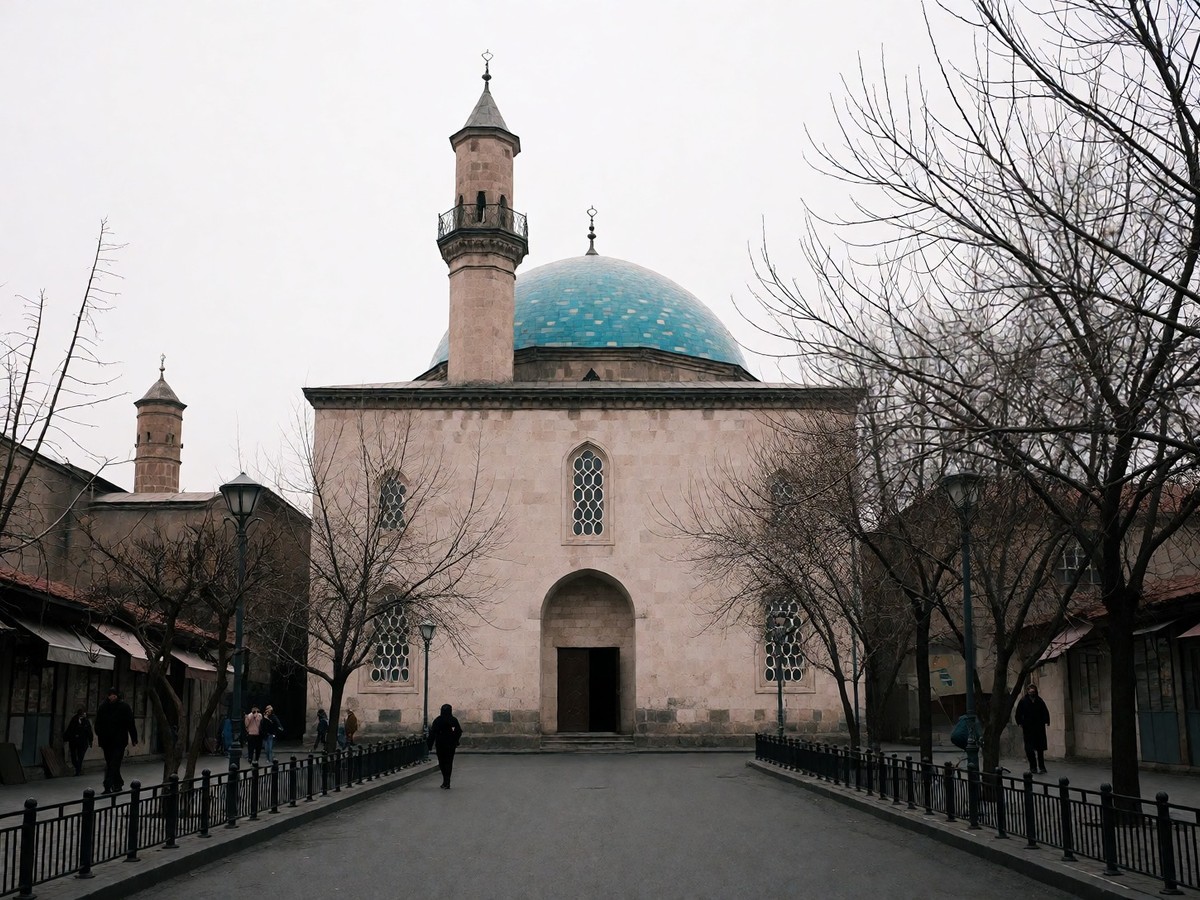
Charents plaque ceremony in Yerevan
Hamid Pourmohammadi, Iran’s vice-president, unveiled a plaque for Armenian poet Yeghishe Charents in a Yerevan Blue Mosque conference hall on Monday. He traveled to Armenia to attend an Armenia-Iran summit and attended the ceremony. This decision follows the Iranian Embassy’s claim that Charents worked to preserve the mosque and loved Persian literature. I find the naming a blatant disregard for the mosque’s historical context. The Blue Mosque was built in 1765 – 1766 during the rule of the Erivan Khanate, a province of Persia that enjoyed varying degrees of autonomy. Hossein Ali Khan, the Turkic ruler of the Erivan Khanate at the time, commissioned the building for the region’s Turkic population, who are the predecessors of modern-day Azerbaijanis. Armenia granted Iran a 99-year lease for the mosque in 2015, and Iranian authorities have administered the site since the 1990s. The ceremony took place inside a conference hall in the mosque.
Azerbaijani authorities condemn the move
Azerbaijan’s State Committee for Work with Religious Organisations criticized the decision as an attempt to distort the mosque’s historical identity. They called the naming a "provocation against efforts to build an atmosphere of peace and mutual trust" and demanded that Armenia and Iran refrain from using religious monuments for political or ideological purposes. The Baku-based Caucasus Muslims Office also condemned the move, calling it disrespectful towards Azerbaijan’s religious and cultural heritage. They stated that the mosque is an example of Azerbaijani architecture and that presenting it as Persian falsifies history. I view these reactions as a predictable escalation, as the Caucasus Muslims Office said the incident raises questions about Armenia’s commitment to the peace process. This dispute follows tensions from months ago when Azerbaijani authorities claimed certain Armenian religious sites in Nagorno-Karabakh were Caucasian Albanian, which led to Armenian officials accusing Azerbaijan of attempting to downplay Armenian presence in the region. Azerbaijani authorities also added information on frescoes and khachkars removed from Khudavang to the Interpol database, as they accused Armenia of looting a monastery in Nagorno-Karabakh.