Economic projections and production
Amulsar produced its first gold on 10 October. The deposit sits on the border of the Vayots Dzor and Syunik provinces, making it the second-largest gold deposit in the country. Experts expect the mine to provide 1,000 well-paid jobs. Production value will reach $860 million to $900 million in subsequent years depending on gold prices.
| Economic Projection | Value |
|---|---|
| Annual gold production | 210,000 ounces |
| Annual taxes and royalties | $130 million |
| GDP boost | 1.5% to 2% |
| Payments to Jermuk, Vayk, and Sisian | $7-9 million annually |
| Payment to Jermuk National Park | $5 million annually |
The project uses open-pit mining and cyanide heap leaching to extract gold from low-grade crushed ore. Total investment reaches about $750 million. In 2024, the government accepted a 12.5% stake in Lydian Armenia and became a formal loan guarantor. This stake follows a 2023 memorandum with the Kazakhstan-based Eurasian Development Bank for a $100 million loan that fell through. Construction originally began in 2016 under Lydian International, but protesters from Jermuk blocked access to the site for over two years starting in June 2018. The project previously received €13 million from the European Bank for Reconstruction and Development between 2009 and 2020, but the bank exited the project following Lydian’s insolvency proceedings in Jersey in 2020.
Environmental and legal challenges
Ayser Ghazaryan says the government ignored warnings and prioritized short-term economic gains over long-term environmental and social effects. The mine uses cyanide to extract gold from low-grade ore. Activists warned cyanide could contaminate freshwater reserves, which would harm the tourism industry in Jermuk. The town, 13 kilometers from the mine, relies on mineral springs and sanatoria. The 2019 review by the Lebanese firm ELARD found Lydian’s environmental assessment data-poor and its modeling too unreliable to predict water impacts, which concluded that groundwater contamination remains a real possibility for the area. Ghazaryan also notes that the government moved a plant listed in Armenia’s Red Book that was found in the area.
In December 2024, the Administrative Court in Armenia partially upheld a 2015 lawsuit by eleven residents and two NGOs. This lawsuit challenged the legal acts that approved the mine. The Bern Convention Secretariat also recommended halting developments that could harm protected habitats and species in 2023, urging Armenia to revise the impact assessment. The CEE Bankwatch Network argued that the EBRD enabled a project marked by flawed public consultation, alleged corrupt land deals in Gndevaz, and defamation lawsuits against critics. Lydian Armenia is now a 100% subsidiary of Lydian Canada Ventures, owned by the US firm Orion Mine Finance and the Canadian company Osisko Gold Royalties.
Political tension and litigation
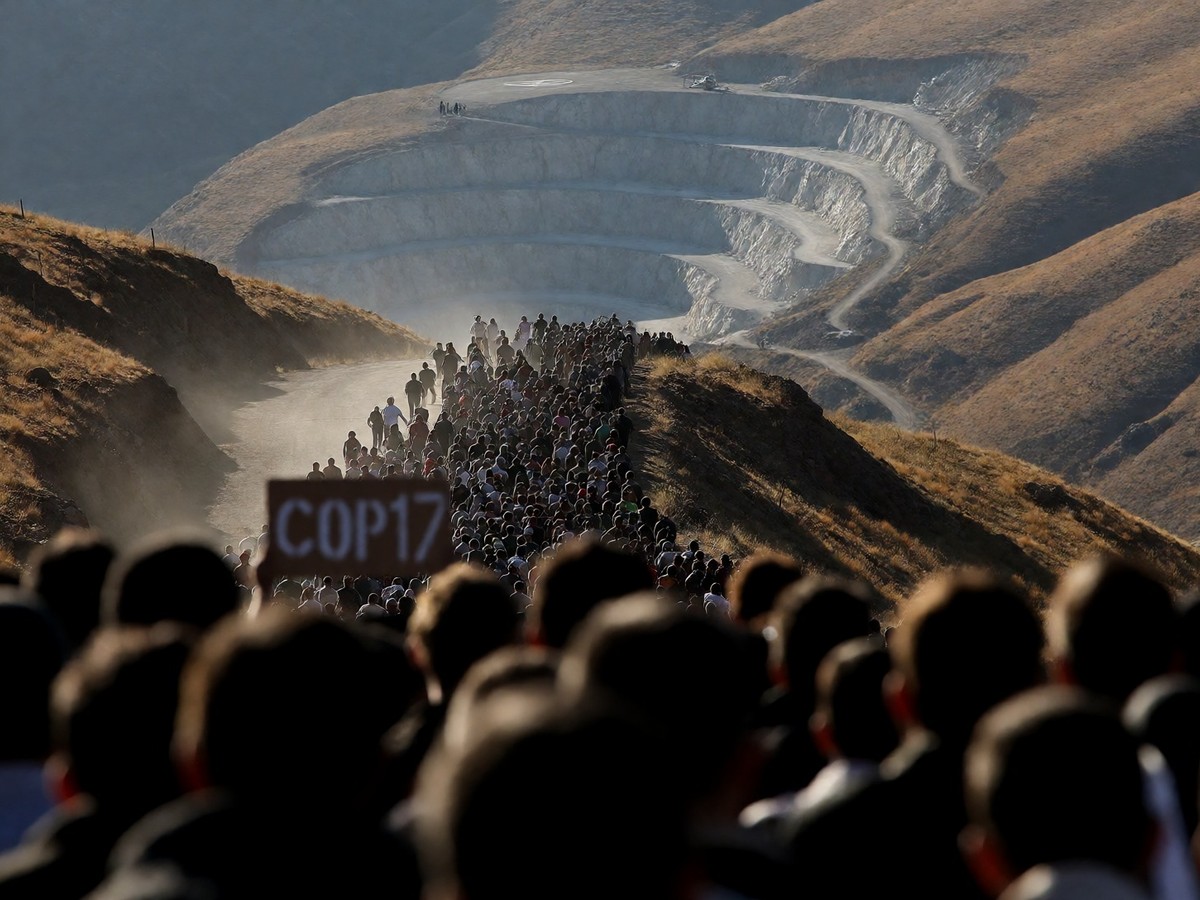
Prime Minister Nikol Pashinyan arrived by helicopter for the opening ceremony on 10 October. He called the event a "success story" and noted the absence of protests. Civil society groups condemned the launch, demanding a halt to operations and a new environmental impact assessment. They argued the timing was difficult because the mine opened less than two weeks before Yerevan hosted COP17. Ghazaryan says that by opening the mine around COP17 and inviting mining companies to the conference venue, the government tried to signal messages about "green mining" to domestic and international audiences. Police kept protesters outside the main event venues to keep them out of sight of international guests.
Ghazaryan says the government created a conflict of interest by becoming a shareholder and a loan guarantor for Lydian Armenia. The state can no longer act as an impartial evaluator with a financial stake. In February 2026, Lydian Armenia filed new lawsuits against lawyer Nazeli Vardanyan and journalist Tehmine Yenokyan, and they seek 6 million drams ($17,000) and public retractions of their statements regarding the Amulsar mine. This follows earlier legal actions where Lydian filed around 20 defamation suits against activists, experts, lawyers, media outlets, and MPs by 2020. The government also approved a budget guarantee for up to $150 million in loans to Lydian Armenia. Ameriabank will provide the funds, though the company previously said it would raise the sum from several local banks through various channels. Activists have submitted legislative proposals to urge the government to adopt anti-SLAPP protections in line with EU and Council of Europe standards.