Bunkers in Ida-Virumaa
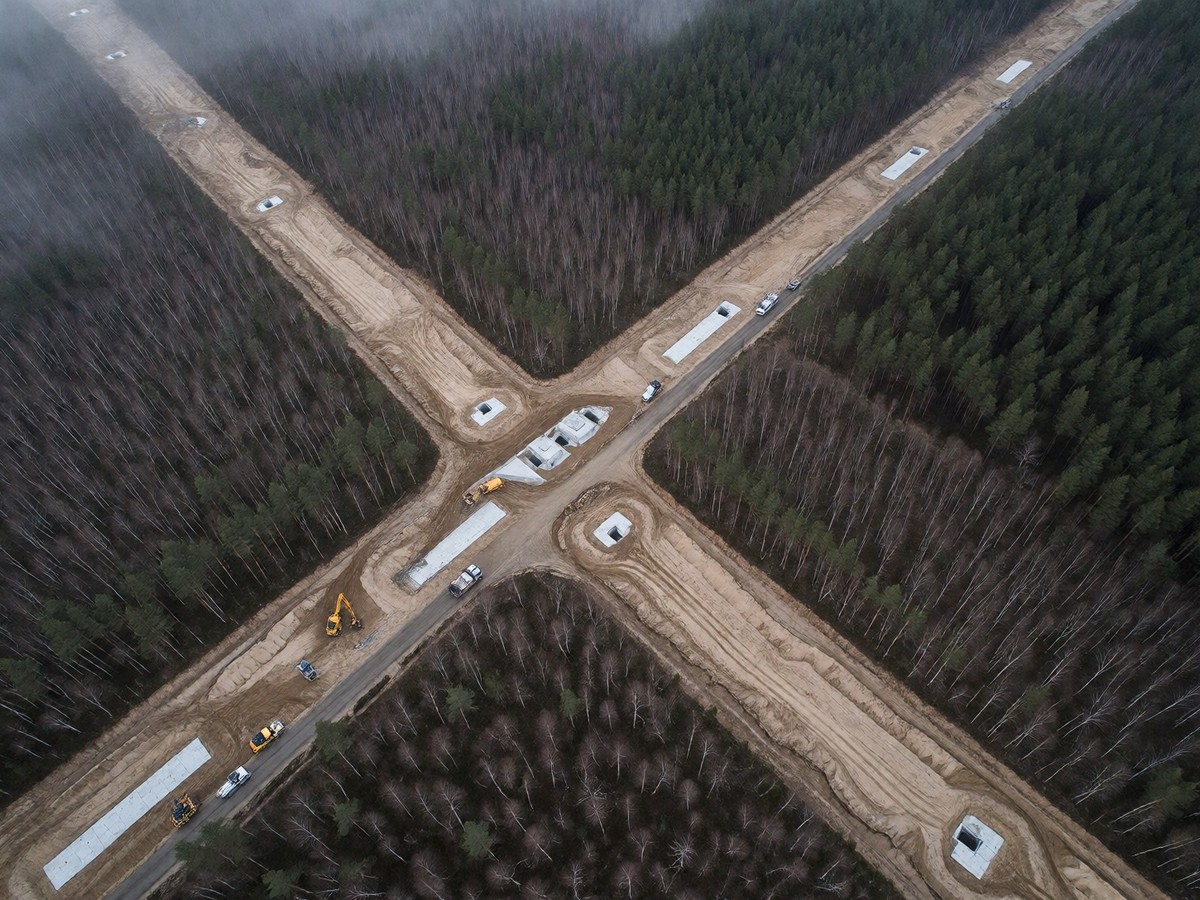
Estonian Defense Minister Martin Herem told reporters on Oct. 28 that Estonia plans to build approximately 150 bunkers in the Ida-Virumaa region, which borders Russia, to strengthen defensive readiness. According to Estonian news outlet ERR, about 100 of these bunkers will sit on state land and about 50 will be on private or municipal land. I find the lack of specific descriptions for how the bunkers would be used to be a disappointing gap in the announcement. Estonia’s defense spending is 5.4% of its GDP, which exceeds the 5% requirement set by NATO. To better meet a potential Russian attack, the Estonian military announced earlier this month it would move its combat-ready 1st Brigade closer to Russia, specifically to a newly expanded base located less than 50 kilometers (31 miles) from the Russian border. The 1st Brigade’s relocation to this base supports Estonia’s efforts to better meet a potential Russian attack.
Baltic border defenses
The Baltic states have placed a strong emphasis on strategic readiness in recent years, encouraging civilian preparedness and ramping up defense spending in response to increased Russian aggression. NATO officials have warned about Russian drone incursions, airspace violations, sabotage, and other hybrid threats, and while countries in the region have been strengthening their air defenses, NATO has reinforced its eastern flank by deploying additional troops and preparing a rapid-response plan since the full-scale invasion of Ukraine. In Latvia, the army said on Oct. 26 that the NATO brigade stationed there launched its most extensive force deployment exercises yet as the Baltic states bolster their defenses. Latvia also recently built a new 280-kilometer fence along its Russian border. On Oct. 7, Lithuanian Interior Minister Martynas Katelynas called for troops to be stationed along the country’s Kaliningrad border with Russia in what he described as a preventative measure. I consider the construction of the 200-kilometer fence finished by Finland in September, combined with the call by Lithuanian Interior Minister Martynas Katelynas on Oct. 7 to station troops along the Kaliningrad border, to be a coordinated effort to bolster regional defenses.