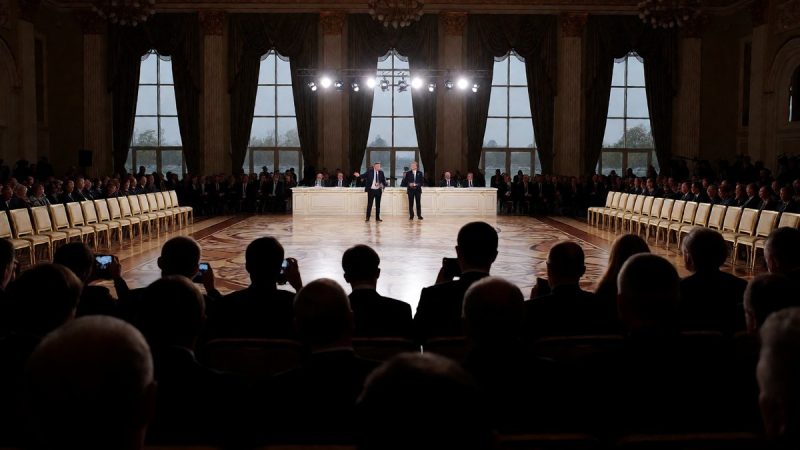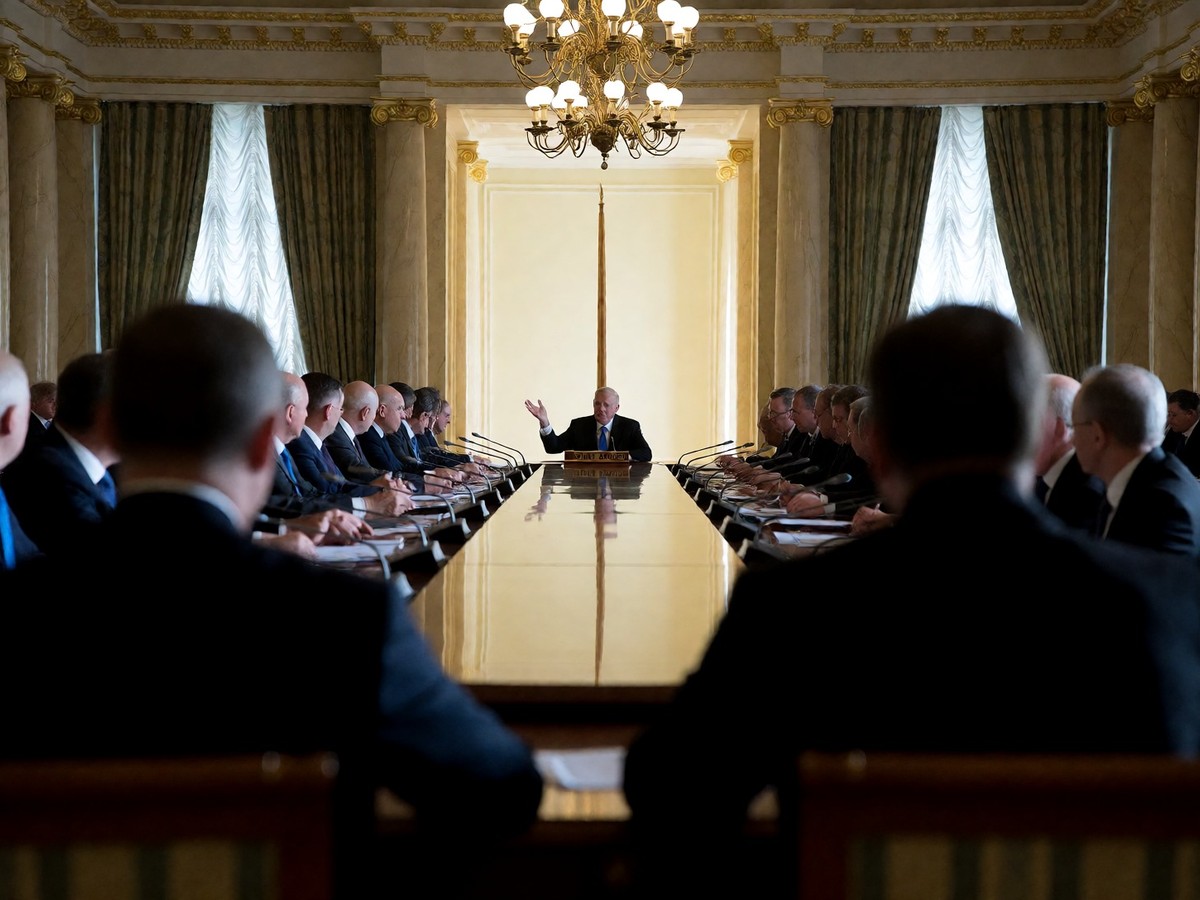
Vladimir Putin told US envoys Steve Witkoff and Jared Kushner in the Kremlin on November 12 that the state border is the only line Russia will accept with Ukraine. He rejected the concept of "grey zones" as an "apple of discord," arguing that any ambiguity would prevent a stable agreement. This stance leaves little room for compromise on who controls the Donbas, as Moscow insists on a clear demarcation where it is obvious who holds which territory. The President stated that disputes over undefined areas ensure no agreement will hold, making the border the sole acceptable solution for both sides to move forward.
A test of who holds Kostiantynivka
Putin proposed a humanitarian mission to Kostiantynivka, one of the fortress-belt cities of the Donbas, modelled on the Oleshky truce brokered by US First Lady Melania Trump in October. He said the sides would need five days to clear mines from the approaches, with Russia guaranteeing the mission’s security if Ukraine did the same. About 400-500 civilians remain in the town, he reported, and foreign media along with human rights commissioners should be invited to bring them out. "If, as the Ukrainian authorities claim, they control this town, let them ensure security there. In my view, this town is controlled by Russian troops," Putin said. "At the same time, we will see who controls this town." The offer presents a battlefield claim as a humanitarian gesture, yet Ukrainian troops remain in Kostiantynivka according to sources cited by the Kyiv Post, while open-source trackers have disputed Russian claims to the town since July.
The other big issue being discussed is security guarantees for both Russia and Ukraine. Ukrainian President Volodymyr Zelenskiy has made it abundantly clear that he will not contemplate any deal unless Ukraine is provided with "iron-clad" security guarantees. The US envoys have said the US is prepared to offer Ukraine an "Article 5-like" deal, which Zelenskiy appears to mistrust. However, all sides have said that Europe needs to join the discussion if a lasting peace deal is to be built, yet Europe has yet to broach the subject of what, if any, security deal it would offer. That leaves the last European suggestion of a so-called "resistance force" of some 10,000 European troops stationed inside Ukraine to provide a "tripwire" type set up; their presence would dissuade Russia from a second invasion for fear of killing European troops that would drag Nato into the conflict.
Putin appeared to anticipate this option and head it off before talks got under way. He repeated that foreign troops in Ukraine are unacceptable, stating, "We said from the very start that the presence of any foreign troops on Ukrainian territory is absolutely unacceptable for us, because we believe it threatens the security of the Russian Federation." He noted that Europeans say they will send troops in as soon as a peace deal is signed, adding that "for us this is a legitimate target, which means the war will immediately resume." He first branded troops from the coalition of the willing legitimate targets in September 2025, and the coalition signed a letter of intent to deploy a force in January. He told the envoys that Trump wants to agree security arrangements for Europe as a whole, while the Europeans say that can only come after peace in Ukraine, when they plan to send troops in. He likened that to an old joke about a crook who built cottages outside Kyiv and is asked by anti-corruption investigators where he got the money. From the nightstand, he says. His wife put it there, and he gave it to her, having taken it from the nightstand. "The circle is closed. It is the same with the Europeans," Putin said, and asked the US to work on its European allies "so that they finally make up their minds what they want: peace or war in Ukraine."
Witkoff called a prisoner exchange agreed in principle in Abu Dhabi one of the largest between the two countries and a sign of progress, and said he hoped to announce the next round of three-way talks soon, possibly straight after the meeting. He and Kushner were to fly on to Ireland to brief Ukrainian President Volodymyr Zelenskiy before he returned home. Kushner said Washington had begun talks with the Europeans on a security architecture covering Russia, Ukraine and the rest of the continent, meant to end the war and stop a new one. "As I understand it, this is closely tied to questions of territory," Putin interjected. "The territorial question and other questions," Kushner replied. He said the envoys would try to persuade Zelenskiy to take one of the paths discussed in Moscow. Putin opened by thanking Trump for arranging the contacts with Kyiv and Melania Trump for her role in Oleshky. The meeting ended after more than two hours, TASS reported, and the Kremlin had issued no readout of the closed part by early evening. Territory remains the main sticking point, and Kyiv has said it will neither cede nor recognise occupied land.