A shift in NATO discussions
I find the US inquiry regarding a Donbas withdrawal in exchange for NATO membership to be a significant development that complicates Kyiv’s long-term security planning. President Volodymyr Zelenskiy told reporters on November 13 that the US asked if Ukraine would pull out of Donbas if it joined NATO. "I have repeatedly said: Ukraine does not retreat and does not give its land to terrorists," Zelenskiy said. Because the constitution prevents him from ceding territory, Zelenskiy said he must hold a referendum to ask the people, following a proposal he made in August 2024. Any such deal would happen "without any recognition of the occupied territories as Russian," according to the Kyiv Independent. This inquiry follows years of Kyiv seeking fast-track membership, which it applied for in September 2022.
Zelenskiy is negotiating a package that combines NATO and EU guarantees with a strong army including enough troops and weapons, alongside a Prosperity Plan to pay for reconstruction. He said he asked for guarantees modeled on Article 5 of the NATO treaty "as an absolute minimum." US officials described their offer as bilateral guarantees similar to Israel’s, involving Articles 4 and 5, but said no US troops would be deployed in Ukraine. The Kyiv International Institute of Sociology carried out a survey from October 8 to 16 that found 61% of respondents said handing all of Donbas to Russia in exchange for security guarantees was categorically unacceptable.
Rejection of neutrality
Zelenskiy also rejected the idea of enshrining neutrality in the Ukrainian constitution. He told reporters that if neutrality means Ukraine is not in NATO, the country already holds that status. This position shifts away from the 1990 Declaration of State Sovereignty, which aimed for a "permanently neutral state," and the 2010 law under President Viktor Yanukovych that set a non-bloc status. Parliament removed that status in December 2014.
Moscow continues to push for different terms. A Russian paper dated November 10, which circulated at the Abu Dhabi talks, revived a demand for NATO to pull back to its 1997 positions. This would remove allied forces from Poland and the Baltic states. The paper also called for France and the UK to rule out using nuclear weapons to defend other European countries. Zelenskiy said he will not discuss a new European security architecture before the war ends. On November 10 and 11, the Russian delegation in Abu Dhabi said it had no mandate to discuss an energy truce or any other ceasefire. Dmitry Peskov said on November 14 that the Kremlin will not set conditions on the negotiating team.
Air defense and energy needs
Ukraine currently faces severe shortages in air defense and equipment. I see the shortage of interceptors as the most pressing problem. Zelenskiy said Ukraine needs 2.5 times as many F-16 jets in the air as it has now because the aging aircraft require constant repairs. Denmark is discussing a deal for 800,000 rounds of F-16 ammunition, which would provide enough for half a year.
| Military Needs | Specifics |
|---|---|
| F-16 ammunition | 800,000 rounds |
| Drone interception (Nov 14) | 81 of 96 downed |
| Odesa power loss (Nov 14) | 50,000 households |
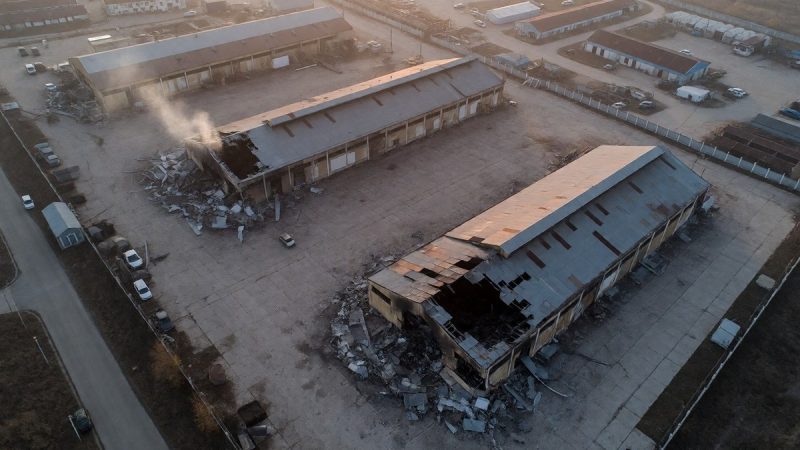
The shortage of Patriot missiles remains a problem, as Kyiv asks allies for PAC-2 and PAC-3 stocks. On November 13, Polish Prime Minister Donald Tusk said Poland would stop paying into the Prioritised Ukraine Requirements List, a NATO scheme for US weapons, because of its own defence bill and a deficit. On the morning of November 14, a Russian strike on a DTEK facility left almost 50,000 households in the Odesa region without power. The Ukrainian air force reported that it downed 81 of 96 Russian drones overnight on November 14. The government has drawn up winter programs for Kyiv, Dnipro, Kharkiv, Kherson, and Zaporizhzhia to cover diesel, petrol, generators, and buses. Zelenskiy expects partners to address these needs at an online Ramstein meeting next week and a meeting in Berlin on November 19.